Living
Torre Melina — The Hotel That Put the Farmhouse Back in Its Name
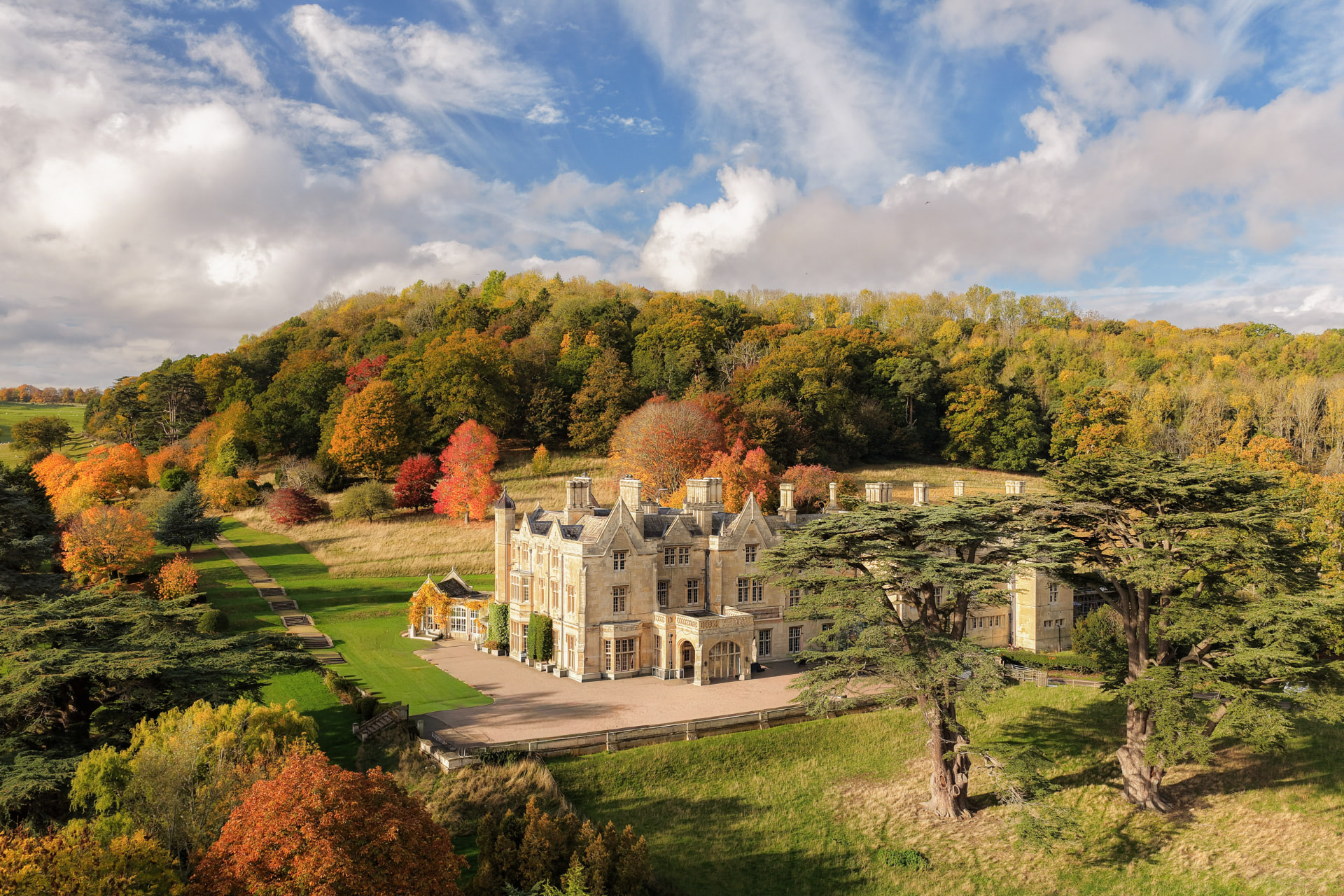
For more than three decades, one of Barcelona's biggest hotels carried the name of a king. When it reopened in 2024, it took the name of the farmhouse that had been here first. That tells you rather more about Torre Melina than its five stars do.
By James B. Stoney, Editor · 17 September 2026
Barcelona, 1992
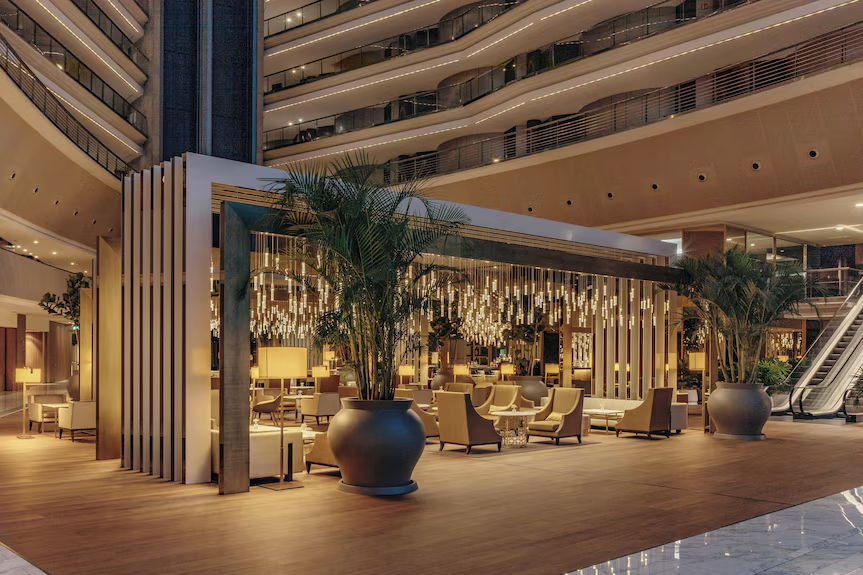
The building at the top of Avinguda Diagonal was created in the great burst of construction surrounding the 1992 Barcelona Olympics. Designed by architects Carlos Ferrater and José María Cartañá, the Hotel Rey Juan Carlos I opened in 1992 as Barcelona was presenting a substantially remade version of itself to the world.
The architecture still belongs unmistakably to that moment. Sixteen storeys rise above an enormous internal atrium, with the bedroom floors arranged around it and a huge glazed wall drawing daylight into the centre of the building. Ferrater's original design deliberately used natural northern light so that the character of the lobby changed between day and night.
This wasn't conceived as an intimate Barcelona hotel. It was infrastructure for an ambitious city: hundreds of bedrooms, conference facilities, gardens and enough scale to accommodate the international audience Barcelona was suddenly attracting. More than thirty years later, the building is still enormous. But the name above the door has changed.
Before the Hotel
Torre Melina wasn't invented by a branding agency. Long before the Olympics — and long before this part of Barcelona looked remotely urban — there was a farmhouse here.
The estate has medieval origins. The site is documented back to the 12th century, when the surrounding territory was agricultural land on what was then the edge of Barcelona's world. Over subsequent centuries the property passed through different families and became known as Torre Melina. Old photographs held by Barcelona's municipal archive show something almost impossible to reconcile with the city around it today: a substantial country house surrounded by gardens and open land.
The farmhouse itself has gone. Some of its landscape survived.
The Gardens
This is where Torre Melina begins to make sense as a choice for an Edit about Barcelona beyond the centre.
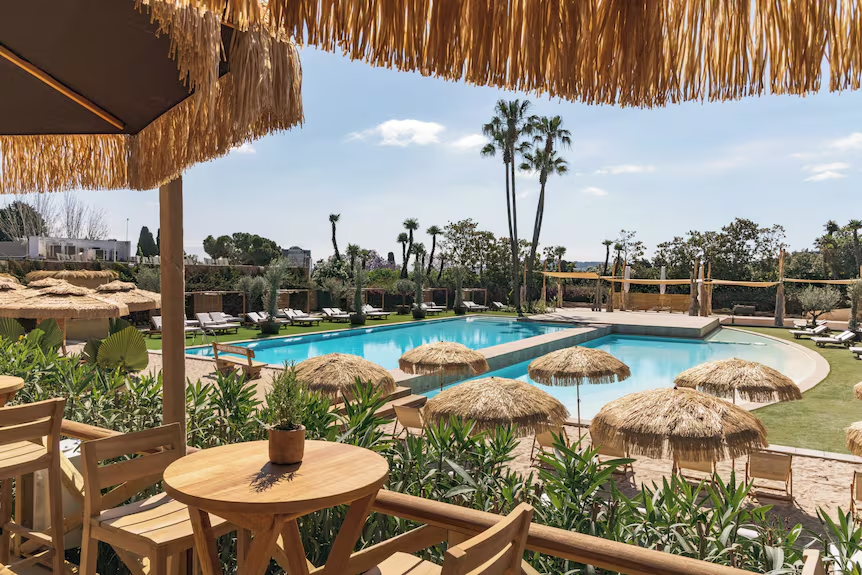
Step outside the scale of the hotel and there are 25,000 square metres of gardens, including mature trees and remnants of the landscape associated with the old estate. Barcelona's municipal archive records the historic Torre Melina surrounded by English-style gardens designed by Josep Fontserè, the architect and master builder best known for his work on Parc de la Ciutadella.
That doesn't mean today's 25,000 square metres should be read as an intact Fontserè garden. More than a century of development separates the historic estate from the modern hotel. What remains is continuity of place and elements of the landscape rather than a preserved garden frozen at a particular date.
The result is nevertheless unusual for Barcelona. This is a city where the best hotels tend to sell proximity: the Passeig de Gràcia outside the door, the Gothic Quarter around the corner, the Mediterranean at the end of the street. Torre Melina sells distance. You are still in Barcelona, but the city has loosened around you.
The King Leaves
The Hotel Rey Juan Carlos I closed in 2020 and remained shut for almost four years. Meliá took over the property and invested a reported €40 million in its transformation before reopening it to guests in January 2024 under its Gran Meliá brand. The renovation reduced the room count from 438 to 391 rooms and suites and reworked much of the interior while retaining Ferrater's original architecture.
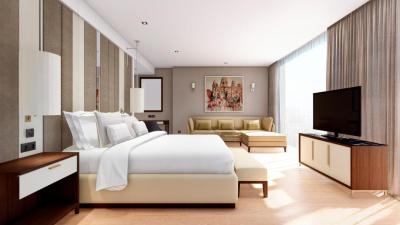
Most interestingly, the old name disappeared. The replacement was Torre Melina. A hotel created during Barcelona's Olympic reinvention had reached its own moment of reinvention and chosen to look much further backwards for its identity. Not to 1992. To the land underneath it.
A Resort at the End of Diagonal
The scale that once made the Rey Juan Carlos I feel slightly removed from Barcelona now works in Torre Melina's favour. There are two outdoor pools, a wellness centre, restaurants, a 360-degree rooftop and direct access to the Palau de Congressos de Catalunya. The hotel is surrounded by those extensive gardens, giving the property enough space to function differently from most central Barcelona hotels.
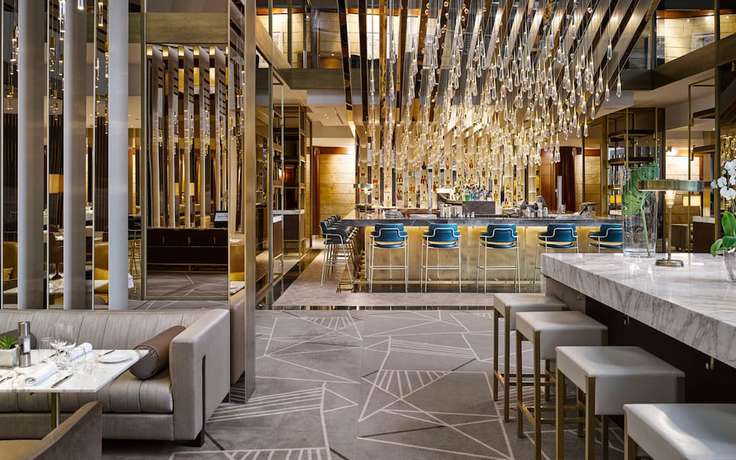
"Urban resort" is a more convincing description here than it is at many city properties. You can stay for a significant part of the day without needing Barcelona to entertain you.
And because Torre Melina sits towards the western end of Diagonal in Les Corts, staying here changes the geography of a Barcelona trip. Pedralbes is nearby. The centre isn't. For this Edit, that's precisely the point.
The Other Barcelona
There is a tendency to treat Barcelona as though it becomes progressively less interesting the further you move from Plaça de Catalunya. Torre Melina makes the opposite case.
This isn't the Barcelona of balconies, narrow streets and Modernista façades. It is a Barcelona shaped by farmland, 19th-century gardens, Olympic ambition, conference infrastructure and the broad western end of Diagonal. Some of that history sits awkwardly together. A medieval estate eventually disappeared beneath a vast luxury hotel named after a king. Three decades later, the king's name disappeared and the estate's returned. Cities rarely move in straight lines.
Why It Earns Its Place
Because Torre Melina makes more sense once you stop judging it by how quickly you can get to the Gothic Quarter.
The building belongs to the Barcelona that emerged in 1992: confident, international and determined to demonstrate that it could operate at a different scale. The name belongs to a Barcelona that existed centuries before that. And the gardens sit somewhere between the two.
There are smaller hotels. More central hotels. Hotels that deliver a more immediately recognisable version of Barcelona. Torre Melina offers something else: enough space to step away from the city without actually leaving it. Thirty-two years after the Olympics, the old hotel was given another life. This time, it borrowed its name from what was there before.
The Lifestyle Edit Scorecard
- Setting
- 9.1 / 10
- Design
- 9.0 / 10
- Comfort
- 9.3 / 10
- Character
- 8.9 / 10
Who it's for
- Anyone who has already done central Barcelona and wants to experience a different part of the city.
- Travellers who value gardens, pools and space over being able to walk to the Ramblas.
- Visitors with business at the Palau de Congressos.
- Anyone who likes a city hotel capable of functioning as somewhere to stay rather than merely somewhere to sleep.
Questions
- What is Torre Melina?
- Torre Melina is a 391-room Gran Meliá hotel in Les Corts, Barcelona. The building previously operated as the Hotel Rey Juan Carlos I.
- Where is Torre Melina?
- Torre Melina is at the western end of Avinguda Diagonal in Les Corts, beside the Palau de Congressos de Catalunya.
- Was Torre Melina previously another hotel?
- Yes. The building opened in 1992 as the Hotel Rey Juan Carlos I. It closed in 2020 and reopened under Meliá's Gran Meliá brand in January 2024.
- Why is it called Torre Melina?
- The name comes from the historic Torre Melina farmhouse and estate that once occupied the site. The property's history can be traced back to the medieval period.
- Who designed the hotel?
- The original hotel was designed by architects Carlos Ferrater and José María Cartañá between 1989 and 1992.
- How many rooms does Torre Melina have?
- The renovated hotel has 391 rooms and suites.
- Does Torre Melina have a swimming pool?
- Yes. It has two outdoor swimming pools within the hotel grounds.
- How large are the gardens?
- The hotel sits within approximately 25,000 square metres of gardens. Historic gardens associated with the former Torre Melina estate were attributed to Josep Fontserè, although today's hotel grounds should not be interpreted as an intact surviving Fontserè garden.
- Is Torre Melina central?
- No — and that's part of its appeal. It sits in Les Corts towards the western end of Diagonal, away from Barcelona's main central tourist districts.