
Edit No.32
The Fens, From the Edge
Peterborough Cathedral · Flag Fen · Prévost at the Haycock
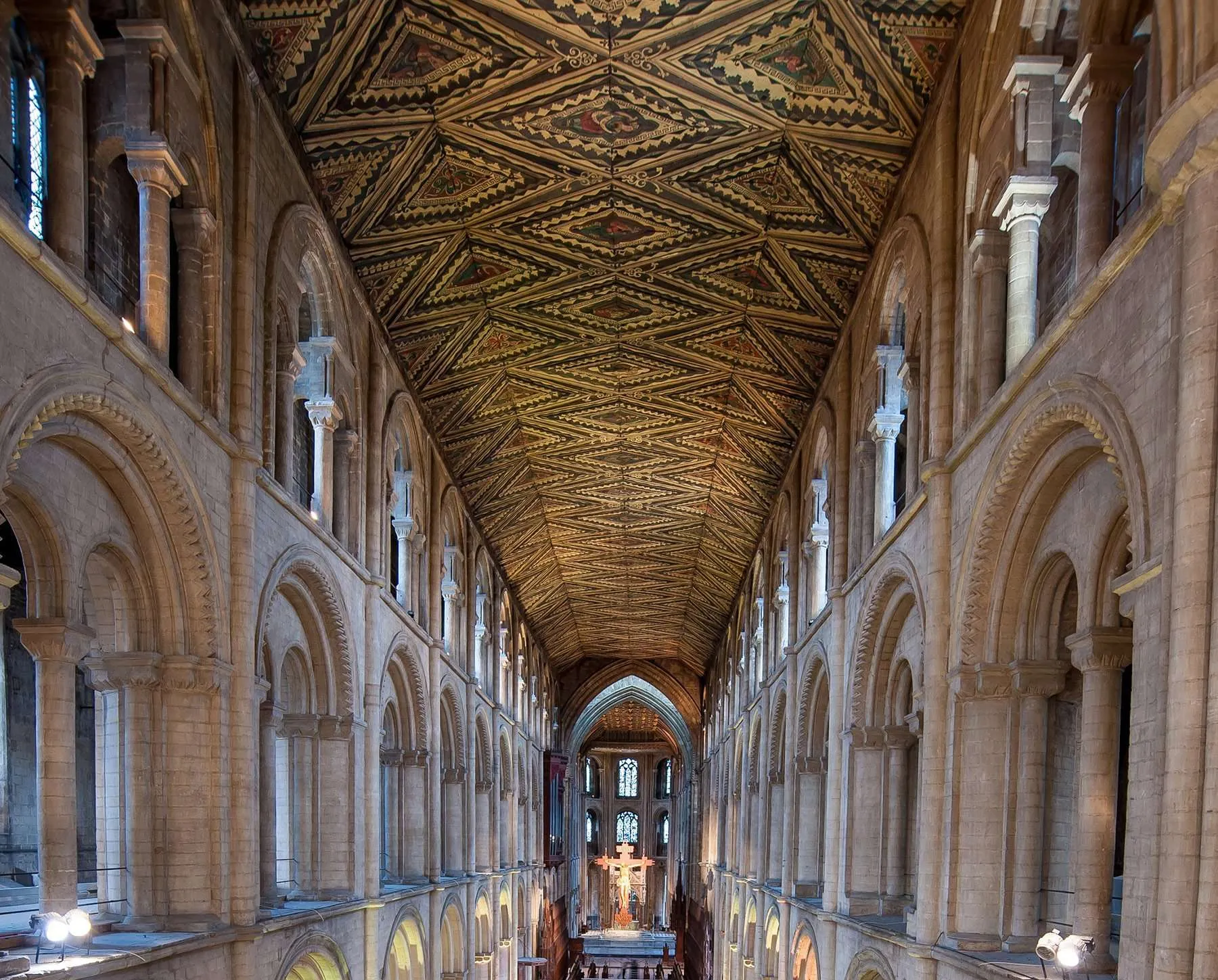
The Fens are often described from their centre: flat land, drainage channels, black soil and horizons that seem to run without interruption. This edit begins at the edge, in Peterborough, where the landscape meets one of England's great surviving Norman churches.
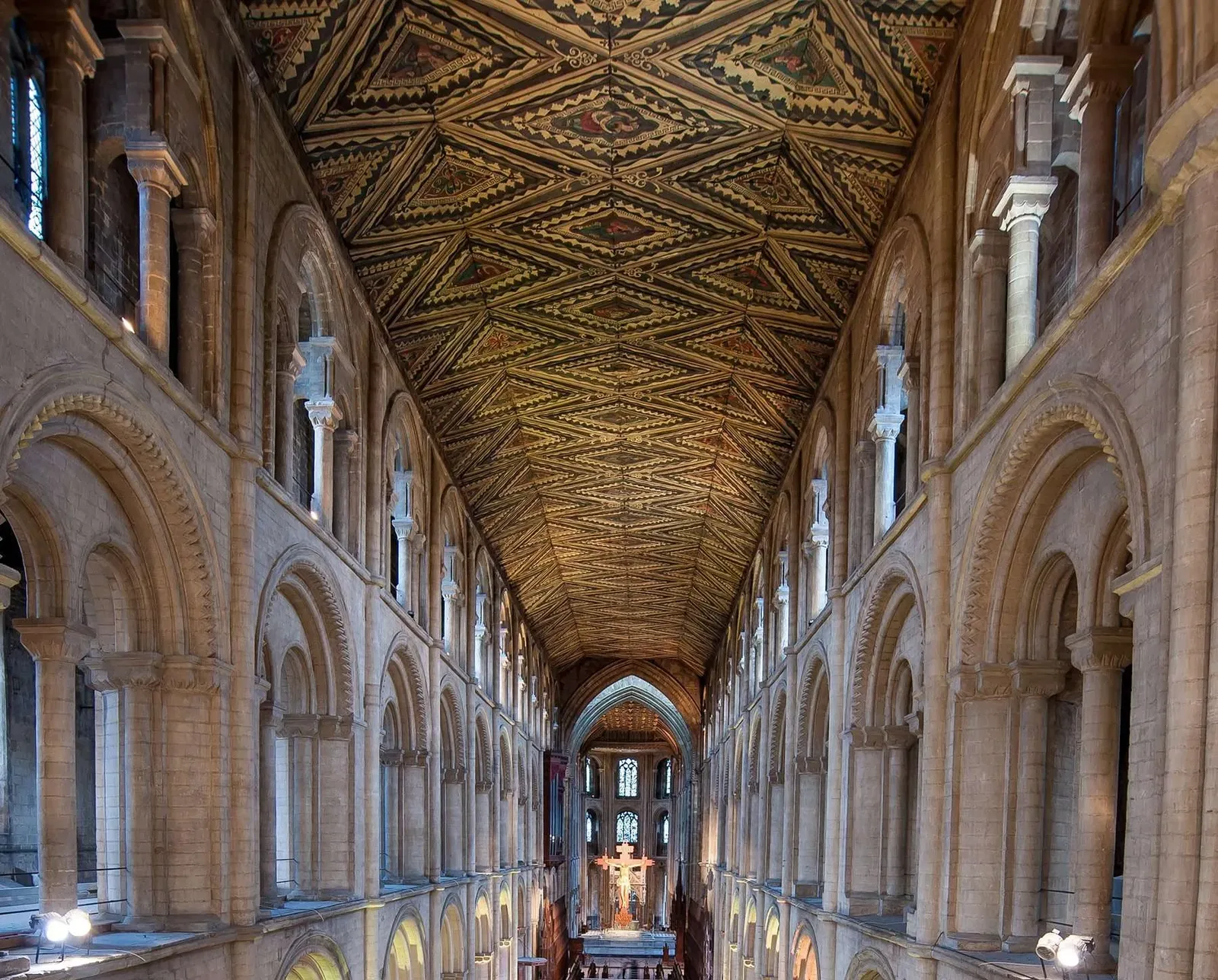
Peterborough Cathedral has stood on a site of Christian worship since a monastic community was founded here in 654. The present building began after the fire of 1116, and its long nave still carries a painted thirteenth-century wooden ceiling of extraordinary scale.
It is also a place where national history became local and physical. Katharine of Aragon remains buried here. Mary, Queen of Scots, was buried here for twenty-five years before her son had her moved to Westminster Abbey.
The first piece in this edit looks beyond the two queens to the architecture everyone walks beneath: Norman arches, a medieval painted ceiling, the Hedda Stone and the late medieval east end — a building far better than its reputation, in a city too often treated as somewhere to pass through.
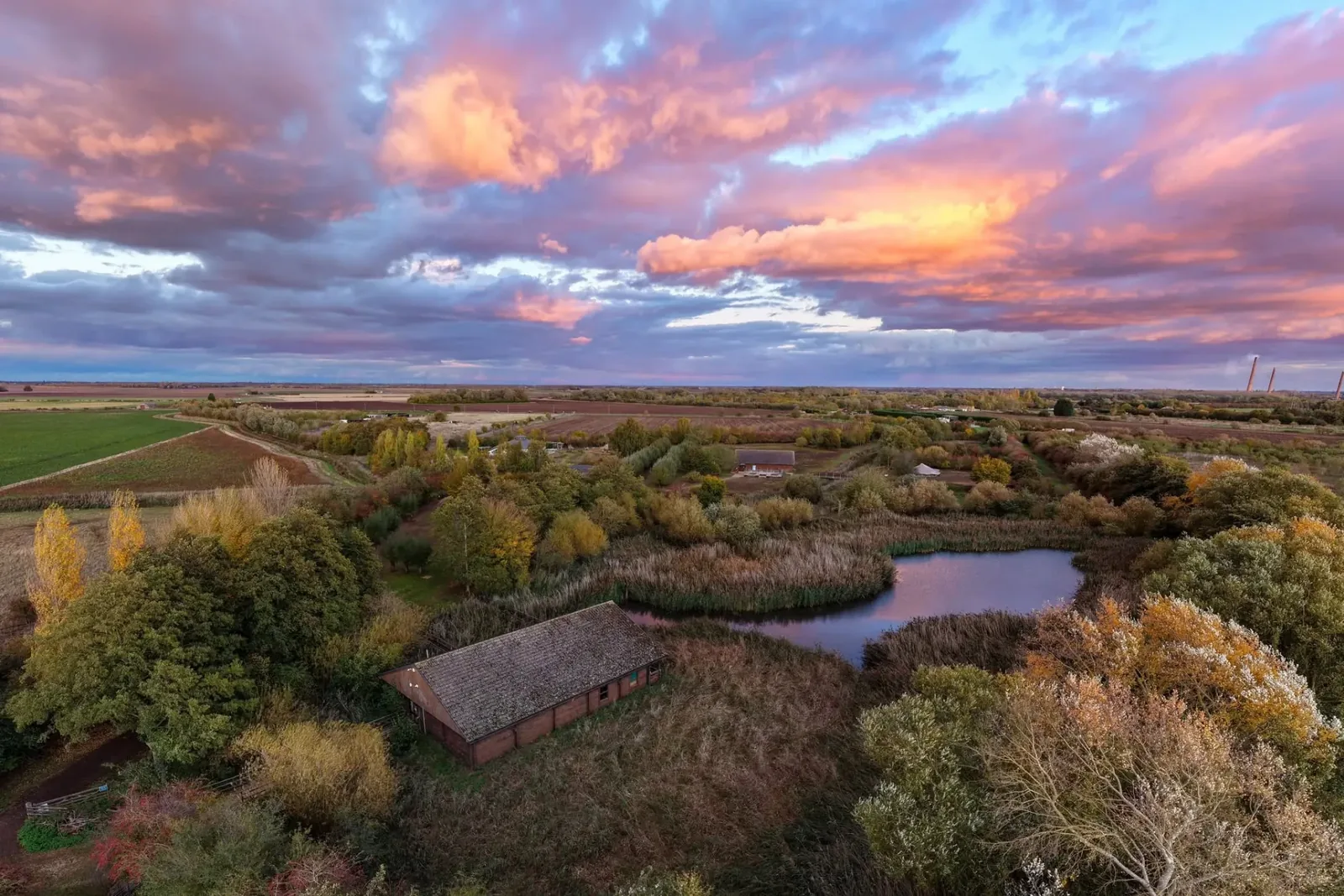
A few miles east, Flag Fen reveals the older landscape beneath the city: a monumental Bronze Age timber causeway and platform preserved for 3,500 years by waterlogged peat, now being recorded as the ground that protected it begins to dry.
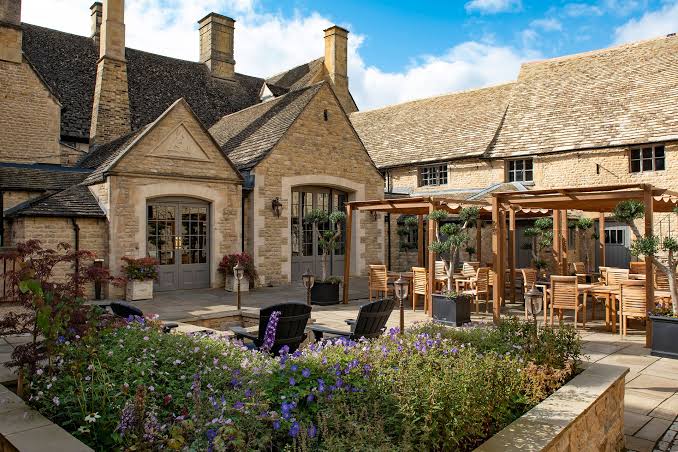
West of Peterborough at Wansford, Prévost follows another route through the landscape. The restaurant left the city in 2021 for the orangery of the Haycock, a centuries-old coaching inn beside the road that became the A1.
In this edit
Place
Prévost — The Restaurant That Followed the Road
People have been stopping to eat at the Haycock for centuries. The road has changed, the coaches have disappeared and the restaurant now serves tasting menus beneath an artificial olive tree, but Wansford is still doing much the same job it always did: feeding people travelling through.
Experience
Flag Fen — What the Water Kept
For 3,500 years, the water beneath Flag Fen did something extraordinary: it stopped the past from rotting. The conditions that preserved one of Britain's great prehistoric structures are now changing, and archaeologists are racing to record what's left.
Experience
Peterborough Cathedral — The Ceiling Everyone Walks Under
People come to Peterborough Cathedral for two queens, one who is still here and one who was taken away. The thing most of them should be looking at is above their heads, and it has been hanging above the nave, through restoration and alteration, for roughly eight centuries.
Questions
- What does Edit No.32 cover?
- The Fens from their edges rather than their centre, beginning in Peterborough with one of England's great surviving Norman churches and its exceptional painted medieval ceiling.
- Where does the edit begin?
- At Peterborough Cathedral in the city centre, a short walk from the railway station and from London Road across the River Nene.
- Why start with Peterborough Cathedral?
- Because it brings architecture, medieval art and Tudor history together in a building that is much more remarkable than Peterborough's reputation as a place to pass through suggests.
- What is special about Peterborough Cathedral's ceiling?
- It is a painted wooden nave ceiling dating from the thirteenth century, with its medieval scheme still legible after centuries of restoration and alteration.
- What is Flag Fen?
- A nationally important Bronze Age site east of Peterborough, where waterlogged peat preserved a monumental timber causeway and platform for around 3,500 years.
- Why is Flag Fen being excavated again?
- Changing groundwater conditions are threatening the buried wood, so archaeologists are recording vulnerable parts of the monument before they are irreversibly lost.
- Where is Prévost?
- In the orangery of the Haycock Manor Hotel at Wansford, around eight miles west of Peterborough and minutes from the A1.
- Why is the Haycock part of this edit?
- Because its history as a coaching inn beside the Great North Road connects Wansford's geography to the modern restaurant that moved there from Peterborough in 2021.