Place
Prévost — The Restaurant That Followed the Road
People have been stopping to eat at the Haycock for centuries. The road has changed, the coaches have disappeared and the restaurant now serves tasting menus beneath an artificial olive tree, but Wansford is still doing much the same job it always did: feeding people travelling through.
By James B. Stoney, Editor · 22 September 2026
Before the Restaurant
Long before anyone served a tasting menu here, people were stopping at Wansford because they needed to get across the river. The crossing of the Nene made the village an important point on the route that became the Great North Road, carrying traffic between London and the north of England.
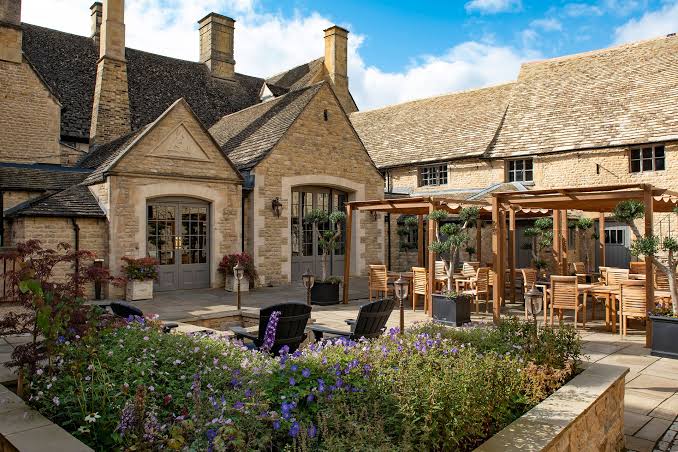
The Haycock's own history records an inn on the site as the Swan in 1571, when severe flooding reportedly reached its bedrooms. The building standing today is principally early seventeenth century: Historic England dates it to the early 1600s and records a displaced date stone of 1632.
It became a posting house and coaching inn. Travellers arrived, horses were changed, people ate and slept, and then continued north or south. The traffic that sustained places like the Haycock eventually changed beyond recognition. The modern A1 bypasses the centre of Wansford, but passes only a short distance from the old inn. The road moved. The reason for stopping survived.
Wansford in England
The hotel's name comes from a story that has been told for nearly four centuries. In its familiar form, a traveller called Barnabee falls asleep on a haycock and is swept downstream by the flooded Nene. When he wakes and asks where he is, he is told Wansford. His incredulous reply — "Wansford in England?" — gave the village a nickname it still uses today: Wansford-in-England.
The details have changed in the telling, but this isn't recently invented hotel folklore. Richard Brathwait recorded a version of the story in Barnabae Itinerarium in 1638; Daniel Defoe encountered another version in the following century.
The Haycock took its name from it — an unusually appropriate name for an inn whose existence has always been bound up with the river, the road and people passing through.
Prévost Comes Out of Town
Prévost is much younger. Chef Lee Clarke established the restaurant in Peterborough in 2015, and its city incarnation later operated from 20 Priestgate. It attracted serious attention quickly, entering the Michelin Guide and establishing the name before the restaurant ever reached Wansford.
Then Prévost went in the opposite direction to most ambitious restaurants. The Haycock had been acquired for a substantial restoration and reopened in 2021. Prévost moved out of Peterborough and into the hotel's new orangery, exchanging a city-centre address for a village on the old road north.
It was an interesting reversal. Restaurants generally migrate towards concentrations of people. Prévost left Peterborough for a building whose commercial reason for existing had historically been the people passing its door. The traffic is still there. It simply travels along the A1 now.
The Orangery
Don't expect the dining room to look like the rest of a seventeenth-century coaching inn. Prévost occupies a bright orangery overlooking the grounds, with large windows, birdcage chandeliers, pergola-like structures and an artificial olive tree at its centre. Michelin describes the room as theatrical, which is fair.
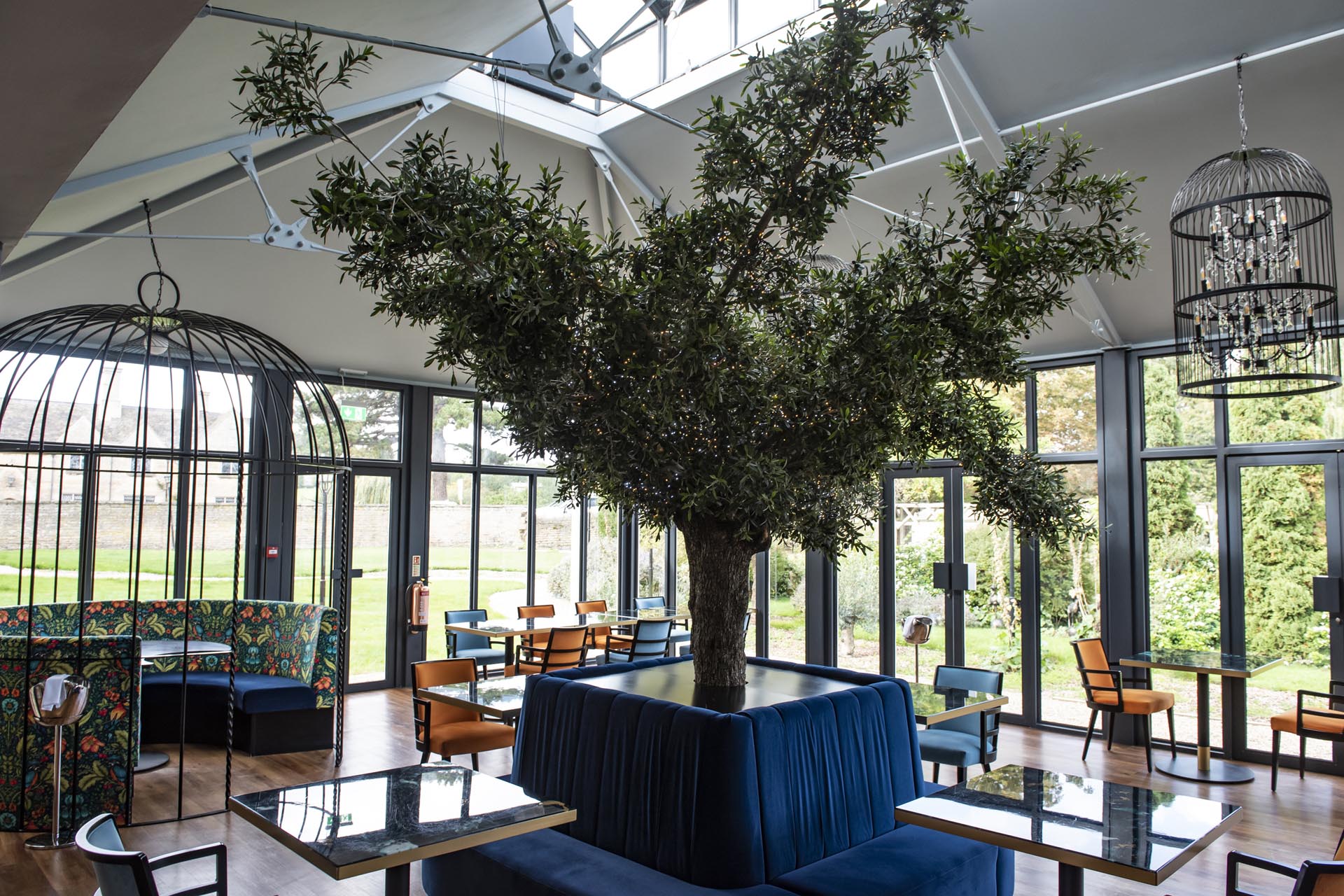
There would have been an obvious temptation to make the restaurant look historical too. Prévost doesn't. You pass through the older fabric of the Haycock and arrive somewhere deliberately contemporary, and that separation works. The restaurant belongs to the hotel without pretending to have been here since the coaches.
It also helps distinguish Prévost from the country-house dining room it could easily have become. The Haycock supplies the history. The restaurant is allowed to belong to the present.
The Modern Restaurant
Rikki Hughes now leads the kitchen. His earlier career included six years at Tom Kerridge's two-Michelin-starred Hand & Flowers, and he later headed the kitchen at 263 in Preston before coming to Prévost.
The format is contemporary British fine dining, built around tasting menus rather than the broad hotel menu the setting might suggest. The restaurant currently holds three AA Rosettes and is listed in the Michelin Guide. It does not hold a Michelin star. That distinction is worth making because Prévost doesn't particularly need one to make sense here. The interesting thing is the contrast between what the building once provided and what happens inside it now.
The old coaching inn existed to feed and accommodate travellers efficiently enough to send them on their way. Prévost asks them to stop for considerably longer. The horses have become cars, the coaching route has become the A1, and dinner has become a sequence of carefully constructed courses in an orangery. The function, stripped back far enough, is remarkably similar.
Four Centuries of Passing Through
That is what makes the Haycock more than an attractive container for a restaurant. Wansford's geography created the business. There was a river to cross and an important road running through the village, so travellers needed somewhere to eat, sleep and change horses. The Haycock became one of those places.
Transport subsequently engineered much of that necessity away. Railways undermined the coaching trade. Motor traffic replaced the horse. The main road eventually moved around the village rather than through its centre. Yet the inn remained, and in 2021 a restaurant from Peterborough moved into it.
There is no direct line between a seventeenth-century traveller eating at the Swan and somebody sitting beneath Prévost's artificial olive tree, and it would be sentimental to pretend there is. But the continuity of purpose is real. People are still coming off the road to eat here.
Why It Earns Its Place
Prévost could be written about simply as a Michelin-listed restaurant with three AA Rosettes. That would also make it considerably less interesting. Its place in this Edit comes from where it ended up.
The restaurant began in Peterborough, moved out of the city and settled inside a coaching inn whose history was shaped by one of England's great routes north. Wansford was a place to stop because the geography demanded it. The Great North Road became the A1, the road moved around the village and the coaching economy disappeared.
More than four centuries after an inn was recorded on this site, people are still leaving the main road specifically to come here and eat. The horses, coaches and Great North Road have gone. The reason for stopping hasn't.
The Lifestyle Edit Scorecard
- Food
- 9.2 / 10
- Setting
- 9.3 / 10
- Value
- 8.7 / 10
- Character
- 9.1 / 10
Who it's for
- Anyone looking for ambitious cooking between Peterborough and Stamford, but particularly people who prefer restaurants with a reason for being where they are. Come for Prévost rather than simply because you're staying at the Haycock. Then spend a little time looking at the old inn around it. The restaurant makes more sense once you understand the road outside.
Questions
- Does Prévost have a Michelin star?
- No. Prévost is listed in the Michelin Guide but does not currently hold a Michelin star. It holds three AA Rosettes.
- Who is the head chef at Prévost?
- Rikki Hughes currently leads the kitchen. His previous experience includes six years at Tom Kerridge's two-Michelin-starred Hand & Flowers and heading the kitchen at 263 in Preston.
- Was Prévost originally in Peterborough?
- Yes. Prévost was established in Peterborough in 2015 and later operated from 20 Priestgate. It moved to the Haycock Manor Hotel in Wansford in 2021.
- How old is the Haycock?
- An inn called the Swan is recorded on the site in 1571. The surviving building is principally early seventeenth century; Historic England records a displaced date stone of 1632.
- Why is it called the Haycock?
- The name derives from a centuries-old story about a traveller called Barnabee who fell asleep on a haycock and was swept along by floodwater. Versions of the tale were recorded as early as 1638 and helped give rise to the name "Wansford-in-England".
- What food does Prévost serve?
- Prévost serves contemporary British fine dining, with tasting-menu formats rather than a conventional hotel dining-room menu.
- When is Prévost open?
- Prévost opens on selected days for lunch and dinner. Check the restaurant's current opening hours and menu before travelling.