Experience
Flag Fen — What the Water Kept
For 3,500 years, the water beneath Flag Fen did something extraordinary: it stopped the past from rotting. The conditions that preserved one of Britain's great prehistoric structures are now changing, and archaeologists are racing to record what's left.
By James B. Stoney, Editor · 22 September 2026
Something Under the Fields
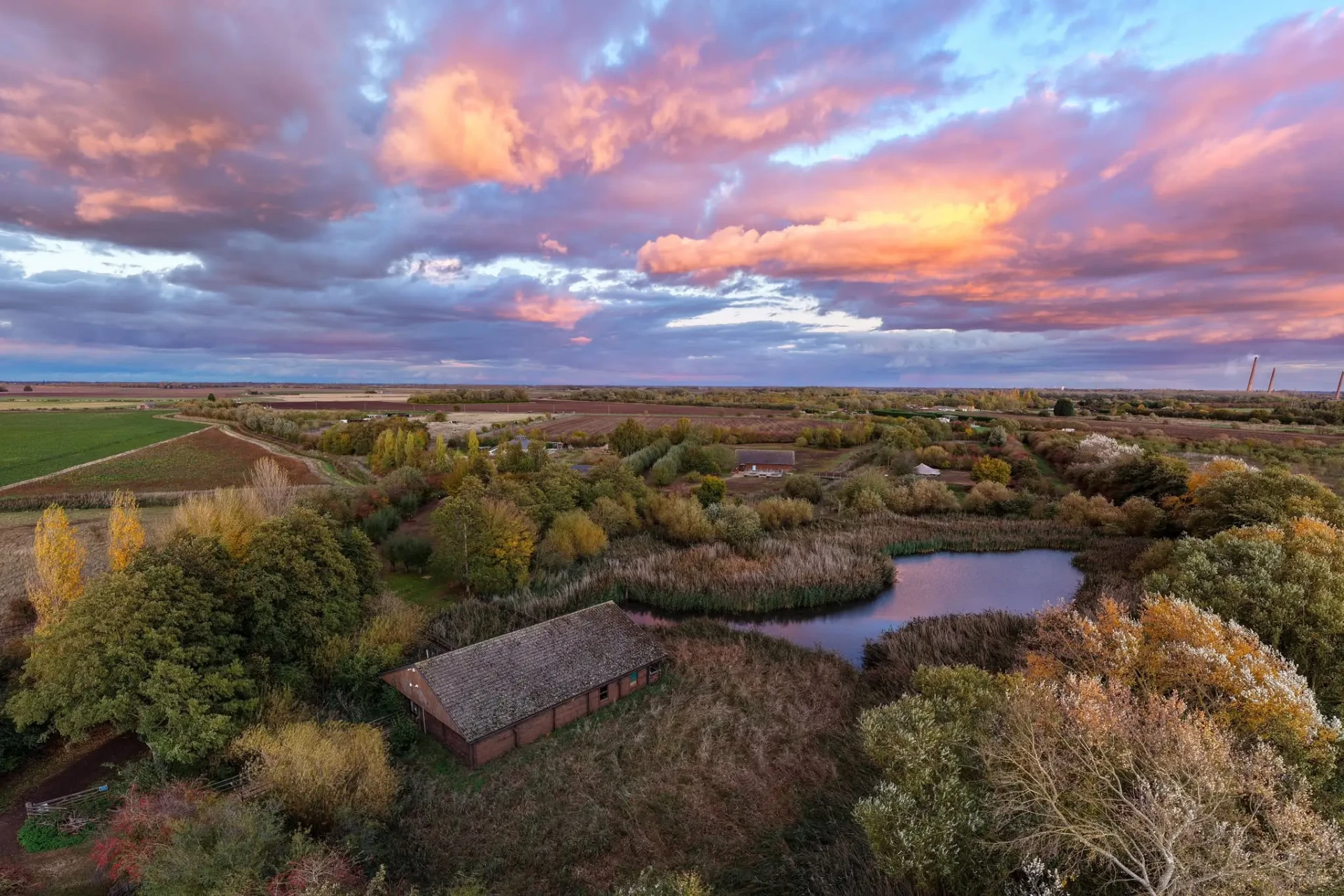
Buried beneath an otherwise unremarkable stretch of Fenland outside Peterborough is a timber alignment running for more than a kilometre across what became increasingly wet ground, leading towards a huge wooden platform. Tens of thousands of sharpened posts went into it. Across the wider monument, the number of pieces of timber may have run into the millions.
Flag Fen was not discovered because somebody went looking for a lost Bronze Age monument. The story began with Peterborough expanding. Archaeological work associated with the development of Peterborough New Town had already revealed an unusually intact prehistoric landscape around Fengate from 1971. Then, on a foggy morning in November 1982, archaeologist Francis Pryor was walking along the Mustdyke drainage ditch when he encountered a piece of worked timber. Within three weeks, one piece had become 500.
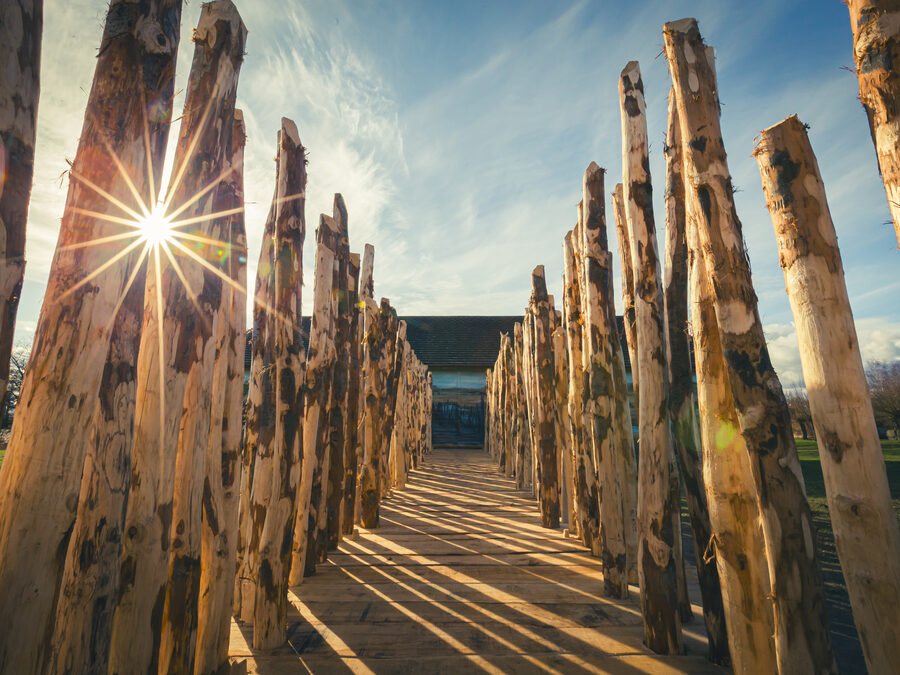
What emerged was enormous. The monument includes at least five parallel rows of posts forming an alignment approximately 1.1 kilometres long and ten metres wide, running across the northern part of the basin towards a large timber platform. Flag Fen's current research strategy estimates that the alignment alone involved around 22,000 axe-sharpened posts or piles, mostly oak. Older interpretation from the site estimates that the causeway and platform together may have required around two million pieces of timber over centuries of construction and repair.
This was not a path thrown across a bog. It was monumental engineering carried out with axes.
What the Water Kept
Wood normally disappears. Leave a timber structure in the English landscape for three and a half millennia and fungi, insects, bacteria, oxygen and weather should leave very little behind.
Flag Fen was different because the landscape became wet. As water levels rose during the Bronze Age, the basin developed into marshland. Once timbers became buried in waterlogged peat, the lack of oxygen dramatically slowed the organisms responsible for decomposition. The Fen effectively sealed part of the structure away.
That preservation extends beyond architecture. Archaeologists have recovered weapons, jewellery and tools around the monument. More than 300 objects have been recorded among the timbers, including valuable items apparently deliberately deposited into the watery landscape.
Exactly what Flag Fen meant to the people who built and used it remains harder to establish. The causeway provided a way across increasingly difficult wet ground, but the deliberate deposition of valuable objects indicates that the landscape had significance beyond simple transport. The temptation is to label it a temple or ceremonial centre and finish the story there. The archaeology does not give us that luxury. We know an enormous amount about how it was built, and much less about precisely why.
The Wood Is Still There
This is what separates Flag Fen from an archaeological site where the objects have been removed to a museum and the original landscape has become an abstraction. Some of the timber is still beneath you.
Inside the Preservation Hall, a section of the original causeway remains exposed in its archaeological position, kept wet artificially with a spray system. Elsewhere, much of the monument remains buried beneath the site. A reconstructed section of the causeway, opened in 2025, helps make sense of what is otherwise difficult to visualise: a substantial timber route crossing a landscape that looked very different from the drained agricultural Fenland surrounding Peterborough today.
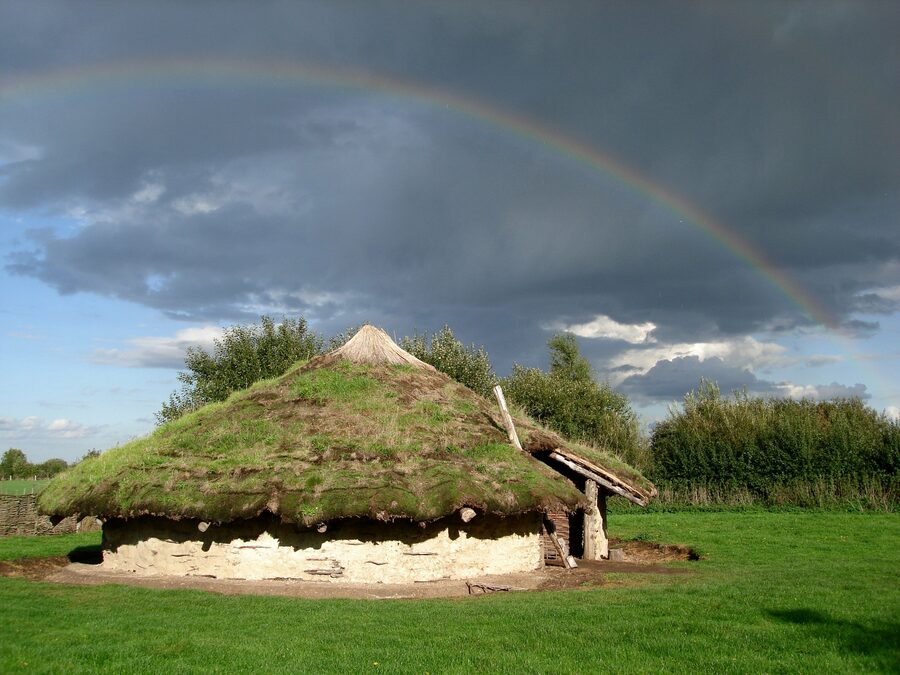
The museum adds another layer. One of the earliest wooden wheels found in Britain is displayed here, alongside objects that turn Bronze Age life back into something domestic rather than remote. Since late 2025, rare Bronze and Iron Age log boats excavated at nearby Must Farm have also been on public display at Flag Fen for the first time.
From 23 September, Fen to Fire brings Must Farm even closer. The temporary digital installation reconstructs the extraordinary Late Bronze Age settlement near Whittlesey that was destroyed by fire and preserved beneath river silt almost 3,000 years ago. It runs at Flag Fen until 18 October, which makes this an unusually good moment to visit. There is another reason.
The Water Is Leaving
The thing that makes Flag Fen exceptional is also what makes it vulnerable. Its archaeology survived because it remained wet. Once buried organic material dries out and is exposed to oxygen, the processes that had effectively been suspended begin again.
You can see what that means a few miles south, at Holme Fen. A post installed there in 1851 had its top originally set level with the peat surface. More than four metres of peat have since been lost around it, drying out and wasting away once the land was drained. Flag Fen's timbers sit in the same kind of ground.
Flag Fen has known about the problem for years. Its 2025–35 research strategy describes a point at which parts of the monument are moving from preservation towards irreversible loss as Fen drainage and environmental change alter the conditions underground.
Then, on 14 September 2026, came something more urgent. Flag Fen announced that £700,000 of grant funding had been secured through the Countryside Stewardship Heritage Service, a partnership involving Defra and Historic England, for a major new excavation. According to the site, around 40 per cent of its buried archaeology is at serious risk of being lost within months.
The response is unusual. For decades, the obvious archaeological instinct at a site like this was to leave as much as possible safely underground. Excavation is destructive: once archaeology has been dug, it cannot be put back. But that logic changes when leaving something underground may destroy it anyway. The new project will excavate and record parts of Flag Fen while there is still something left to record.
Three and a half thousand years after Bronze Age communities responded to a landscape becoming wetter, archaeologists are now responding to the consequences of it becoming drier. The drainage ditch where that first piece of timber turned up in 1982 belongs to the same story that now threatens the rest.
Why It Earns Its Place
Flag Fen doesn't look monumental in the conventional sense. There is no stone circle rising from the horizon, no enormous earthwork and no ruined temple. Much of the thing that matters is invisible, still sitting beneath flat Fenland ground. That is precisely why it works.
People cut and sharpened thousands upon thousands of pieces of timber, carried them into an increasingly wet landscape and constructed something that extended for more than a kilometre. They returned to it, repaired it and placed valuable objects around it. Then the landscape swallowed it, and the water did the rest.
For roughly 3,500 years it preserved something that should have disappeared. We happen to be visiting at the point when that preservation can no longer be taken for granted.
The Lifestyle Edit Scorecard
- History
- 9.7 / 10
- Interpretation
- 9.1 / 10
- Setting
- 8.7 / 10
- Experience
- 9.0 / 10
Who it's for
- Anyone interested in archaeology, prehistory or landscapes that don't immediately reveal why they matter. It is particularly good for people who find prehistoric sites frustrating because so much has to be imagined. At Flag Fen, some of the material itself survived. Go into the Preservation Hall, look at the timber, and remember that somebody cut it with an axe three and a half thousand years ago.
Questions
- How old is Flag Fen?
- The monumental timber causeway and platform were constructed around 3,500 years ago during the Bronze Age, with the structure developed and maintained over a long period.
- How was Flag Fen discovered?
- On a foggy morning in November 1982, archaeologist Francis Pryor was walking along the Mustdyke drainage ditch when he encountered a piece of worked timber. Within three weeks, around 500 pieces had been identified.
- Can you actually see the ancient wood at Flag Fen?
- Yes. A section of the original causeway remains exposed in situ inside the Preservation Hall, where a spray system keeps the timbers wet. Much more of the monument remains buried underground.
- How big was the Flag Fen causeway?
- Current Flag Fen research describes a post alignment at least 1.1 kilometres long and around ten metres wide, comprising at least five parallel rows and an estimated 22,000 sharpened posts or piles. It led towards a substantial timber platform.
- Why has the wood survived for thousands of years?
- The waterlogged Fen environment restricted oxygen and slowed the organisms that normally break down organic material. Those conditions preserved wood and other organic remains that would usually disappear from an archaeological site.
- Is Flag Fen being excavated again?
- Yes. On 14 September 2026, £700,000 of funding was announced for a major new excavation and research project. Flag Fen says around 40 per cent of its buried archaeology is currently at serious risk of being lost within months.
- What is the Fen to Fire exhibition?
- Fen to Fire is a temporary immersive digital reconstruction of nearby Must Farm, the Late Bronze Age settlement destroyed by fire and exceptionally preserved beneath silt. It is at Flag Fen from 23 September to 18 October 2026 and is free to view in the Visitor Centre.