Experience
Moreton Show — Where the Heavy Horses Still Matter
Twenty thousand people, three hundred and fifty exhibitors, one day, and a line-up where the headline acts are Shires.
By James B. Stoney, Editor · 12 September 2026

The odd thing about Moreton Show, standing in the middle of it, is how much it feels like a festival.
There's a main arena and a series of smaller rings running simultaneously, each with its own schedule. There are crowds moving between them, timings to plan around, food and drink at the edges, a sense of a day that has to be navigated rather than simply attended.
What's different is the billing. The talent is livestock.
A Different Starting Point
Moreton Show was formed in March 1949, from the merger of three organisations: the Cotswold Agricultural Society, the Moreton Shire Horse Society and the Moreton-in-Marsh & District Agricultural Society.
Their stated purpose was specific. The new society existed to improve the breeding and rearing of livestock, hunters and heavy horses, and to raise the standard of farming and farm crafts in the district. Those objectives, the society says, still stand.
The first show was held on Saturday 3 September 1949, on the Batsford Estate. The first Saturday in September has remained Moreton's traditional place in the agricultural calendar, on the same estate where it began. The 2026 show took place on Saturday 5 September.
The Scale of It
Moreton describes a show spread across roughly 165 acres, attracting more than 20,000 visitors and 350-plus exhibitors in a single day.
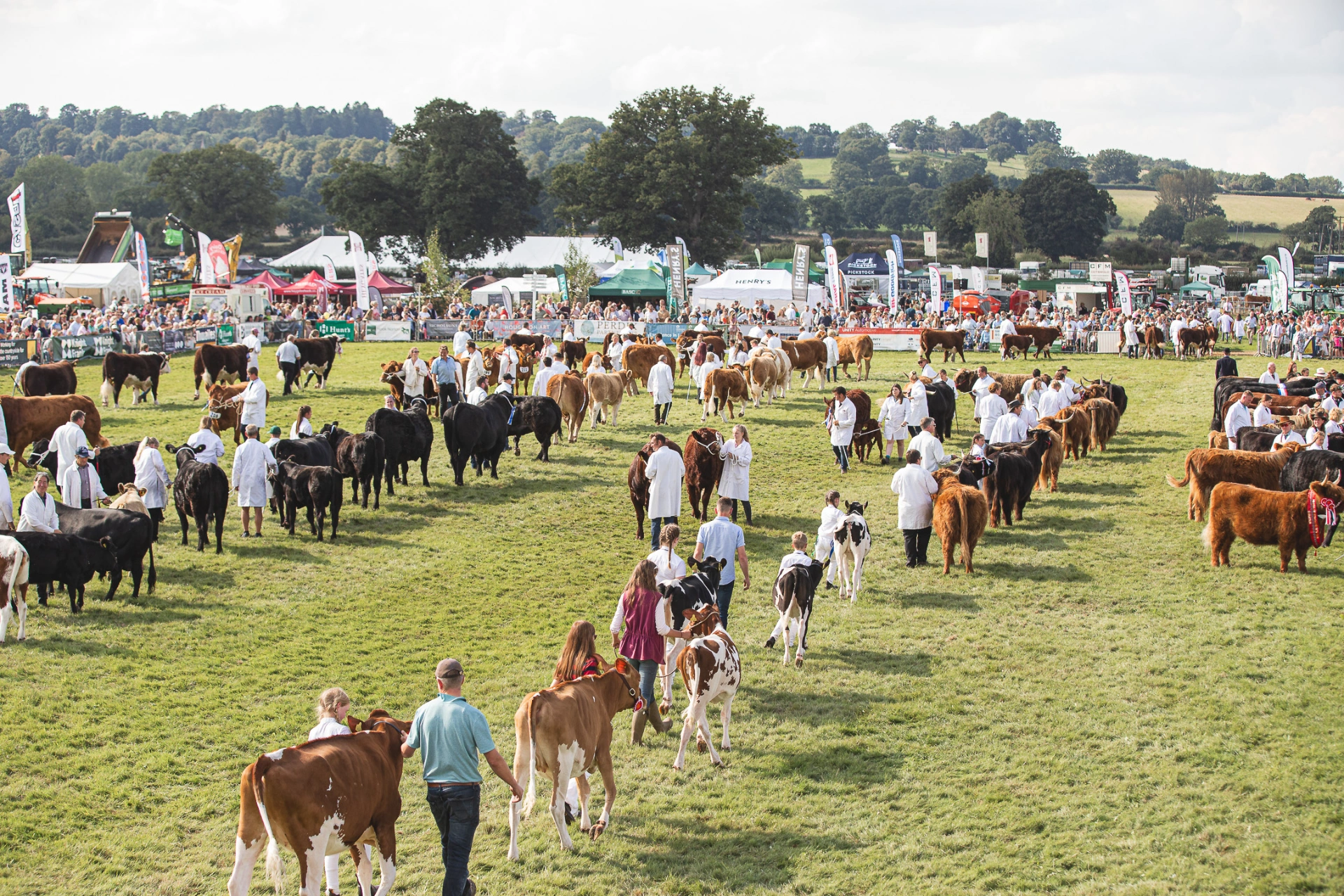
That puts it among Britain's largest one-day agricultural shows, and the one-day part matters. Most events of this scale give themselves a weekend or longer. Moreton compresses the whole thing into a Saturday.
Jeremy Clarkson, writing in The Sunday Times Magazine in 2022, called it possibly "the greatest show on earth." Given his own farming operation a few miles away, that carried rather more local relevance than the usual celebrity endorsement.
But the scale is only part of what makes Moreton interesting. Twenty thousand people attending an event is unremarkable. Twenty thousand people attending an event where cattle judging is part of the entertainment is something else.
The Heavy Horses
One of Moreton's three founding organisations was the Moreton Shire Horse Society. Improving heavy-horse breeding was written into the Show's purpose from the beginning.
Today the heavy-horse programme brings together Shires, Clydesdales, Suffolk Punches and Percherons. Moreton's own description of them is the one worth remembering: the "tractors of days gone by."
For generations, horses supplied much of the power of British agriculture. They ploughed fields, hauled produce and moved loads before mechanisation progressively removed the economic need for them. Within a few generations, animals that had been agricultural assets became breeds requiring active conservation. The Suffolk Punch is an especially stark example, now classed among Britain's rarest native livestock breeds.
A society founded in 1949 partly to improve heavy-horse breeding therefore finds itself doing something subtly different 77 years later. The horses are still bred, shown and judged, but maintaining viable populations now matters alongside improving them. The objective hasn't entirely changed. The world around it has.
Seeing the four breeds together is genuinely striking, and not only because of their size. There is something strange about watching animals bred over centuries to work alongside people being presented in a ring before a crowd that overwhelmingly arrived under mechanical power.
The tractors won. The horses still draw the crowd.
The Rest of the Day
Moreton is much more than its heavy horses.
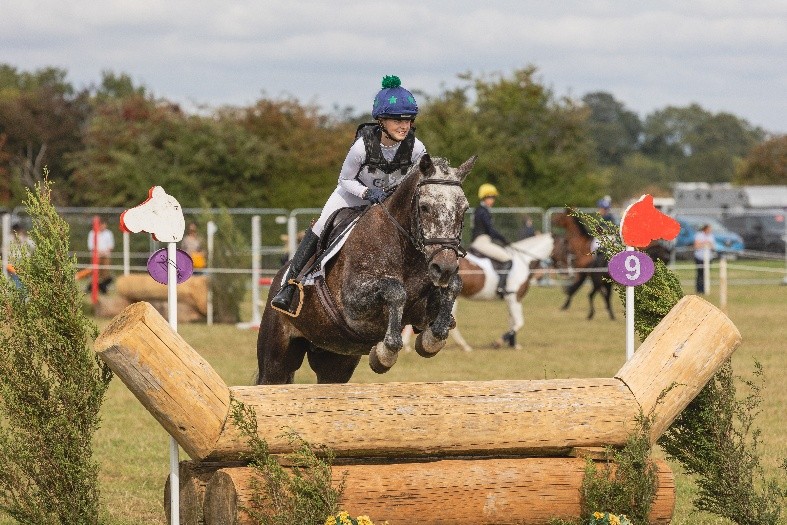
Cattle, sheep and other livestock move through their own classes while horses and ponies compete elsewhere. Showjumping runs alongside displays and demonstrations, with agricultural machinery, rural businesses, food producers and crafts filling the ground between the rings.
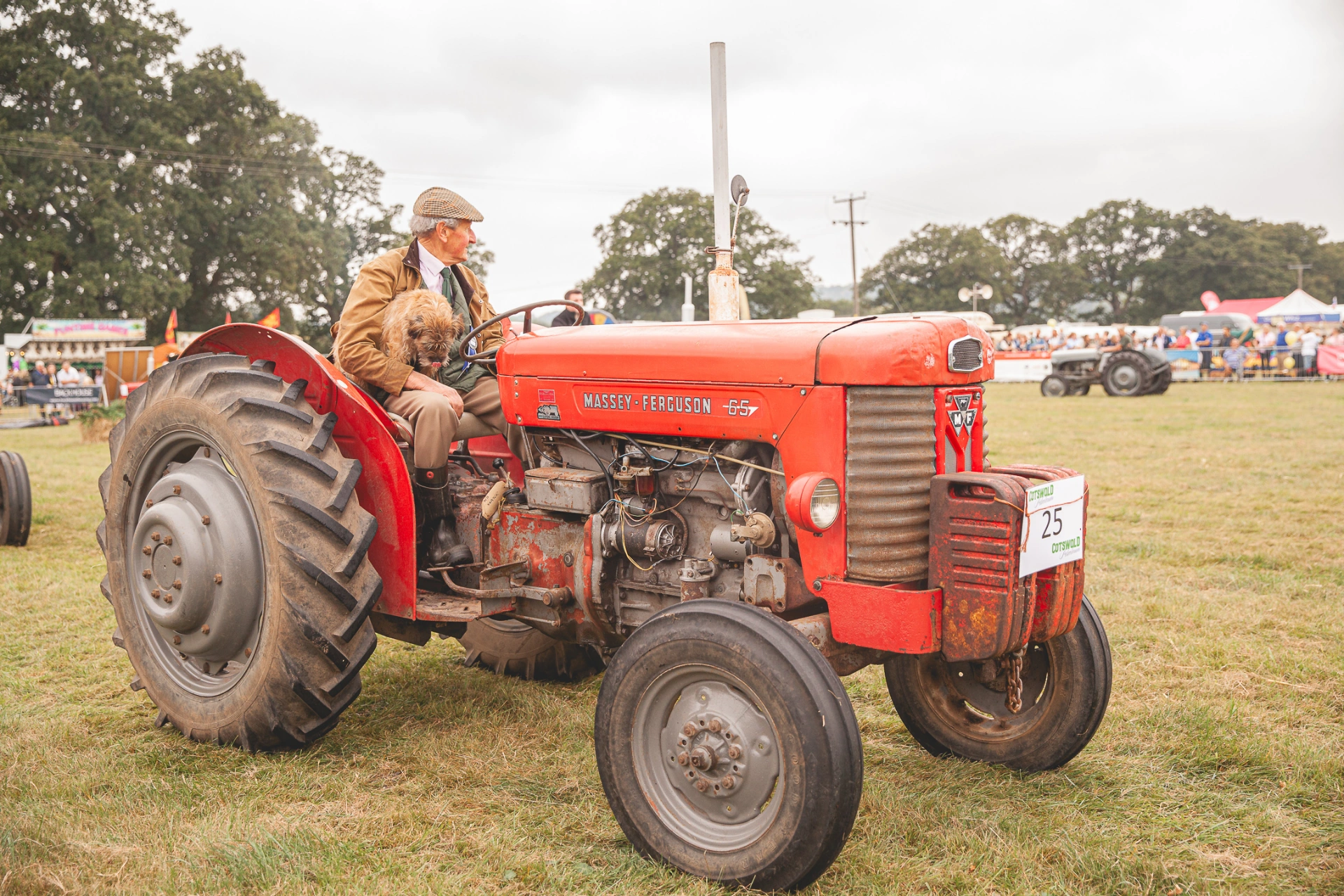
That is where the festival comparison becomes difficult to ignore. At a music festival, you check the programme to decide which stage to visit next. At Moreton, you find yourself doing much the same thing with livestock rings. Miss one class because you stayed too long somewhere else and the day carries on without you.
Then there are the quieter competitive sections: produce, baking, flowers, handicrafts and the other categories that agricultural shows have been judging for generations. They are worth seeking out. The main arena provides the spectacle, but these smaller competitions preserve something closer to the original purpose of the Show: people bringing what they have grown, bred, made or baked and allowing someone else to decide how good it is.
Not Just Show Day
There is another easy misconception about agricultural shows: that the farming is assembled for an audience once a year and disappears again when the gates close.
Moreton's agricultural competitions extend beyond the Saturday. Its Farms and Crops programme continues the connection with the farming community through the growing season, maintaining a line back to the original competitions that judged crops and agricultural practice when the Show began.
That matters because it stops Moreton becoming countryside theatre. The public sees the grand parade. The agriculture carries on when everyone has gone home.
Why It Earns Its Place
Because it shows you the working Cotswolds underneath the version most visitors encounter.
The North Cotswolds sell themselves on honey-coloured villages, hotels, restaurants and antique shops. Moreton Show is what the same landscape looks like when agriculture takes over the billing. For one Saturday, 165 acres become something closer to a festival than a conventional country show: multiple rings, thousands of spectators and a timetable sufficiently crowded that you have to decide what you're prepared to miss.
And the heavy horses are the thing you remember. Four breeds that went from supplying the power of agriculture to requiring active conservation within a remarkably short period of history, still being bred, prepared and judged by people who care a great deal about the differences between them.
The Show wasn't set up to preserve anything. It was set up to improve things. It's the world around it that turned it into preservation.
The rest of this edit stays on the same working ground — Dumbleton Hall, twenty minutes away, is a house that has served the postal community since 1959, and ROSI in Broadway built its kitchen on flour milled from British wheat. For another corner of rural England seen at work, Edit No.28 made the case for Botley Hill Farmhouse on the Surrey downs.
The Lifestyle Edit Scorecard
- Atmosphere
- 9.5 / 10
- Sense of Place
- 9.6 / 10
- Heritage
- 9.5 / 10
- Access
- 9.0 / 10
Who it's for
- Anyone who wants to see the working side of the Cotswolds rather than only the visitor-facing one.
- Families, given the sheer variety packed into a single day.
- Anyone interested in farming, rural crafts or traditional livestock breeds.
Questions
- When is Moreton Show?
- Moreton Show traditionally takes place on the first Saturday in September. The 2026 Show was held on Saturday 5 September.
- Where is Moreton Show held?
- On the Batsford Estate near Moreton-in-Marsh in Gloucestershire, where the first Moreton Show was held in 1949.
- How did Moreton Show start?
- It was formed in March 1949 from the merger of the Cotswold Agricultural Society, the Moreton Shire Horse Society and the Moreton-in-Marsh & District Agricultural Society. The first Show followed on 3 September 1949.
- How big is Moreton Show?
- The Show describes an event covering roughly 165 acres, attracting more than 20,000 visitors and 350-plus exhibitors, making it one of Britain's largest one-day agricultural shows.
- Which heavy horses are shown at Moreton?
- The heavy-horse programme includes the Shire, Clydesdale, Suffolk Punch and Percheron. Several traditional heavy-horse breeds now face significant conservation challenges.
- What else is there besides livestock?
- The programme extends across equestrian competition, agricultural machinery, rural demonstrations, food, crafts and competitive classes for produce, baking, flowers and handicrafts. The Society also runs Farms and Crops competitions beyond the main Show Day.