Living
Dumbleton Hall — A Cotswolds Country-House Hotel Restored From an Unusual Past
A Tudor Revival house below Bredon Hill, reopened in April 2026 as a 34-bedroom hotel after a two-year restoration. Its more unusual chapter came in 1959, when postal workers bought it as a living memorial to colleagues killed in two world wars.
By James B. Stoney, Editor · 10 September 2026
Most restored country house hotels have a story about who built them and who visited. Dumbleton Hall has a stranger one about who owned it, and why.
A Different Starting Point
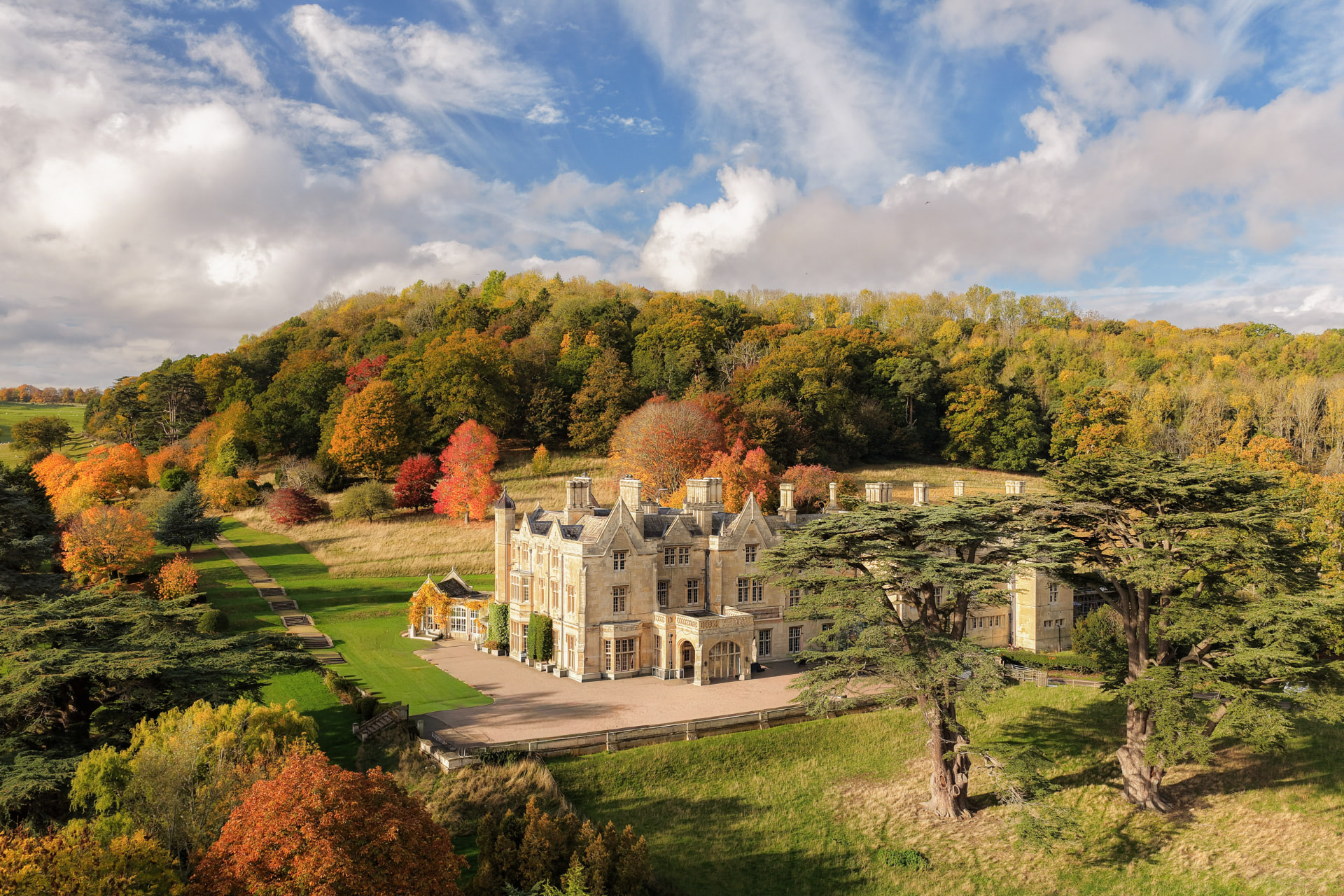
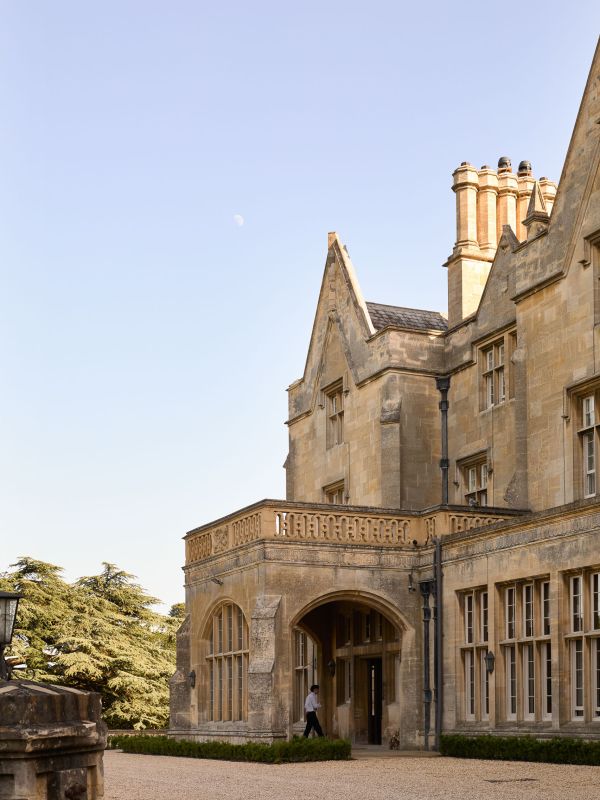
The present house was commissioned in the early 1830s for Edward Holland, an agriculturist and Member of Parliament who was involved in the foundation of what became the Royal Agricultural College at Cirencester. He turned to George Stanley Repton — youngest son of the landscape designer Humphry Repton — to create a Tudor Revival country house in golden stone looking out towards Bredon Hill.
It replaced something older. The Cocks family had held the estate for roughly two centuries, with an earlier manor house occupying the site before Holland's new house was built.
Dumbleton later passed to the Eyres family and, through marriage, the Eyres-Monsells. John Betjeman was among the visitors during this period and wrote several poems while staying at Dumbleton.
That is the sort of history most country house hotels would lead with. Dumbleton's more unusual chapter came afterwards.
Bought by the Post Office
In 1959, the house was purchased by the Post Office Fellowship of Remembrance, an organisation supported by donations from Post Office employees and established as a living memorial to colleagues who had died in the two world wars.
It's worth sitting with what that means. Postal workers across Britain contributed towards a country house, not simply as a monument to be looked at, but as somewhere fellow Post Office workers and their families could actually stay.
Dumbleton operated as a place for holidays, rest and convalescence for Post Office employees and their families. It remained associated with the Fellowship for decades before opening more widely to the general public in 1996.
A war memorial you could sleep in, supported by the people whose colleagues it commemorated. That's a different proposition from a plaque.
Sold, Then Restored
The Fellowship held Dumbleton for more than 60 years. In 2021, the house was sold — the first change of ownership in more than six decades — beginning another significant transition in its history.
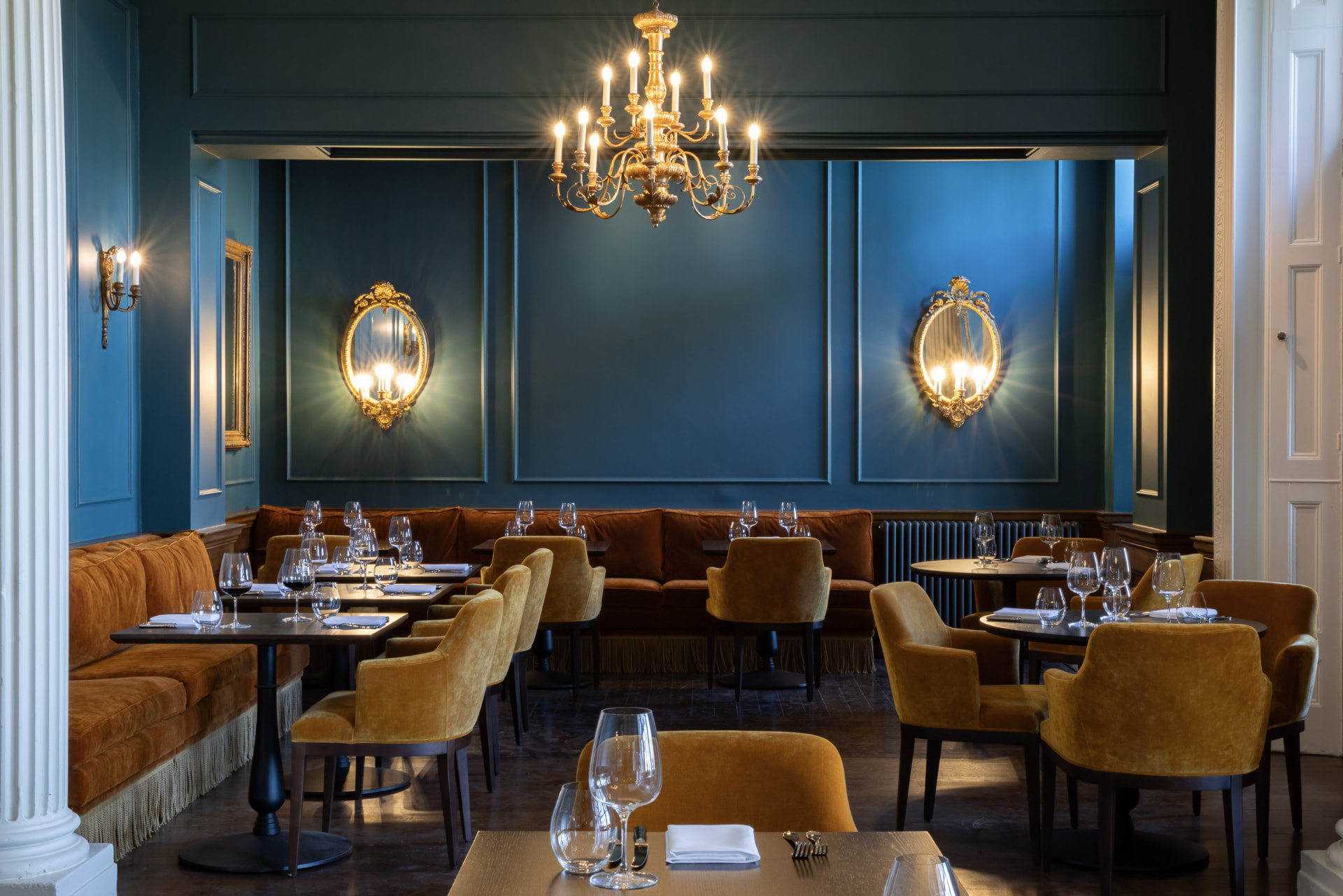
What followed was an extensive two-year restoration, reported to have cost around £25 million, before Dumbleton reopened on 2 April 2026. The hotel now has 34 bedrooms, alongside the restaurant Cedar 1905, bars and the restored public rooms of the house.
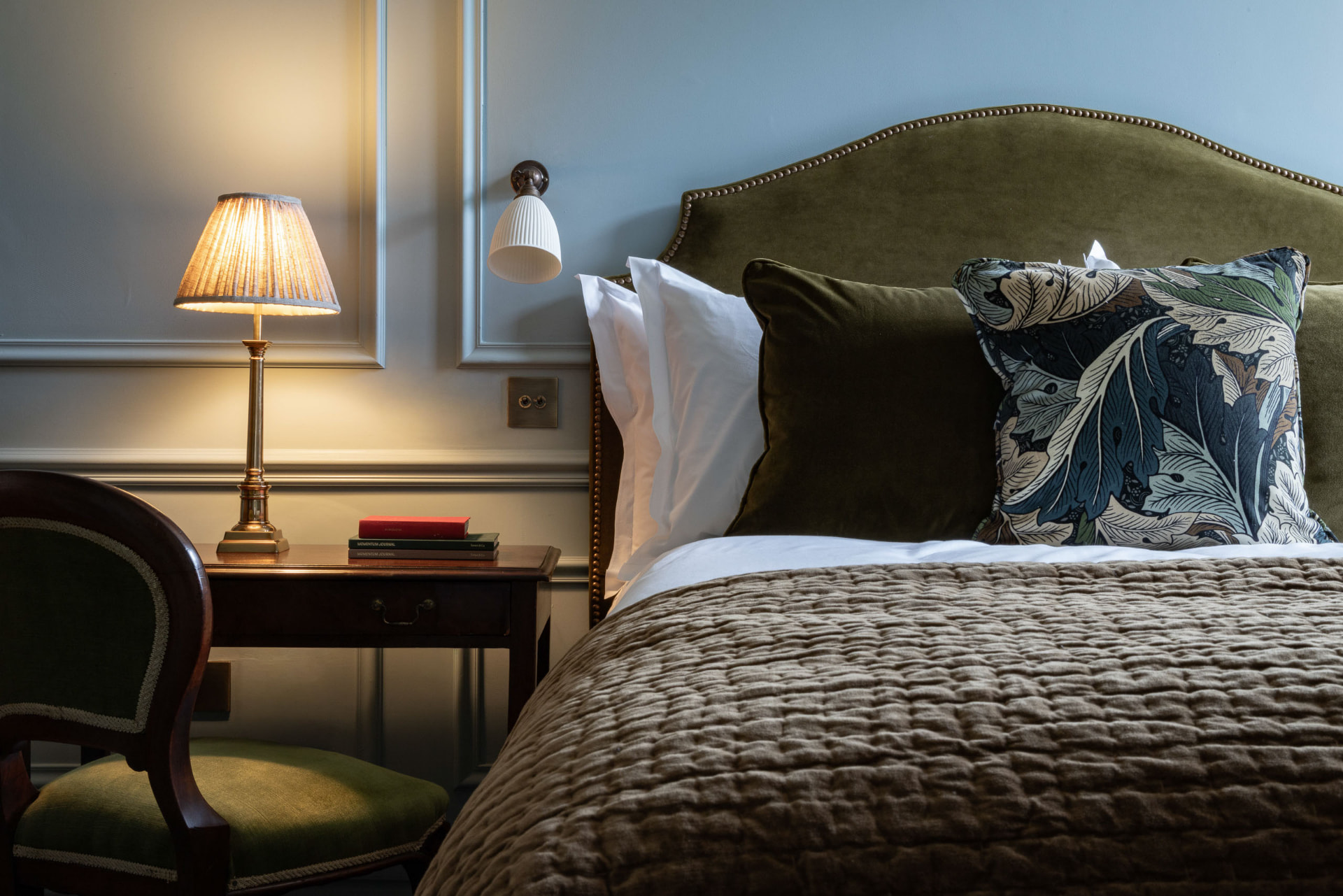
Dumbleton remains Grade II* listed, recognition of the architectural importance of the building and surviving historic fabric. The restoration has therefore had to work with a house whose character cannot simply be redesigned away. The Repton bones remain legible.
Where It Sits
Dumbleton lies below Bredon Hill, near Evesham on the Gloucestershire side of the Worcestershire border, surrounded by gardens, lake and parkland.
This is the quieter edge of the Cotswolds — closer in character to the Vale of Evesham than the heavily visited circuit around Broadway and Bourton-on-the-Water. Bredon Hill rises immediately beyond it, an outlier of the Cotswold escarpment crowned by an Iron Age hillfort and looking across the Severn Vale.
That location changes the feel of a stay here. Dumbleton has the architecture and landscape people come to the Cotswolds looking for without being positioned in the middle of its busiest villages.
Why It Earns Its Place
Because the Post Office chapter is the part nobody would invent.
A country house designed by a Repton for an agricultural reformer is a good story. A country house acquired more than a century later as a living memorial to postal workers killed in two world wars is a considerably more unusual one.
For decades, the building wasn't preserved by attempting to recreate the life for which it had originally been designed. It survived because an entirely different group of people found another purpose for it.
The house has now been restored again. The more interesting history is still there if you know to ask about it.
The same instinct for places that hold their shape runs through the rest of this edit — and through Edit No.28, from Botley Hill Farmhouse on the North Downs to the restored estate at Beaverbrook.
The Lifestyle Edit Scorecard
- Setting
- 9.3 / 10
- History
- 9.6 / 10
- Restoration
- 9.2 / 10
- Character
- 9.3 / 10
Who it's for
- Travellers who want a country house hotel with a genuinely unusual history rather than a generic one.
- Walkers interested in Bredon Hill and the quieter northern edge of the Cotswolds.
- Anyone who would rather explore the Vale of Evesham side of the region than stay entirely within the Broadway–Bourton circuit.
Questions
- Who built Dumbleton Hall?
- The present house was commissioned in the early 1830s for Edward Holland, an agriculturist and MP, and designed by George Stanley Repton, youngest son of the landscape designer Humphry Repton. It replaced an earlier manor house on an estate long associated with the Cocks family.
- What is the Post Office connection?
- In 1959, Dumbleton Hall was acquired by the Post Office Fellowship of Remembrance, an organisation supported by donations from Post Office employees and established as a living memorial to colleagues who died in the two world wars. The house provided holidays, rest and convalescence for Post Office workers and their families.
- When did Dumbleton Hall open to the general public?
- The hotel opened more widely to the general public in 1996, after decades primarily serving Post Office employees and their families.
- When did Dumbleton Hall reopen?
- Dumbleton Hall reopened on 2 April 2026 following an extensive two-year restoration. The project has been reported at around £25 million.
- How many rooms does Dumbleton Hall have?
- The restored hotel has 34 bedrooms.
- Where is Dumbleton Hall?
- Dumbleton Hall is near Evesham in Gloucestershire, beneath Bredon Hill on the northern edge of the Cotswolds.
- Is Dumbleton Hall listed?
- Yes. Dumbleton Hall is Grade II* listed.