
Product
Hart Silversmiths — The Guild That Never Quite Disappeared
An Arts and Crafts experiment brought 150 Londoners to a Cotswold town in 1902. It failed within six years. One silversmith stayed, and his family is still working on the first floor of the same building.
By James B. Stoney, Editor · 13 September 2026
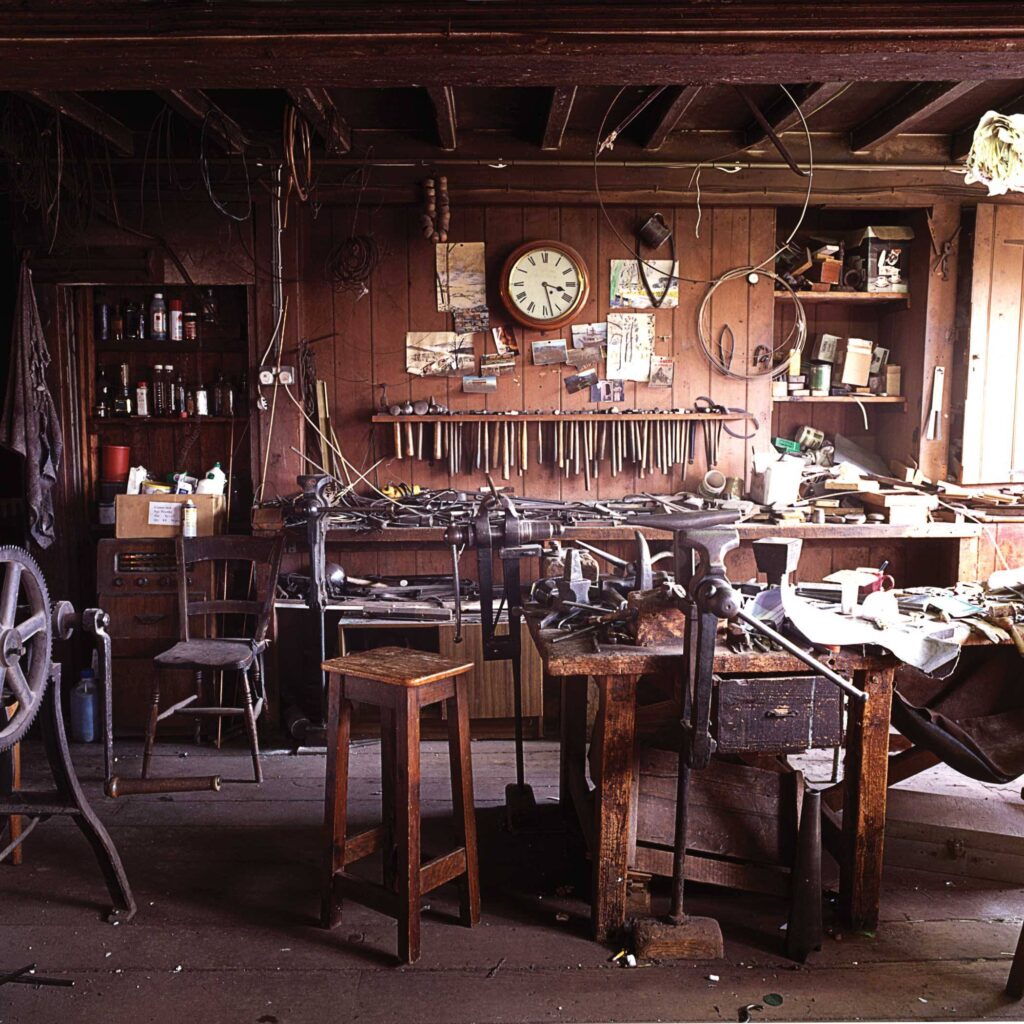
Chipping Campden is one of the most visited towns in the Cotswolds, and most of what people come for is the High Street. Up a staircase in the Old Silk Mill on Sheep Street, four men are raising silver by hand, in the workshop where the Campden chapter started.
A Different Starting Point
C. R. Ashbee founded the Guild of Handicraft in London's East End in 1888. It was built on medieval guild ideals, and its social purpose was explicit: employing young men from one of the poorest districts in London, most with no formal training in art or craft.
Ashbee was not a marginal figure. By 1900 he had an international reputation, and was the only British designer besides Charles Rennie Mackintosh invited to exhibit at the Vienna Secession. He translated Benvenuto Cellini's treatise on goldsmithing into English so that his own silversmiths could read it.
In 1902, he moved the entire operation out of London. Around 150 men, women and children relocated to Chipping Campden, into the Old Silk Mill on Sheep Street.
The Building They Moved Into
The Old Silk Mill is Grade II* listed and first appears in a trade directory of 1780 as "the recently erected mill in Campden which gives employment to great numbers of the poor in the town."

It was a silk throwing mill — spinning thread rather than weaving cloth. By the time Ashbee arrived it had stood empty for roughly fifty years.
There's a symmetry in that which is easy to miss. The building's first documented purpose was employing the poor of Campden. Ashbee brought it back into use for a scheme with much the same intention, applied to the poor of Whitechapel.
Six Years
The Guild of Handicraft was wound up in 1908.
Six years. A utopian experiment involving around 150 people, an internationally known designer, and a wholesale relocation from London to Gloucestershire, and it lasted six years.
George Hart, born in 1882, was one of the Guildsmen. He considered himself a countryman and was reportedly pleased by the move to the Cotswolds in the first place. When the Guild collapsed, he and three other partners carried on.
That decision is the entire reason there's anything to write about now.
Four Generations
The line runs George → Henry → David → William. Hart Gold & Silversmiths is still on the first floor of the Old Silk Mill, still raising silver by hand.

The current team is four: David, George's grandson; William, David's son; Julian, David's nephew and also fourth-generation; and Derek Elliott.
Elliott is the only one not a Hart by blood. He was recruited from Chipping Campden School in 1982, aged eighteen, while he was still sitting his A-levels — which is its own comment on how this kind of skill actually gets transmitted. Not through a course, but by someone spotting a school-leaver and putting tools in his hands. He trained as David's apprentice and became a Freeman of the Goldsmiths' Company in 1987.
William joined in 1990, the year his grandfather Henry died. He had trained in computer science first.
What Makes It Different
There is no shortage of Arts and Crafts heritage in this part of the Cotswolds. There are museums, collections, interpretation boards and gift shops.

Hart is not that. It is a working silversmiths, doing the specific thing the Guild of Handicraft was founded to do, in the building it moved into in 1902, by the direct descendants of a man who was there at the start.
The distinction matters. Preserved craft and continued craft look similar from outside and are entirely different in substance. One is a record of how something was done. The other is someone doing it, this morning, because there's an order to fill.
Why It Earns Its Place
Because almost everything about the Guild of Handicraft failed, and this didn't.
Ashbee's scheme was ambitious, idealistic and short-lived. What survived it wasn't the movement, or the philosophy, or the institution. It was one man who liked the countryside, stayed put, and kept working — and then his son, and his grandson, and his great-grandson.
Go up the stairs. It's still there.
The rest of this edit keeps the same working theme — Moreton Show puts the agricultural Cotswolds on parade on the Batsford Estate, ROSI in Broadway built its kitchen on flour milled from British wheat, and Dumbleton Hall below Bredon Hill has served the postal community since 1959.
The Lifestyle Edit Scorecard
- Craft
- 9.7 / 10
- Continuity
- 9.8 / 10
- Setting
- 9.3 / 10
- Character
- 9.5 / 10
Who it's for
- Anyone interested in the Arts and Crafts movement who would rather see it practised than displayed.
- Visitors to Chipping Campden looking for something beyond the High Street.
- Anyone commissioning or buying silver who wants to know exactly whose hands made it.
Questions
- What is the Guild of Handicraft?
- An Arts and Crafts guild founded by C. R. Ashbee in London's East End in 1888, based on medieval guild ideals and employing young men from one of the poorest areas of London. Ashbee relocated it to Chipping Campden in 1902, bringing around 150 men, women and children with him. The Guild was wound up in 1908.
- Who are the Harts?
- George Hart was one of the original Guildsmen who came from London in 1902 and stayed on after the Guild collapsed. Four generations of the family have worked as silversmiths since.
- Where are they based?
- On the first floor of the Old Silk Mill, Sheep Street, Chipping Campden — the same building the Guild of Handicraft moved into in 1902.
- What is the Old Silk Mill?
- A Grade II* listed building first recorded in a 1780 trade directory as a newly erected mill employing "great numbers of the poor in the town." It was a silk throwing mill, and had stood empty for around fifty years before Ashbee took it on.
- Who works there now?
- David Hart, George's grandson; his son William; his nephew Julian; and Derek Elliott, who joined in 1982 at eighteen, recruited from Chipping Campden School, and became a Freeman of the Goldsmiths' Company in 1987.
- Is it a museum?
- No. It is a working silversmiths' workshop, still producing hand-raised silver.


