Experience — Craft & History
Salina Santa Teresa — The Salt Marsh Brought Back to Life
For 25 years, Salina Santa Teresa produced no salt. Today the pans are working again, and the marsh around them with them.
By James B. Stoney, Editor · 1 September 2026
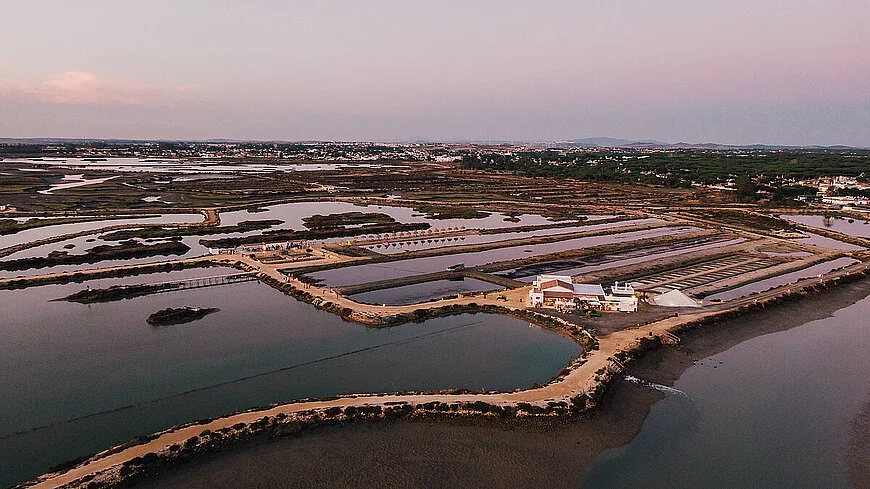
For 25 years, Salina Santa Teresa produced no salt.
The old salt pans outside Chiclana had been abandoned. Parts of the site were used as a dumping ground for building rubble, while a landscape that had once formed part of one of Cádiz's defining industries was gradually being lost.
Then, in 2021, local family company Rocaluisan acquired it and began bringing it back into use.
Today, salt is being produced again. Fish are raised in the esteros. The restored wetland supports birdlife. Visitors can walk the old salt channels with a guide, eat beside the marsh and, when available, experience the hypersaline water themselves.
On scheduled dates, there is also the despesque: the traditional manual harvest of fish from the esteros.
These aren't necessarily things you do on a single visit. That distinction matters. Salina Santa Teresa is a working landscape with different activities operating at different times, rather than an attraction assembled around a fixed visitor itinerary.
That is part of what makes it interesting.
When Cádiz Was Built on Salt
Salt pans once covered large parts of the Bay of Cádiz.
The geography was unusually well suited to them. Atlantic tides pushed seawater into the marshes, while the Andalusian sun provided the heat needed to evaporate it.
Over generations, people engineered that landscape into something more complicated.
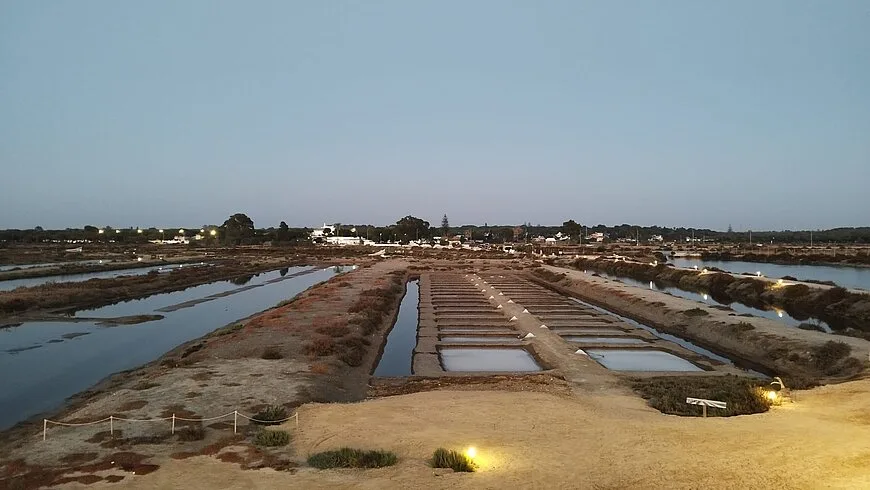
Water was directed through a labyrinth of channels and shallow ponds, moving gradually from one section of the salina to another. As evaporation increased its salinity, salt eventually crystallised for harvesting.
It was slow, physical work, performed by salineros who understood how water, tides, wind and temperature interacted.
At one point Cádiz had more than 140 salinas. By the middle of the 20th century, however, many had ceased to be economically viable. Traditional production declined and abandoned salt pans began to disappear or find other uses.
Santa Teresa was one of them.
Twenty-Five Years of Abandonment
The current project began in 2021, when Rocaluisan acquired Salina Santa Teresa after roughly a quarter of a century of abandonment.
Bringing it back meant more than clearing the site and producing salt again.
A working salina is also a managed wetland. Its channels and ponds provide habitats for fish, crustaceans, molluscs and birds, while the movement of seawater through the system helps maintain the marsh itself.
That relationship between human activity and ecology is one of the most interesting things about Santa Teresa. This isn't a landscape whose environmental value depends upon removing people from it. Traditional human intervention helped create and maintain the conditions in which much of its wildlife exists.
Restoring the industry therefore also means restoring part of the ecosystem around it.
Follow the Water
The most straightforward way to understand Santa Teresa is through one of its guided visits.
The route explains how seawater moves through the salina, becoming progressively warmer and more concentrated until salt can crystallise. What initially appears to be a flat expanse of water, mud and vegetation gradually reveals itself as a piece of working infrastructure.
Standard guided visits are currently advertised at €8 per person, with a minimum group of eight. That is worth knowing before making a special journey: a couple or solo traveller shouldn't assume they can simply arrive and join a tour.
Santa Teresa also offers specialist birdwatching experiences with ornithologist Francis Silva, reflecting the importance of the marsh as habitat as well as workplace.
The result is less like visiting a conventional attraction than being shown how to read a landscape — much as Maison des Paludiers does in the salt marshes of Guérande.
The Fish That Live in the Salt Pans
Salt isn't the only thing produced here.
The esteros — tidal ponds within the salina system — support fish that enter the marsh and grow in its waters. Their traditional harvest is known as the despesque.
Water levels are lowered and the fish are caught manually, a practice historically tied to the annual working cycle of the salinas.
Santa Teresa continues the tradition, but visitors need to understand what that means in practice. A despesque is a scheduled event, not a demonstration performed as part of every guided visit. Public events take place on selected dates, while private versions can also be arranged for groups.
If your reason for visiting is specifically to see one, check the programme before travelling.
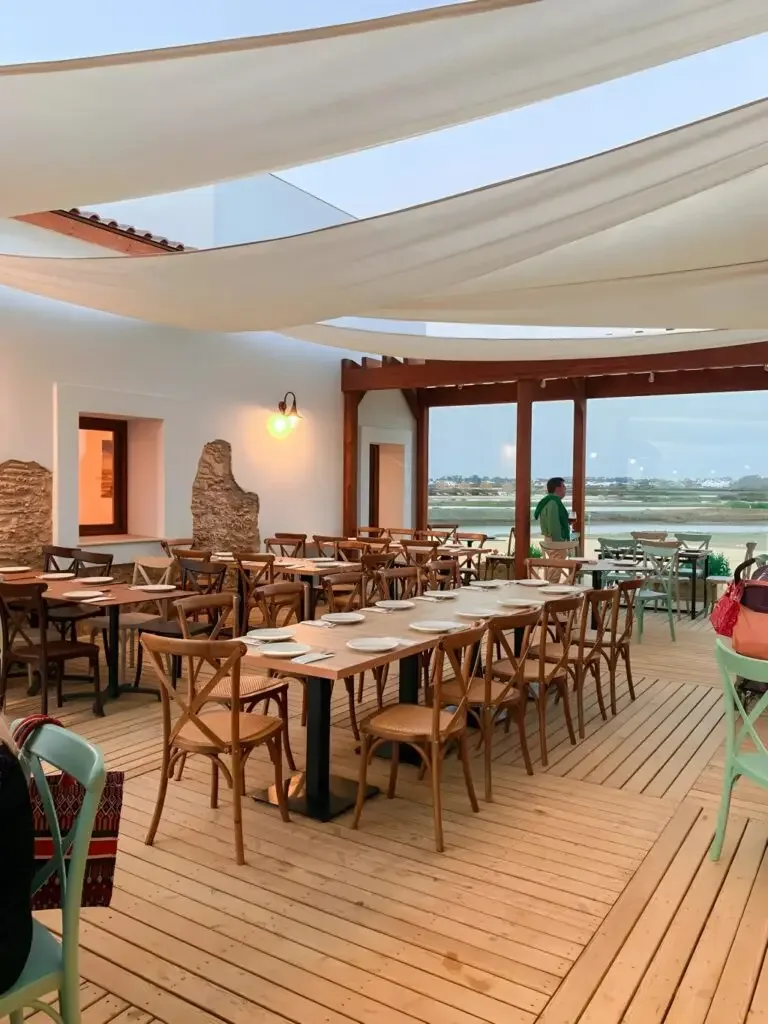
The gastronomic side of Santa Teresa grows naturally from the same landscape. Estero fish, seafood and other local produce connect what is served beside the marsh with the system visitors have just been learning about.
It is a particularly effective way of making an old industry comprehensible: the landscape isn't merely being explained to you; parts of it end up on the plate.
Getting Into the Water
Santa Teresa has also found a more contemporary use for its salt water.
Its thalassotherapy offering makes use of the hypersaline environment, with bathing experiences and treatments including massages overlooking the marsh. There is also a natural marsh beach, while kayak and paddleboard activities provide another way of exploring the setting.
It would be easy to make this sound like a rustic Andalusian spa resort.
It isn't.
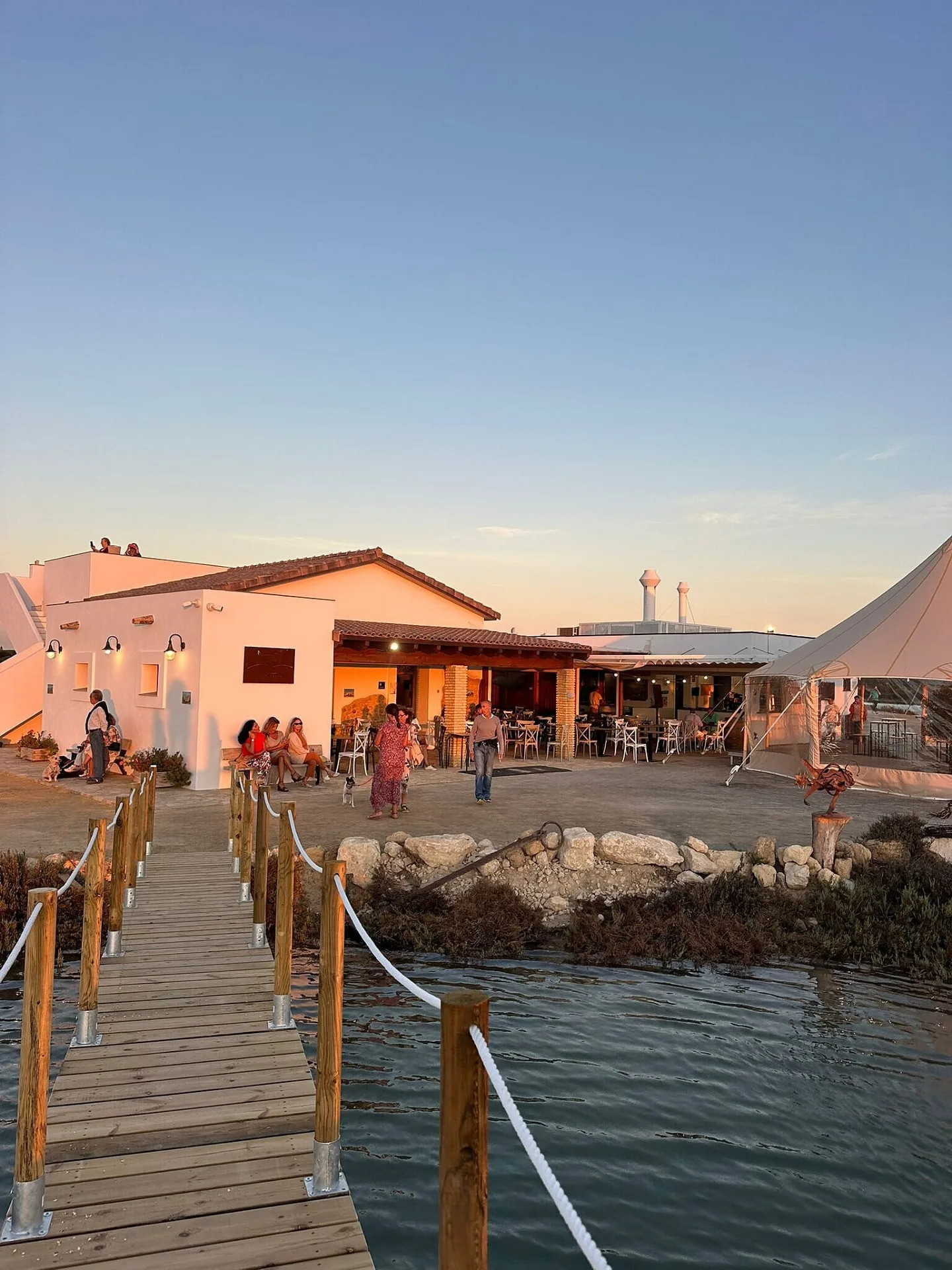
The facilities are connected to a working salt-marsh and eco-tourism operation rather than a polished luxury retreat. That is worth understanding before booking, particularly for anyone whose idea of thalassotherapy involves a five-star hotel, elaborate changing rooms and rows of immaculate loungers.
The appeal lies elsewhere.
The same water that structures the ecology and economics of the salina becomes part of the visitor experience. Thalassotherapy therefore feels less like an amenity imported to make the site more marketable and more like another contemporary use for the landscape.
Availability of bathing, treatments and other activities should be checked directly when planning a visit rather than assumed to accompany a standard tour.
Santa Teresa, Not Salinas de Chiclana
There is a practical distinction worth making.
Chiclana has more than one salt-marsh attraction, and they are easily confused online.
Salina Santa Teresa is the privately restored salina on the Carretera de la Barrosa operated by Rocaluisan. It is separate from Salinas de Chiclana and the Centro de Recursos Ambientales, another salt-related visitor operation elsewhere in Chiclana.
Both draw on the area's salinero heritage and offer experiences connected with salt, esteros and the marsh landscape.
They are not the same place.
When checking opening times, activities or making a reservation for Santa Teresa, make sure the information comes from Salina Santa Teresa itself.
Why It Earns Its Place
There are more polished experiences in Andalucía.
There are also easier ways to explain the history of Cádiz's salt industry. Old tools could be put into a museum, photographs of salineros hung on the walls and the process explained on interpretation boards.
Santa Teresa offers something different because the landscape has been put back to work.
Salt is being produced again. The esteros support fish. The marsh provides habitat for birds. The despesque continues on scheduled dates, while food, guided visits and thalassotherapy give the site additional economic uses that didn't exist in quite the same form when traditional salt production dominated the bay.
That evolution is important. Santa Teresa isn't an attempt to freeze a historic salina at some supposedly authentic moment in the past.
It is an attempt to find enough reasons for one to exist in the present.
The experience can be rustic, activities need planning and not everything happens every day. But those imperfections are easier to accept when the alternative was a salt marsh abandoned for 25 years and used partly as a dumping ground.
Heritage doesn't always survive by becoming a museum. Sometimes it needs to become useful again — a thread that runs through the rest of Edit No.29, Andalucía, From the Field Up, from Casa La Siesta outside Vejer to El Disparate in Seville.
Vitae Lifestyle Scorecard
- Sense of Place
- 9.4 / 10
- Originality
- 9.3 / 10
- Visitor Experience
- 8.6 / 10
- Story & Context
- 9.2 / 10
Who it's for
- Travellers interested in working landscapes, local food and the relationship between industry and ecology.
- Anyone looking beyond the beaches of the Costa de la Luz for something place-specific.
- Visitors who value an unusual experience more than polished hospitality — and who will check what is operating on the date they intend to visit, particularly if a despesque or thalassotherapy experience is the main reason for going.
Questions
- Where is Salina Santa Teresa?
- Salina Santa Teresa is on the Carretera de la Barrosa in Chiclana de la Frontera, Cádiz, within the salt-marsh landscape of the Bay of Cádiz.
- Is Salina Santa Teresa the same as Salinas de Chiclana?
- No. Salina Santa Teresa is the privately restored salina operated by Rocaluisan. Salinas de Chiclana and its Centro de Recursos Ambientales is a separate operation elsewhere in Chiclana.
- Is Salina Santa Teresa still a working salt pan?
- Yes. Salt-making activity has been restored after the site spent around 25 years abandoned. The project combines salt production with aquaculture, tourism, gastronomy and activities connected with the wetland environment.
- Can you visit Salina Santa Teresa?
- Yes. Guided visits explain salt production, the ecology of the marshes and the role salinas played in the local economy. The standard visit is currently advertised at €8 per person with a minimum group of eight, so smaller parties should check availability before travelling.
- What is a despesque?
- A despesque is the traditional harvest of fish from the esteros. Water levels are lowered and fish are caught manually. At Santa Teresa, public despesques take place on scheduled dates rather than being part of every visit, while private events can also be arranged for groups.
- Does Salina Santa Teresa have thalassotherapy?
- Yes. Santa Teresa offers experiences and treatments making use of its hypersaline environment. These are part of a working salt-marsh and eco-tourism site rather than a conventional luxury spa, and availability should be checked when booking.
- Can you eat at Salina Santa Teresa?
- Yes. The gastronomic offering is centred on the salina landscape and local produce, including seafood and fish associated with the estero system.
- Who restored Salina Santa Teresa?
- Family company Rocaluisan acquired the abandoned salina in 2021 with the aim of restoring salt production while developing aquaculture, tourism and other uses capable of supporting the site economically.