Experience — Craft & History
Torre Tavira — The City That Watched the Ships Come In
An 18th-century watchtower, a live optical projection and the clearest explanation of why Cádiz looks the way it does.
By James B. Stoney, Editor · 1 September 2026
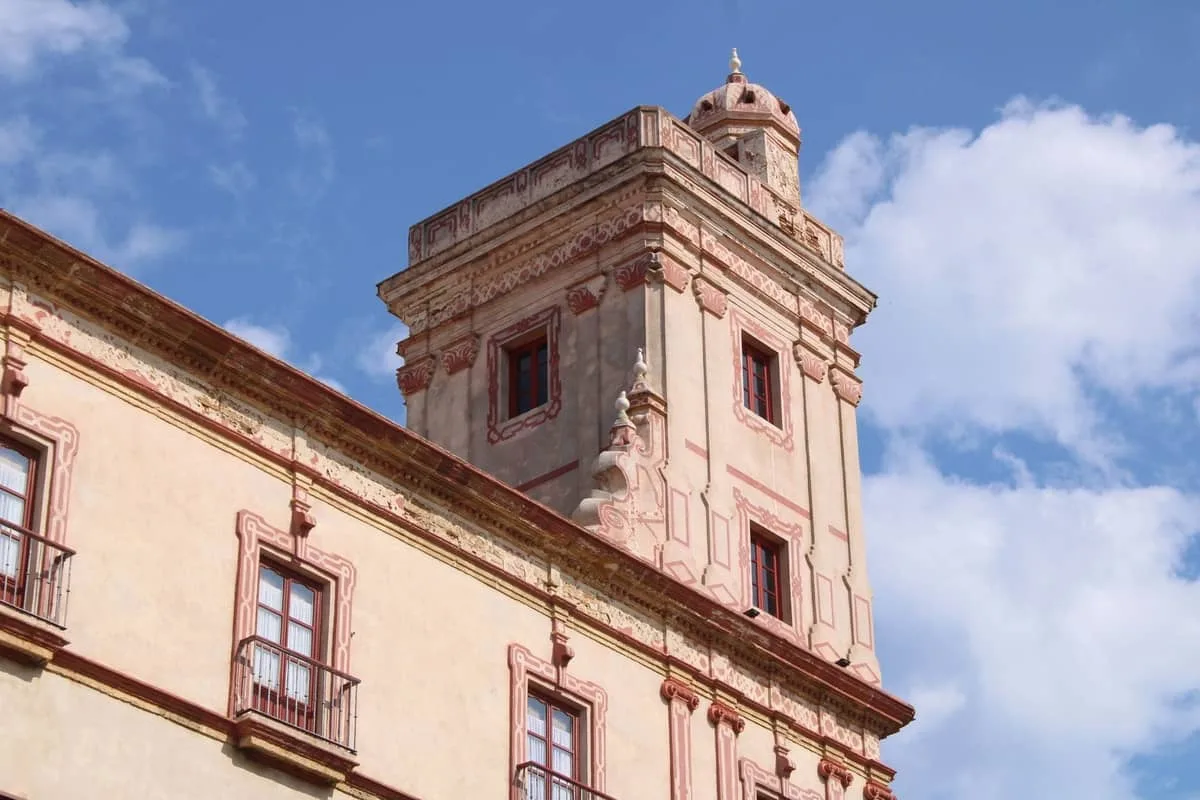
To understand Cádiz, it helps to get above it.
From street level, the old city can feel tightly packed: narrow streets, enclosed squares and tall façades compressed onto a peninsula surrounded by the Atlantic. From the top of Torre Tavira, the geography becomes obvious. The sea is everywhere. The rooftops spread beneath you, the cathedral rises above them and beyond the edge of the city is the water that made Cádiz rich.
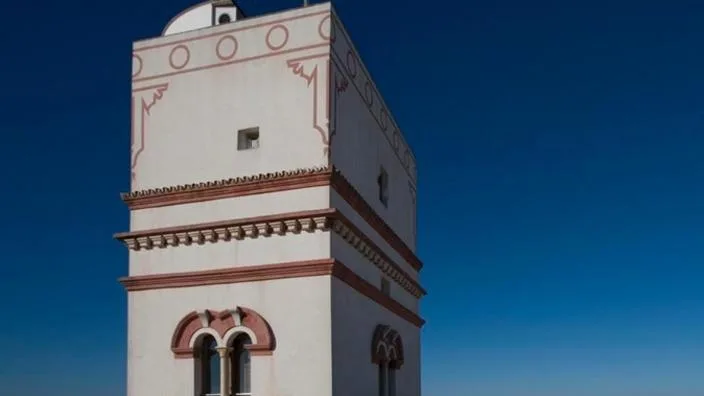
The tower was built in 1730 as part of the Palace of the Marqueses de Recaño. In 1778, because it occupied the highest point in the old town, it became the official watchtower of the Port of Cádiz.
Its purpose was to watch the ships.
A City Looking Out to Sea
Cádiz's watchtowers were not built primarily to admire the view. They were commercial infrastructure.
During the city's great period of Atlantic trade, merchants needed to know what was happening beyond the harbour. Ships arriving from across the Atlantic carried cargo, information and money. Being able to identify vessels approaching Cádiz had obvious commercial value.
Merchant houses therefore acquired towers. They became one of the peculiarities of the city's architecture: structures rising above private houses so their owners or watchmen could observe maritime traffic across the bay. They were useful, but they also became visible expressions of the prosperity generated by Cádiz's trade with the Americas.
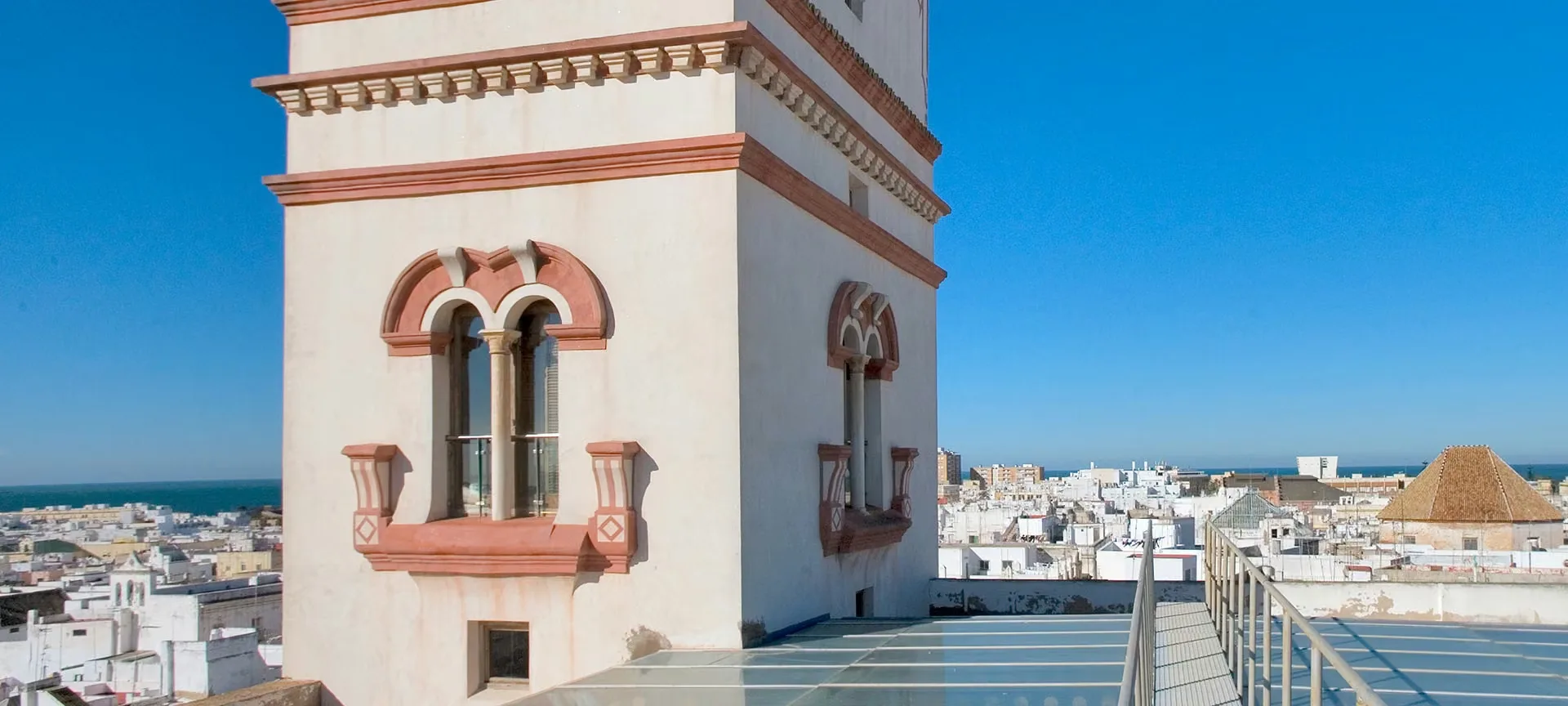
More than 130 watchtowers still punctuate the city's skyline. Torre Tavira became the most important because of where it stood.
At 45 metres above sea level, it occupied the highest point in the old city. In 1778 it was designated the port's official watchtower, providing a commanding view over Cádiz and the surrounding water.
Its first watchman was a retired frigate lieutenant called Antonio Tavira.
The tower still carries his name.
Waiting for the Ships
It is easy to treat the view from Torre Tavira as the attraction. Historically, the view was the job.
Antonio Tavira's role was connected to the security and commerce of a city whose fortunes depended heavily on what was happening at sea. Torre Tavira worked alongside other lookout points, with flag signals used to communicate important maritime movements.
That history changes what you see from the top. The Atlantic isn't simply scenery. From this height, the relationship between the city and the water becomes much easier to understand.
The palace underneath tells part of the same story. The Marqués de Recaño, who commissioned the building from the Schiaffino brothers, had participated in the Flota de Indias with his own cargo. The tower above his house was therefore directly connected to the commercial world that had helped create the wealth beneath it.
House, tower, port and ocean belonged to the same system.
The Palace Below
The Palace of the Marqueses de Recaño has lived several lives since the 18th century.
A free school of drawing, arithmetic and geometry moved into the building in 1787. In 1812, it became the initial headquarters of Spain's Supreme Court. It later housed the School of Noble Arts, a teacher-training school, a religious school and the Manuel de Falla Conservatory.
Today it houses the Casa del Carnaval de Cádiz.
There is an important practical distinction for visitors, however. Torre Tavira and the Casa del Carnaval are separate visitor experiences. The tower has its own entrance, reception, ticketing and timed visits at Calle Marqués del Real Tesoro 10. A ticket for Torre Tavira should not be treated as admission to explore the historic palace and Casa del Carnaval below.
The architectural relationship remains. The visitor operations are separate.
The watchman's role itself survived for remarkably long. According to Torre Tavira's own history, the position passed down through generations until 1994, when Giordano García became its final watchman.
That same year, the tower acquired a different way of looking at Cádiz.
A Camera Without a Photograph
The Camera Obscura sounds more complicated than it is.
An optical system of lenses and a mirror captures what is happening outside and projects a live, moving image onto a white concave screen inside a darkened room. It is the same principle as the camera obscura that preceded photography by centuries.
There is no recorded footage.
Buildings slide into view as the instrument rotates. Cars move through streets. People cross squares. Washing shifts on rooftops. Boats pass through the surrounding water.
A guide moves the image around the city while explaining the buildings, streets and history appearing on the screen. Each session lasts around 15 to 20 minutes.
The technology feels almost absurdly simple compared with the screens through which we now see most places. Yet that simplicity is precisely what makes it memorable. You are watching Cádiz happen outside, at that moment, through optics rather than a digital feed.
When Torre Tavira installed the Camera Obscura in 1994, it was the first of its kind in Spain.
And Cádiz is particularly suited to it. This was already a building designed around the value of looking.
Light Matters
There is a practical consequence to using such a simple optical system.
The Camera Obscura relies on the light available outside. The experience is therefore at its best when Cádiz is bright and visibility across the city is good. Cloud, haze and rain can affect the quality of the projected image, so weather matters more here than it would in a conventional indoor attraction.
That is worth bearing in mind when deciding when to visit, particularly because the Camera Obscura is the most distinctive part of the experience.
On a clear day, the combination works beautifully. The terrace gives you the scale of Cádiz; the Camera Obscura then pulls the city back towards you, turning distant rooftops and streets into a live moving picture.
The Climb
There is another practical consideration that shouldn't be hidden behind the view.
You have to climb the historic tower.
There is currently no visitor lift to the upper levels, so reaching the Camera Obscura and lookout requires a substantial climb by stairs. Torre Tavira itself refers to a project for the future installation of a lift, but visitors should plan on making the ascent on foot.
That matters for anyone with reduced mobility, difficulty climbing stairs, or families deciding whether the experience is suitable for everyone travelling with them.
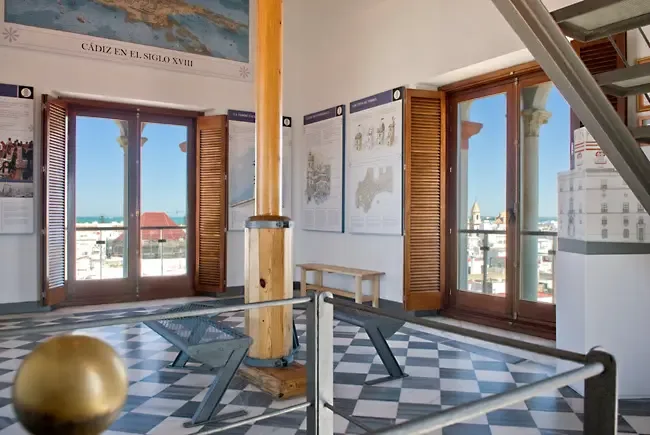
For those able to make the climb, the progression through the building is part of the visit. Two exhibition rooms introduce the Camera Obscura and the history of 18th-century Cádiz before the route reaches the upper levels and lookout.
The Practical Bit
Torre Tavira is at Calle Marqués del Real Tesoro 10, close to the Mercado Central and Plaza de las Flores in the heart of Cádiz's old town.
Advance booking is essential because the Camera Obscura operates in limited-capacity sessions — reserve directly through torretavira.com.
General admission is currently €8, with a reduced €6 ticket available to over-65s, students, large or single-parent families, groups of more than ten people and people with disabilities.
The complete visit takes approximately 45 minutes and includes two exhibition rooms, the lookout and the guided Camera Obscura session.
Current opening hours are 10am–8pm from May to September and 10am–6pm from October to April, with last admission one hour before closing. The tower closes on 25 December and 1 and 6 January.
Book the Camera Obscura session rather than treating Torre Tavira as somewhere to drop into casually, and bear both the stairs and the weather in mind when choosing when to go.
Why It Earns Its Place
Inside the darkened chamber, Cádiz appears on the concave screen in real time.
People cross its squares, traffic moves through its streets and boats pass through the water beyond them. It is a remarkably simple piece of optics, but from this particular tower it carries more weight than the novelty alone would suggest.
For generations, somebody came up here to look across the same rooftops towards the sea and work out what was approaching. The commercial intelligence has disappeared; the habit of observation has not.
Then the session ends, the projection disappears and you climb back down into the streets you were watching a few minutes earlier — streets that run on into the rest of Edit No.29, Andalucía, From the Field Up, from Palacio Villapanés in Seville to the restored pans at Salina Santa Teresa down the coast.
Vitae Lifestyle Scorecard
- Sense of Place
- 9.4 / 10
- Story & Context
- 9.4 / 10
- Experience
- 9.1 / 10
- Originality
- 9.3 / 10
Who it's for
- Anyone who wants to understand Cádiz rather than simply walk around it, and travellers interested in maritime history, architecture and cities shaped by trade.
- Families looking for a historical experience that can be completed in under an hour — the Camera Obscura is central to the appeal, so if you only want a panoramic photograph there are other viewpoints.
- Less suitable for anyone who struggles with a substantial stair climb. Weather is worth considering too: the live optical projection benefits from bright conditions and good visibility.
Questions
- What is Torre Tavira?
- Torre Tavira is an 18th-century watchtower in Cádiz, built as part of the Palace of the Marqueses de Recaño in 1730. It became the official watchtower of the Port of Cádiz in 1778.
- Why is it called Torre Tavira?
- It is named after Antonio Tavira, a retired frigate lieutenant who became its first watchman.
- Why did Cádiz have watchtowers?
- Merchant houses used towers to observe ships and maritime traffic entering the Bay of Cádiz. In a city whose economy was closely connected to Atlantic trade, information about arriving vessels had considerable commercial value.
- How high is Torre Tavira?
- The tower occupies the highest point in Cádiz's old town, around 45 metres above sea level.
- What is the Camera Obscura?
- It is an optical system using lenses and a mirror to project a live, moving image of the city onto a concave screen inside a darkened room. A guide rotates the view through 360 degrees while explaining Cádiz and its landmarks.
- Is the Camera Obscura showing recorded footage?
- No. The images are live. You are watching what is happening outside the tower at that moment.
- Does weather affect the Camera Obscura?
- The system relies on natural light, so the projection is best in bright conditions with good visibility. Poor weather can reduce the clarity of the image.
- Is there a lift at Torre Tavira?
- There is currently no visitor lift to the Camera Obscura and lookout, so visitors need to be comfortable making a substantial stair climb. Torre Tavira has published plans for a future lift installation.
- Is Torre Tavira the same attraction as Casa del Carnaval?
- No. Torre Tavira forms part of the historic Palace of the Marqueses de Recaño, which now houses the Casa del Carnaval, but the tower operates as a separate visitor attraction with its own entrance, booking and ticket.
- How long does Torre Tavira take to visit?
- The complete visit is approximately 45 minutes. Camera Obscura sessions themselves last around 15 to 20 minutes.
- How much does Torre Tavira cost?
- General admission is currently €8, with a reduced €6 rate for eligible visitors.
- Do you need to book Torre Tavira in advance?
- Yes. Advance booking is currently essential because capacity for the Camera Obscura sessions is limited.