Experience — Art & Landscape
Hannah Peschar Sculpture Garden — The Garden Built So Neither Wins
A political journalist and a landscape designer found a cottage advertised in a Sunday paper. More than forty years later, the garden they created still follows one rule: neither art nor nature gets to dominate.
By James B. Stoney, Editor · 22 August 2026
Most sculpture gardens are galleries that happen to be outdoors. The work comes first; the landscape provides the backdrop.
At the Hannah Peschar Sculpture Garden, neither is supposed to win. Hidden down a country lane near Ockley, the garden combines contemporary sculpture with ten acres of woodland, ponds and planting. Works aren't simply installed wherever there is room. Their relationship with what surrounds them is the point.
A Different Starting Point
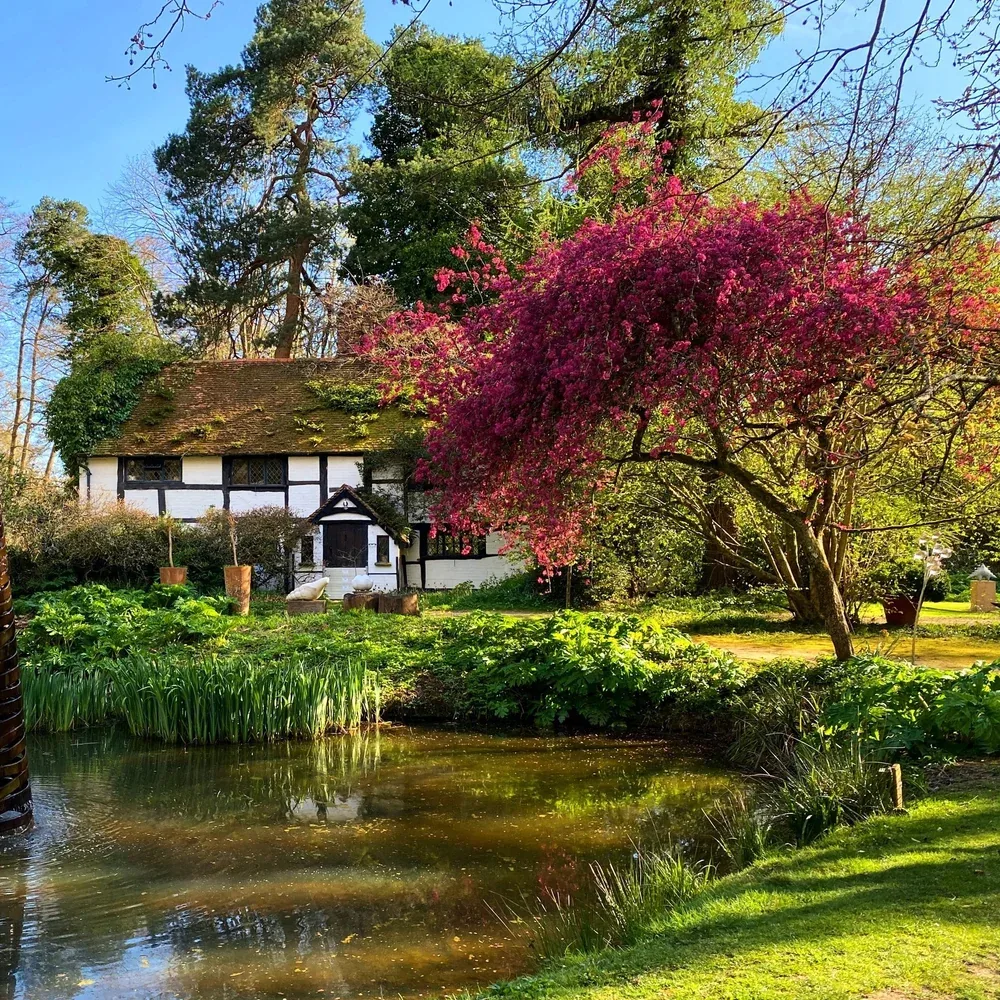
In the 1970s, Dutch-born former political journalist Hannah Peschar and her husband, landscape designer Anthony Paul, were living in London and looking for somewhere in the countryside. They found a centuries-old Grade II-listed cottage advertised in a Sunday newspaper.
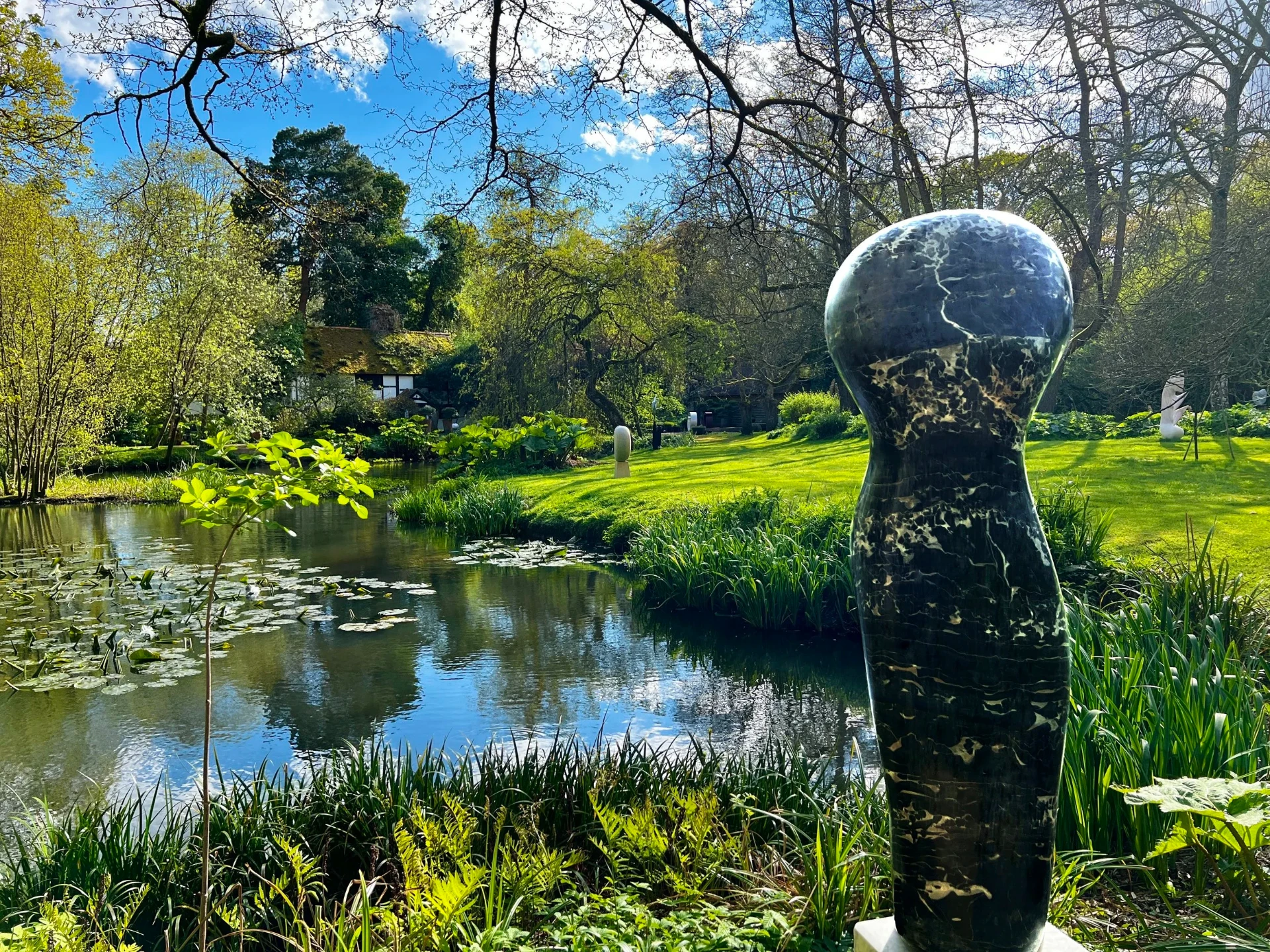
The grounds surrounding it had deteriorated, but Paul saw the opportunity to create a landscape of his own. Over time, ponds, woodland and bold architectural planting transformed the site into something considerably lusher and less formal than the traditional English garden. Peschar saw another possibility. In the early 1980s, she began exhibiting contemporary sculpture among the planting. What started relatively modestly developed into an annual exhibition that she would curate for more than three decades.
The Rule Underneath Everything
The guiding principle sounds simple: neither art nor nature should outshine the other. Achieving that is considerably harder.
A sculpture might be positioned because the leaves of a particular plant frame it. The colour of moss can alter how a surface appears. Bark might echo the texture of a work beside it, while a piece near water changes again through reflection. Even light becomes part of the curation.
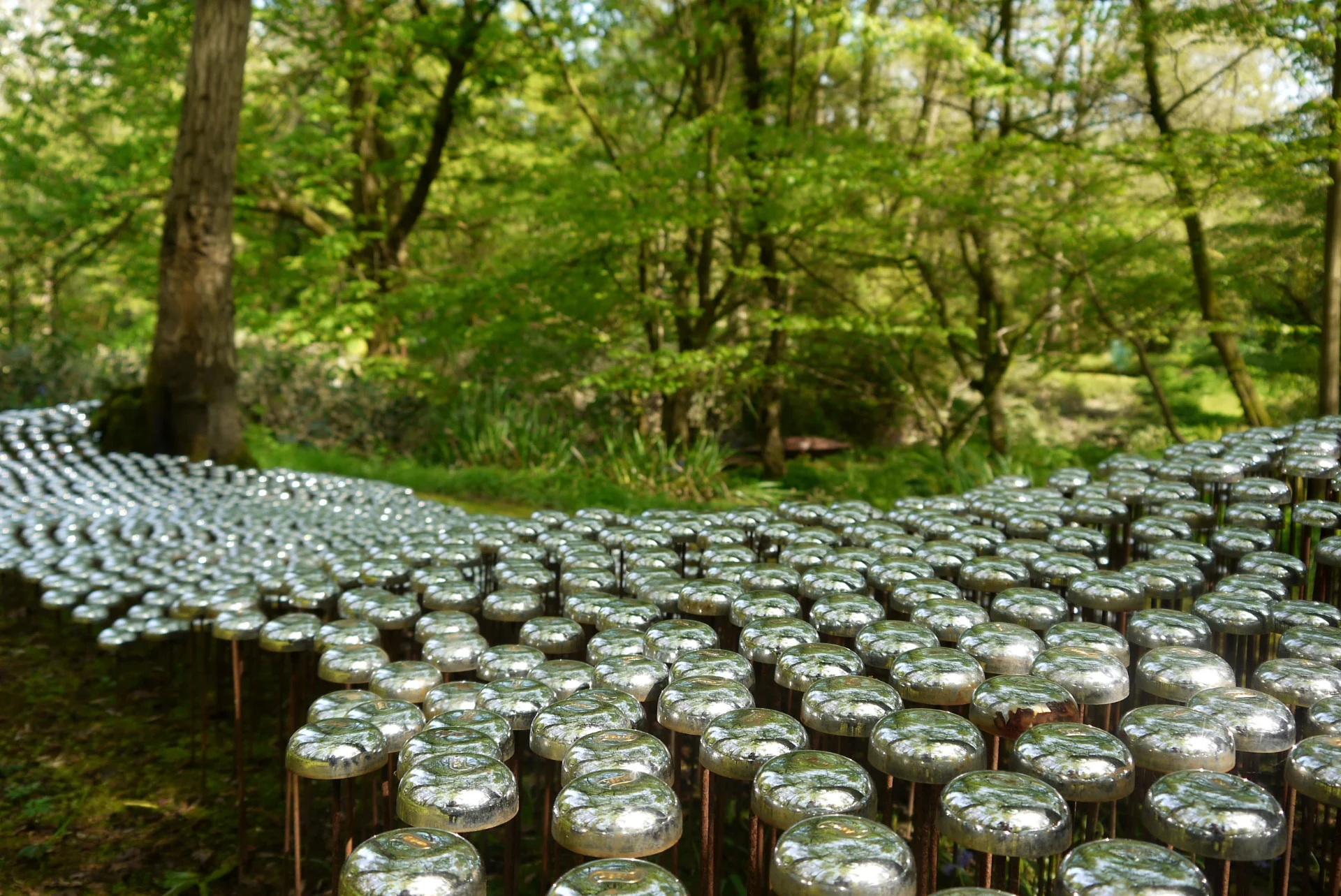
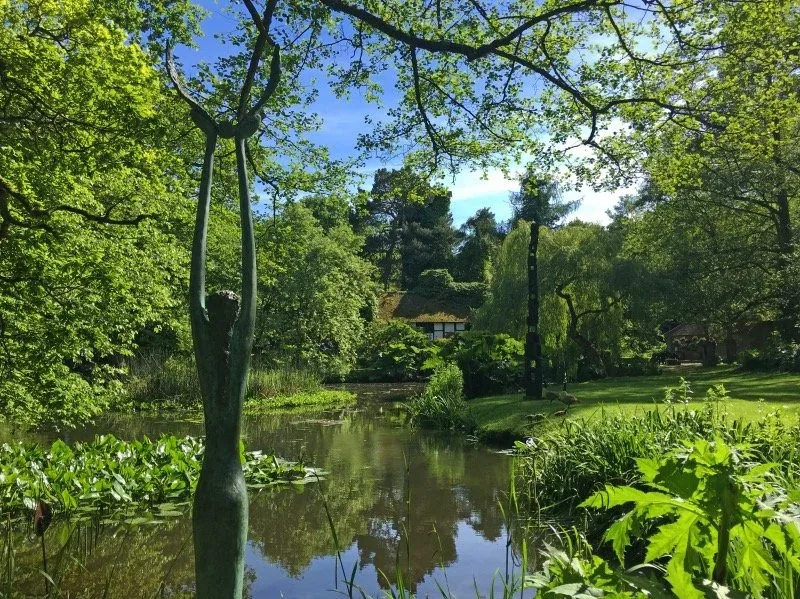
The result is deliberately different from putting sculpture on open lawns. Works emerge from foliage, appear across ponds or sit partially concealed beneath mature trees. Some announce themselves immediately. Others have to be found. That element of discovery is perhaps the garden's greatest strength — there's no white wall isolating an object and instructing you to look at it. The landscape gets in the way, deliberately.
A Garden That Changes
Today, the annual exhibition typically contains around 150 to 200 sculptures by more than 50 artists from Britain and elsewhere in Europe. The range is broad — stone, bronze and wood sit alongside ceramics, glass, wire, plastics and contemporary metals, with figurative pieces appearing among entirely abstract work.
And it changes. The exhibition is refreshed each year, meaning the landscape remains while the relationships within it shift — a space occupied by one work this summer may contain something completely different the next.
Peschar remained the garden's curator until retiring at the end of 2015, when Anthony Paul and Vikki Leedham took over the role. Hannah died in 2021. The garden continued. In 2022, Paul and Leedham added a purpose-built Indoor Gallery, extending the exhibition while retaining the outdoor garden as the centre of the experience.
Keep It Quiet
Part of what makes the garden work is scale. It isn't run like a major visitor attraction. Entry is pre-booked and daily numbers are deliberately restricted.
That matters when much of the experience depends on wandering. The paths move through dense planting and around water rather than directing everybody toward a succession of obvious highlights. A sculpture glimpsed through trees works rather less well if a queue has formed in front of it. The quiet isn't incidental. It's part of the curation.
Why It Earns Its Place
There's a good human story behind the Hannah Peschar Sculpture Garden — two people leaving London, finding a cottage through a newspaper advertisement, and gradually creating something neither appears to have originally set out to build. But the reason to visit is the idea they developed once they got there.
For more than four decades, the garden has resisted treating nature as decoration for art, or sculpture as decoration for a beautiful garden. Sometimes a piece dominates its surroundings. Sometimes the planting almost swallows it. The best moments are when you're not quite sure which one you're looking at first. Neither wins. That's exactly how Hannah Peschar intended it — and it is the same instinct that runs through the rest of Edit No.28, from Foxhills to Starling.
The Lifestyle Edit Scorecard
- Concept & curation
- 9.3 / 10
- Setting
- 9.2 / 10
- Discovery & atmosphere
- 9.1 / 10
- Originality
- 8.8 / 10
Who it's for
- Anyone who prefers discovering art to following a prescribed gallery route.
- Garden and landscape enthusiasts as much as contemporary-art followers.
- Visitors looking for something quieter and less obvious in the Surrey countryside.
- Those happy to plan ahead: entry is pre-booked and visitor numbers are limited.
Questions
- Who founded the Hannah Peschar Sculpture Garden?
- Hannah Peschar, a Dutch-born former political journalist, and her husband, landscape designer Anthony Paul. They found the cottage and grounds through a newspaper advertisement in the 1970s, with Peschar beginning to curate sculpture there in the early 1980s.
- Is Hannah Peschar still involved?
- No. Peschar retired from curating at the end of 2015 and died in 2021. Anthony Paul and curator Vikki Leedham continued the garden, opening an Indoor Gallery in 2022.
- How many sculptures are there?
- The annual exhibition typically features around 150 to 200 works by more than 50 artists from Britain and elsewhere in Europe.
- Does the exhibition change?
- Yes. The collection is refreshed annually, changing the relationship between the sculpture and the surrounding landscape from one season to the next.
- What makes it different from a conventional sculpture park?
- The central curatorial principle is that neither the art nor the natural environment should dominate. Individual works are positioned according to how they interact with planting, trees, water, texture and light.
- Do you need to book?
- Yes. Visits are pre-booked and numbers are deliberately limited.
- Where is it?
- The Hannah Peschar Sculpture Garden is at Black & White Cottage, Standon Lane, Ockley, Surrey.