Experience — Craft & History
Maison des Paludiers — Learning to Read the Salt Marshes
A 1.2-kilometre walk from an old salt-working village into the private marshes beyond it. Ninety minutes later, a landscape that initially looks almost empty begins to make sense.
By James B. Stoney, Editor · 15 August 2026
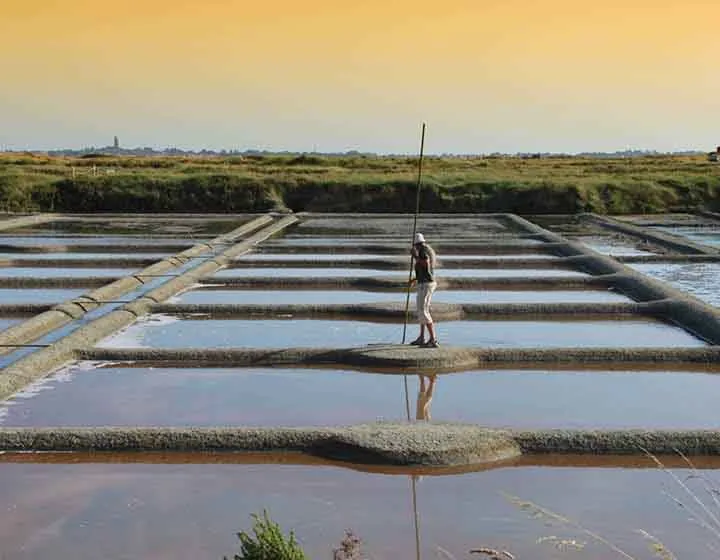
Guérande salt is famous well beyond this corner of the French Atlantic coast. The landscape that produces it is less easily understood.
From the road, the salt marshes appear as a vast patchwork of shallow water, narrow clay banks and irregular pools. Beautiful, certainly, but with little indication of what each part is actually doing.
Maison des Paludiers exists to explain it. Its guided walk begins in the village of Saillé before heading into the working salines, following the journey of seawater through a landscape organised entirely around the production of salt. The clever part is that by the end, you start to see it differently.
Start in Saillé
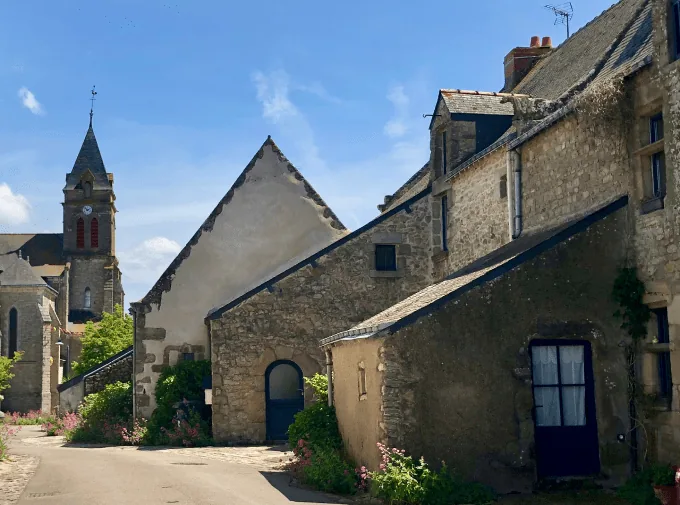
Saillé has been associated with salt for a very long time. The village appears in records from the 11th century as Saliacum, a name connected to its salt-producing role. Its later history remains visible in the 17th- and 18th-century houses associated with the families who worked the surrounding marshes.
There's even a royal footnote. Jean IV, Duke of Brittany, and Jeanne de Navarre, great-grandparents of Anne of Brittany, were married at Saillé in 1386.
The Maison des Paludiers has been interpreting this history and the work of the salt marshes for more than half a century. Since April 2025, it's been operated directly by the Ville de Guérande. But this isn't primarily a museum visit. The interesting part lies outside.
First, Understand the Water
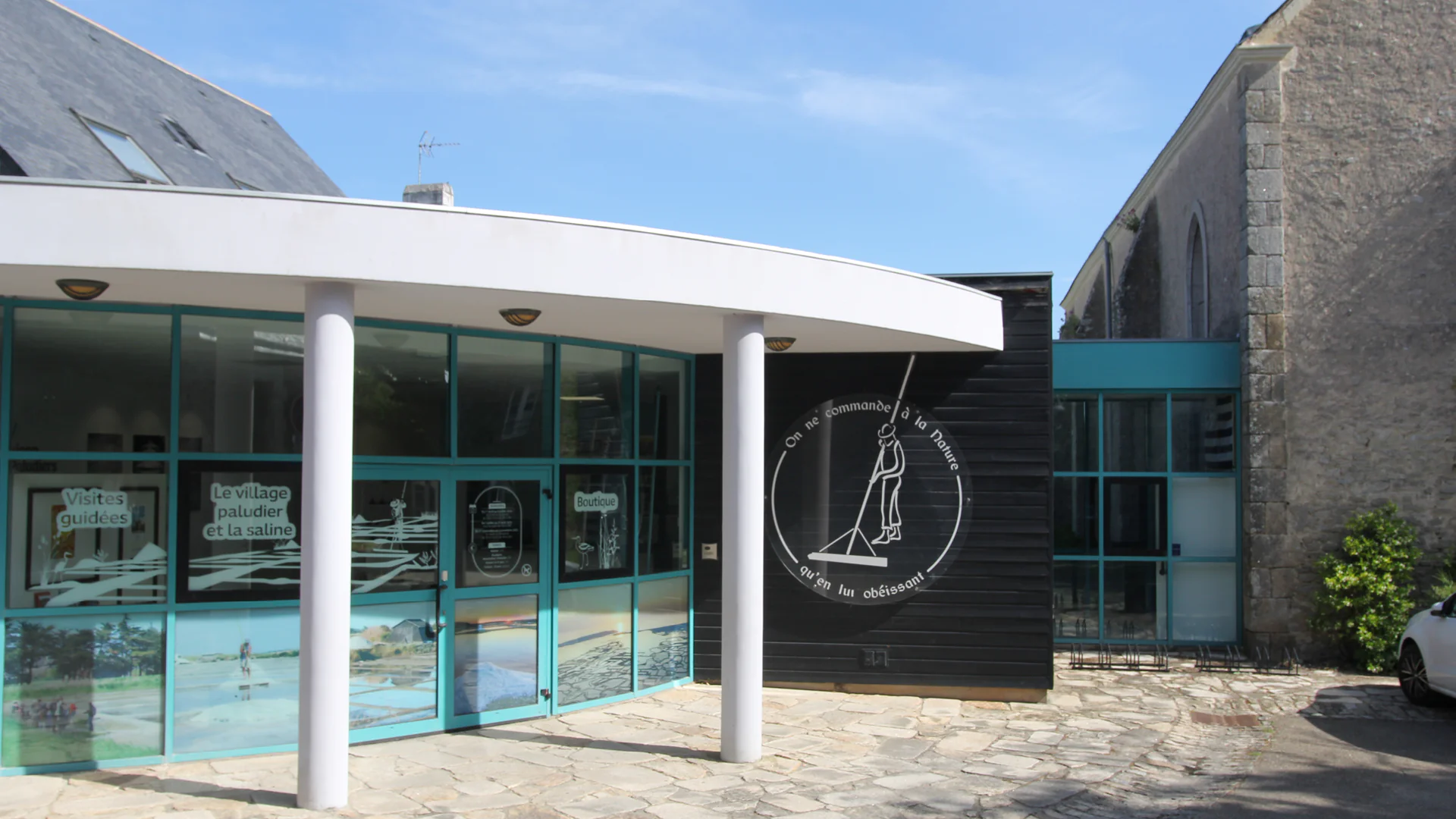
The 90-minute visit covers around 1.2 kilometres and begins indoors. A projection onto a three-dimensional model explains how the salt-marsh landscape formed and, more importantly, how water moves through it. That preparation turns out to be useful.
Once outside, the route passes through Saillé and toward the marshes, where the same system you've just seen in miniature begins appearing at full scale. The guide follows the movement of seawater from one basin to another, explaining how the paludiers manage the water until conditions allow salt to crystallise and eventually be harvested. What had looked like a collection of pools starts to reveal an underlying order.
Into the Salines
The most important distinction between this and simply driving through the Guérande marshes is access. The salines are private working land. They aren't somewhere visitors can wander independently.
When weather and conditions permit, the tour takes visitors alongside and into this working landscape with a guide. During the harvesting season, that can also mean seeing salt collected using traditional techniques still practised by the paludiers today.
There's no guarantee. Salt production remains dependent on the weather, and rain can make both harvesting and access to parts of the marshes impossible. That uncertainty feels appropriate. This isn't a demonstration arranged to begin when a tour group arrives. It's a working landscape that visitors are temporarily being allowed to understand.
A Landscape Built for a Purpose
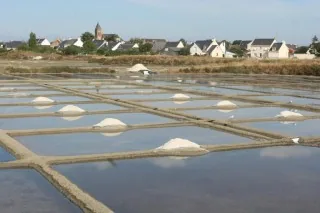
The marshes become considerably more interesting once their appearance stops seeming accidental. Generations of salt workers have created and maintained a system of basins, channels and clay embankments designed to control the movement of seawater through the landscape.
Each section has a role. Water progresses through the system before reaching the shallow crystallisation ponds where salt can ultimately be harvested. The paludier's job involves managing that movement and responding to conditions rather than simply arriving when there's salt ready to collect.
That relationship with the weather remains fundamental. A dry summer day and a wet one don't produce the same conditions. Guérande salt comes from here because the marsh itself is part of the method.
More Than Fleur de Sel
It's easy to encounter Guérande at the other end of the process. Sel de Guérande and fleur de sel appear in restaurants, food shops and kitchens far beyond western France. The name of the place has effectively become part of the identity of the ingredient.
What disappears inside the finished packet is the infrastructure behind it. That's what the guided walk restores. The salt is the final stage of a much larger system involving water, weather, land and accumulated knowledge. Seeing the marshes at working level makes the finished product seem less simple rather than more — the same shift L'Aillet asks for further down the coast, where the produce decides the menu rather than the other way round. It also explains why Saillé exists where it does — the village and marshes aren't separate attractions. One developed because of the other.
When It Rains
There's a practical reality to visiting a working salt marsh: sometimes the Atlantic weather wins. When conditions make the salines inaccessible, the Maison replaces the outdoor section with a more extensive indoor explanation — a second model showing water circulation and crystallisation, alongside a film following the work of paludiers through the seasons.
It isn't the same experience as walking into the marshes. If possible, go on a dry day. But the contingency itself reinforces something important about the place. Salt production here isn't insulated from the weather for the benefit of visitors. The weather is part of the story.
Why It Earns Its Place
Maison des Paludiers works because it changes what you notice.
At the beginning, the attraction is obvious: Guérande's salt marshes are an unusual and beautiful Atlantic landscape. Ninety minutes later, the appearance becomes almost secondary. The pools have functions. The channels have direction. The village has a reason for being where it is. What looked static is actually a carefully managed system whose success still depends on people understanding water and weather.
There are easier ways to experience Guérande salt. You can buy a packet almost anywhere. This is the better way to understand why it exists.
You arrive looking at the marshes. You leave knowing how to read them. The rest of Edit No.27, France, Facing the Atlantic, follows the same shoreline south — including Hôtel Le Garage in Biarritz.
The Lifestyle Edit Scorecard
- Sense of place
- 9.2 / 10
- Experience
- 8.8 / 10
- Craft & heritage
- 9.1 / 10
- Worth the detour
- 8.8 / 10
Who it's for
- Anyone interested in understanding where a familiar ingredient actually comes from.
- Travellers who prefer a guided experience with genuine access over simply stopping at a viewpoint.
- Families with children interested in food, landscape or local history.
- Visitors to Guérande or La Baule looking for something specific to this part of the Atlantic coast.
- The outdoor route isn't suitable for people with reduced mobility, though an adapted indoor experience is available.
Questions
- What is Maison des Paludiers?
- A heritage and interpretation centre in Saillé dedicated to the Guérande salt marshes and the work of the paludiers. It has provided guided visits for more than 50 years and has been operated directly by the Ville de Guérande since April 2025.
- How long is the Maison des Paludiers tour?
- Approximately 90 minutes, covering around 1.2 kilometres, beginning at the Maison before continuing through Saillé and into the surrounding salt-marsh landscape.
- Can you walk into the Guérande salt marshes yourself?
- The salines are private working land and shouldn't be entered independently. The guided visit provides access to parts of the working landscape when conditions allow.
- Will you see salt being harvested?
- Possibly. During the salt-harvesting season, visitors may see paludiers working in the marshes, but this depends on weather and production conditions and isn't guaranteed.
- What happens if it rains?
- If weather conditions prevent access to the salines, the outdoor section is replaced by an indoor programme using models, projections and film to explain water circulation, crystallisation and the work of the paludiers throughout the year.
- When is Maison des Paludiers open in 2026?
- The 2026 season runs from 4 April to 1 November, with opening days and tour schedules varying during the season.
- Are tours available in English?
- Yes. During the main 2026 summer season, dedicated English-language guided tours are scheduled at 11am on Tuesdays and Thursdays from 7 July to 31 August.
- How much does the guided tour cost?
- The standard 2026 adult price for the guided visit is €12. Current availability and tour times should be checked before travelling.
- Where is Maison des Paludiers?
- In Saillé, a historic salt-working village within the commune of Guérande, immediately beside the working salt marshes.