Living
Casa La Siesta — The Hotel That Started With a Field
A junior lawyer left London to learn Spanish, bought a field outside Vejer and spent eighteen months building a hotel from salvaged materials. The search for the right tiles became Bert & May.
By James B. Stoney, Editor · 1 September 2026
Lee Thornley moved to Andalucía to learn Spanish. He bought a field, decided to build a hotel and went looking for old tiles to put inside it. Eighteen years later, both the hotel and the tile business that emerged from it are still going.
Casa La Siesta doesn't have the origin story its appearance might suggest.
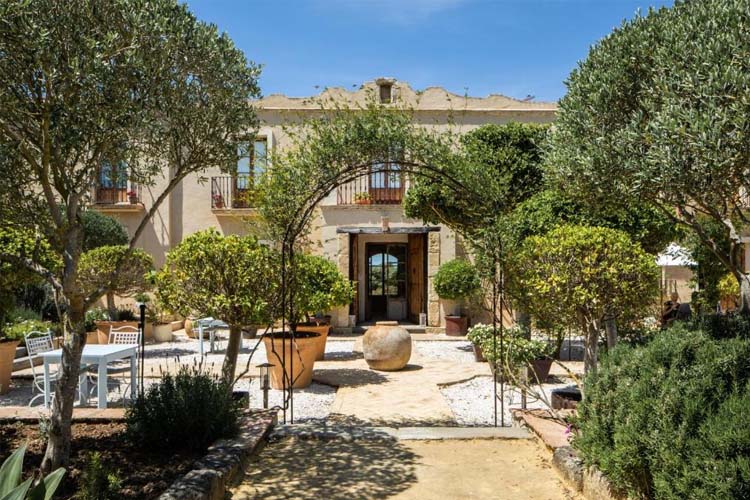
The arches, weathered timber, old tiles and central courtyard make this small hotel in the countryside outside Vejer de la Frontera look as though someone discovered a forgotten Andalusian cortijo and carefully restored it.
That isn't quite what happened.
Founder Lee Thornley arrived in Spain in 2008 after leaving his career as a junior lawyer in London. He came to learn Spanish, fell for Vejer and bought a field with a small outbuilding on it. The plan from the outset was to create a hotel.
What followed explains much of what Casa La Siesta became.
Building Something That Looked as Though It Was Already There
Thornley spent around 18 months building the original property, determined that the finished place shouldn't feel new.
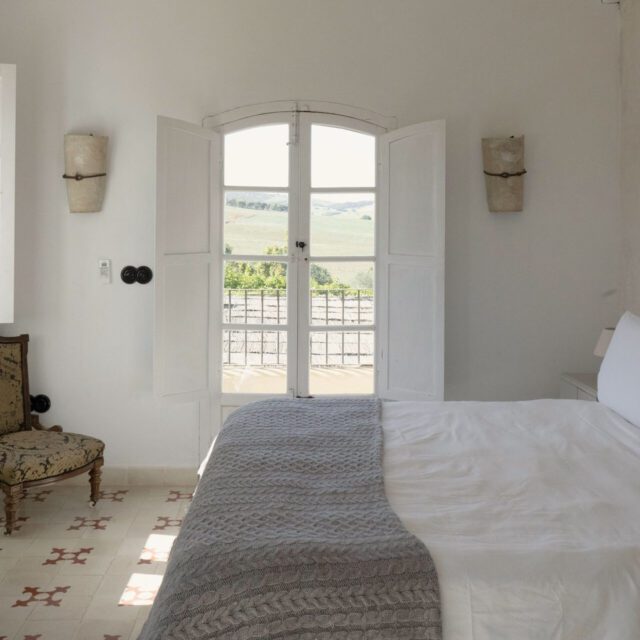
Old beams, doors, windows and tiles were salvaged from reclamation yards and cortijos being demolished elsewhere in Andalucía. Antique and repurposed furniture went inside. The result was less an exercise in replicating a traditional Spanish country house than in assembling one from materials that had already lived somewhere else.
The search for those materials also produced an unexpected second business.
Sourcing reclaimed materials for Casa La Siesta led Thornley into selling reclaimed tiles. In 2010 he met Juanma, whose family had made encaustic tiles using traditional techniques; production followed, and the business was formally launched as Bert & May in 2013.
The connection has since come full circle. The Stables was newly refurbished for 2025, designed and fitted by Bert & May. The company that emerged partly from the building of Casa La Siesta returned to redesign part of the property.
It means the hotel's interiors aren't simply decoration. They are part of the reason another business exists.
Six Rooms, Not Sixty
Casa La Siesta has remained deliberately small.
There are six individually designed rooms in the main hotel, plus two standalone properties in the grounds: the three-bedroom Casita and the two-bedroom Stables. Most rooms feature private terraces; outside are olive trees, orange groves, lavender and two pools.
Vejer itself sits around ten minutes away by car, but the point of staying here isn't really to recreate a town break in the countryside.
The space around the house matters.
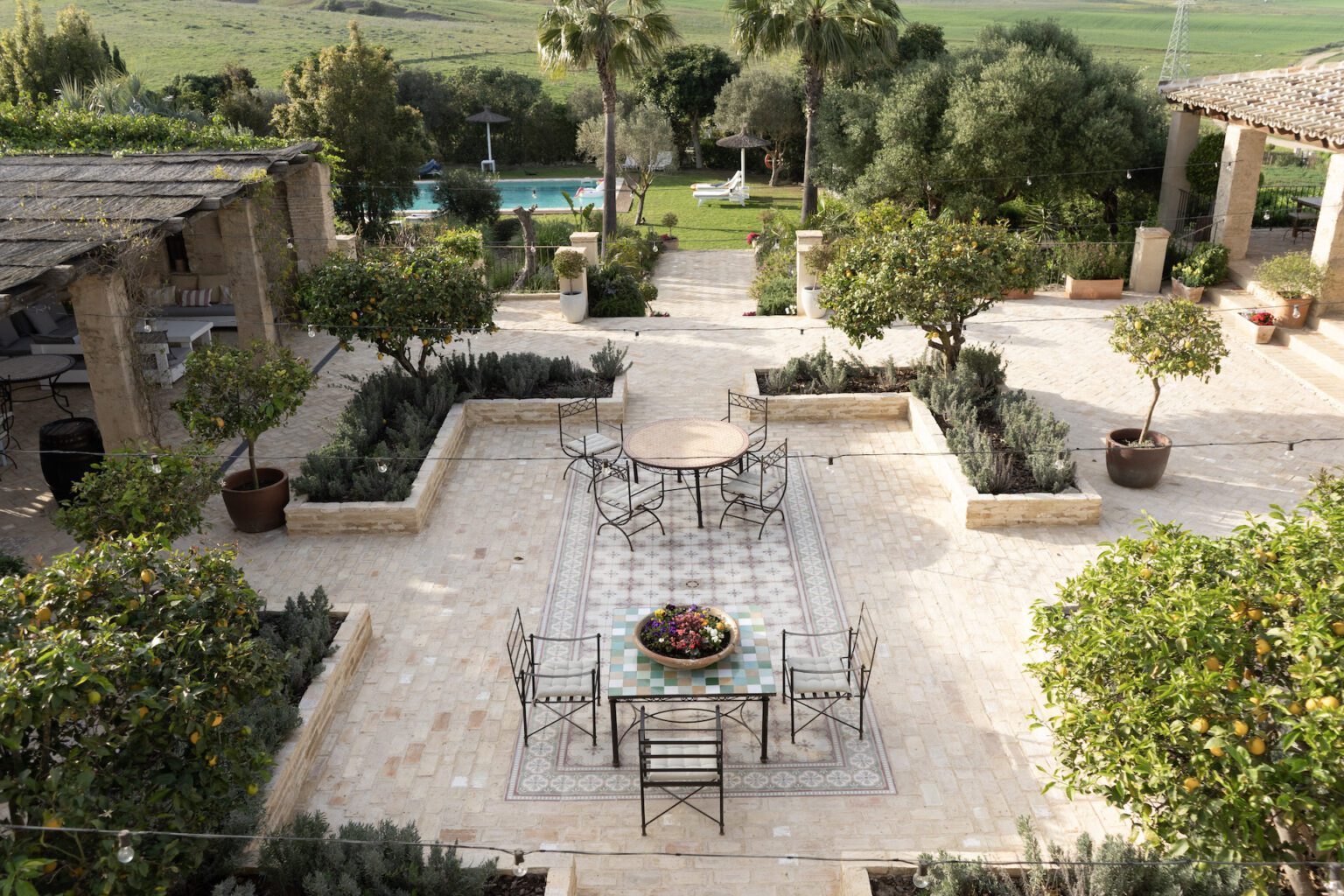
The hotel looks across the rolling Cádiz landscape rather than towards another building. Courtyard dinners, gardens, pools and private terraces make it possible to spend a surprising amount of time doing very little without feeling that you're waiting to go somewhere.
For most of the year, Casa La Siesta operates as adults-only, reserving specific family periods rather than trying to accommodate both markets continuously.
The Garden Reaches the Kitchen
Food follows much the same small-scale approach.
There isn't a fixed hotel restaurant menu designed months ahead. Dishes change according to what's available each morning, with fruit, vegetables and herbs coming where possible from the organic kitchen garden and the remainder sourced from local suppliers and producers. Seafood and recognisably Spanish cooking dominate rather than an international luxury-hotel menu.
There is a particularly nice continuity here.
Alberto, Casa La Siesta's head gardener, was one of the builders who originally worked on the property. Today, he works alongside head chef Connie to grow ingredients for the kitchen. Several members of the wider team have similarly been on the estate for years.
For a hotel whose story is largely about what accumulates over time, that matters.
Still Independent
The danger with successful small hotels is that what people originally liked becomes the blueprint for something much larger.
Casa La Siesta hasn't gone that way.
Thornley remains an owner, now alongside Richard Sidi, who arrived through an unusual route of his own: he was originally a guest. He liked the hotel and its surroundings enough that he eventually became co-owner.
There has been evolution. The Stables underwent an extensive refurbishment, and the estate now accommodates private villa stays, weddings and exclusive hire alongside the original rooms. Low-season doubles now start at €350, putting Casa La Siesta firmly into luxury territory.
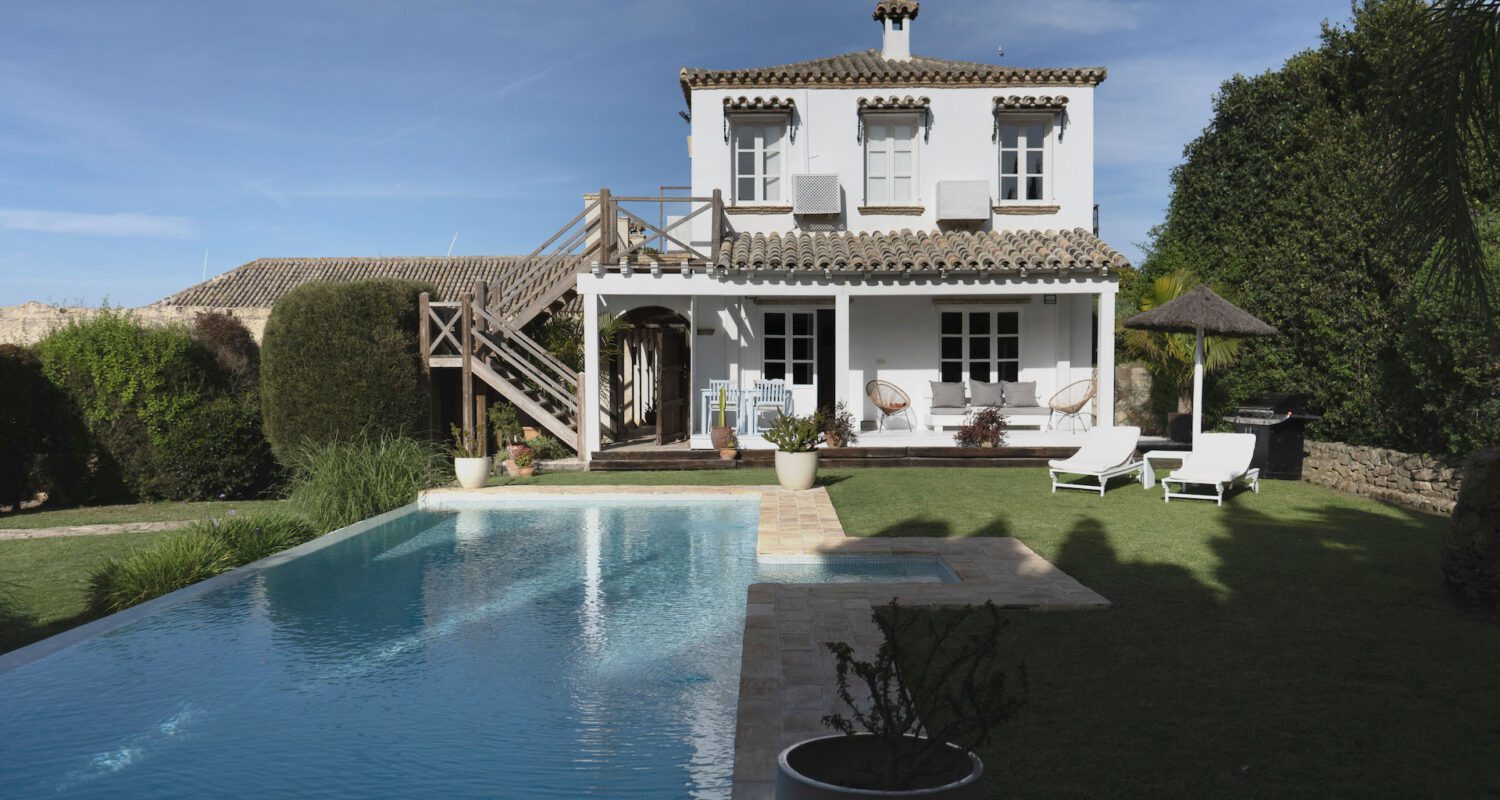
Yet it hasn't become a resort.
There are still six rooms in the main house. Dinner still depends partly on what's growing outside. And one of the people tending that garden helped build the place.
Why It Earns Its Place
Southern Spain isn't short of hotels selling white walls, old tiles and slow living.
Casa La Siesta is interesting because those things came before they became a particularly marketable version of Andalucía.
A lawyer moved to Spain, bought a field and started collecting discarded architectural materials to make a new hotel feel old. The search for the right tiles led through salvage yards, a chance meeting with an artisan maker and eventually to Bert & May. A builder became the gardener. A guest became an owner.
Eighteen years later, Casa La Siesta remains small enough for those details to matter.
The hotel started with a field.
What grew out of it is the reason to stay. The rest of Edit No.29, Andalucía, From the Field Up, follows the same landscape.
Vitae Lifestyle Scorecard
- Character
- 9.4 / 10
- Setting
- 9.3 / 10
- Design
- 9.2 / 10
- Independence
- 9.3 / 10
Who it's for
- Travellers who prefer an independent hotel to a resort.
- Couples combining Cádiz, Seville or the Costa de la Luz with a few quieter days inland.
- Anyone for whom the story and character of a hotel matter as much as its facilities.
Questions
- Where is Casa La Siesta?
- Casa La Siesta is in the countryside outside Vejer de la Frontera in Cádiz province. Vejer is around ten minutes away by car.
- How many rooms does Casa La Siesta have?
- There are six individually designed rooms in the main hotel, plus two standalone properties in the grounds: the three-bedroom Casita and the two-bedroom Stables.
- Is Casa La Siesta adults-only?
- For most of the year, yes. The hotel accepts families during designated periods, while its standalone properties provide self-contained family accommodation year-round.
- How much does Casa La Siesta cost?
- Current published low-season rates start at €350 a night for a double room, €395 for a suite and €425 for a superior room. The Casita and Stables start at €895. Rates vary by season.
- What is the connection between Casa La Siesta and Bert & May?
- Sourcing reclaimed materials for Casa La Siesta led founder Lee Thornley into selling reclaimed tiles. In 2010 he met Juanma, whose family had made encaustic tiles using traditional techniques; production followed, and the business was formally launched as Bert & May in 2013. The connection came full circle when Bert & May designed and fitted the newly refurbished Stables for 2025.