Living
Raffles Singapore — The Hotel That Became the City's Memory
Some hotels become associated with a city. Raffles has had long enough to become entangled with one — and the more interesting question is what remains when you look past the mythology and actually stay there.
By James B. Stoney, Editor · 1 October 2026
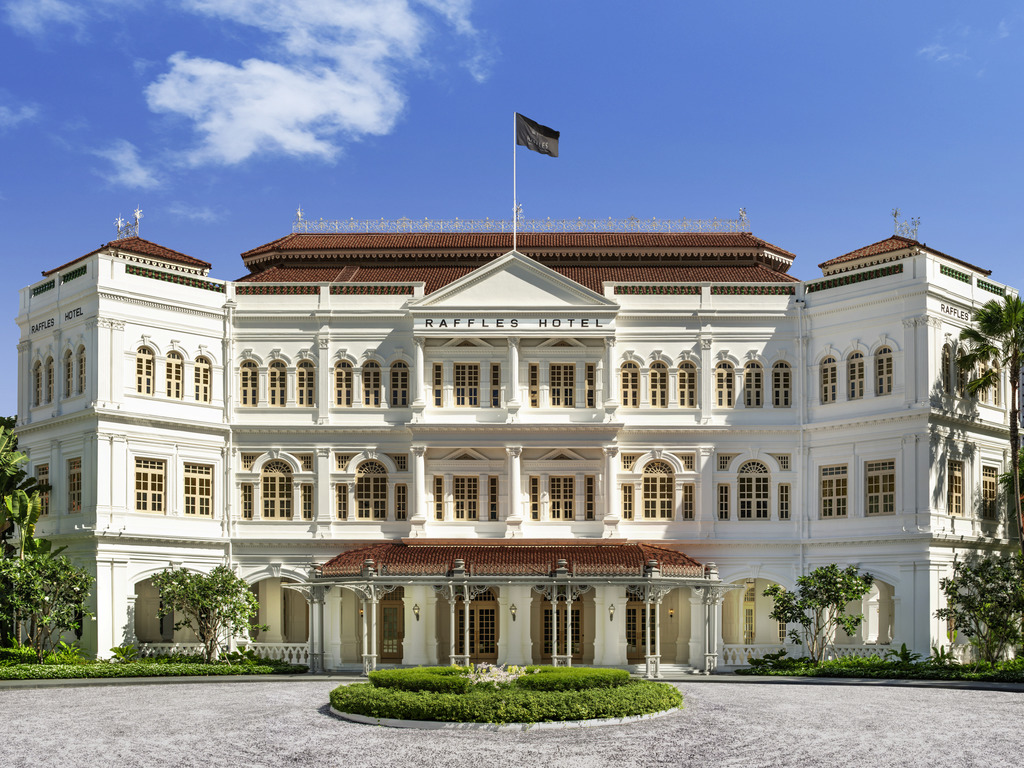
It opened in 1887, when Singapore was a British colonial port and steamships and the Suez Canal were transforming travel between Europe and Asia. It was already 78 years old when independent Singapore was founded in 1965, and a century after opening the government declared it a National Monument.
The difficulty with somewhere this famous is separating the hotel from the mythology built around it. People come for the white arcades, the Singapore Sling, Somerset Maugham and a version of tropical colonial glamour reproduced so often that Raffles can feel familiar before you have walked through the door.
The Hotel Before the Hotel
Raffles did not begin as the building people recognise today. The site held Beach House, a large bungalow from the early 1830s owned by the Arab merchant Syed Mohamed Alsagoff, already used as a hotel and boarding house before the Sarkies brothers took on the lease in 1887.
The Sarkies were Armenian hoteliers, part of a small community whose influence on Southeast Asian commerce was considerably larger than its numbers suggest; their interests would come to include the Eastern & Oriental in Penang and The Strand in Yangon. Raffles welcomed its first guests on 1 December 1887.
The timing was unusually good. The Suez Canal had opened in 1869 and steamship travel was making journeys between Europe and Asia faster and more predictable, creating a new market for wealthy travellers. Raffles expanded with it — new wings in 1889 and 1890, a Billiard Room around 1890, the Palm Court Wing around 1894. Then, in 1899, the hotel changed altogether.
What You See Is Mostly 1899
The original Beach House was replaced by the three-storey Main Building that established the architectural identity Raffles retains today. Designed by Regent Alfred John Bidwell of Swan & Maclaren, it opened in November 1899, using wide verandahs, high ceilings, arcades and Palladian windows not as decoration but as practical responses to a tropical climate before air-conditioning. It was modern as well as grand: the hotel had its own generators supplying electric lights, ceiling fans and call bells when complete electrical systems were still unusual in Singapore.
That distinction matters, because Raffles is routinely described simply as an 1887 hotel. The institution is. Much of the building through which its history is now presented came later.
And it has never really stopped changing. The cast-iron entrance portico is itself a reconstruction: the original went up in 1913, was removed in 1920 to accommodate a ballroom, and the version visitors see was reproduced during the 1989–91 restoration. Raffles has survived partly because successive generations were prepared to alter it.
Almost Lost
The mythology can make Raffles' survival seem inevitable. It wasn't.
After Arshak Sarkies died in 1931, the scale of the brothers' debts became apparent. The Great Depression compounded the problem and the hotel came close to joining other grand Singapore hotels that disappeared; a new company, Raffles Hotel Limited, acquired the hotel and land in 1933. Then came war. During the Japanese occupation the hotel was renamed Syonan Ryokan and used by the Japanese military. It reopened in 1946, but the decades that followed were not an uninterrupted continuation of grand-hotel glamour. Raffles declined as Singapore transformed around it.
In 1987, exactly a century after it opened, Singapore gazetted the hotel as a National Monument. That changed the proposition. Raffles was no longer an old hotel occupying valuable central land. It had become something the country had formally decided to preserve.
Restoring Raffles
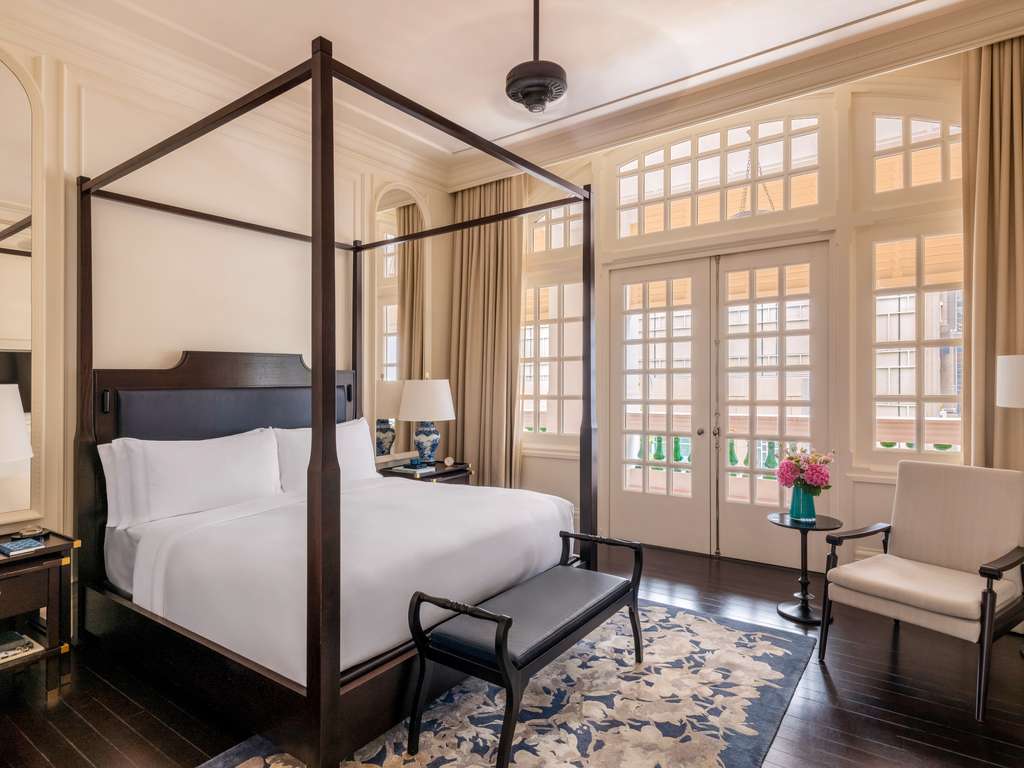
Preservation did not mean leaving it untouched. Raffles closed for roughly two and a half years between 1989 and 1991, and again a generation later: a three-phase restoration began in January 2017, and when the hotel fully reopened on 1 August 2019 its suite count had risen from 103 to 115.
The rooms retain the architectural language people come for — high ceilings, teak floors, verandahs, period detailing — but the hotel isn't preserved as a museum. There are modern bathrooms, a third-floor swimming pool, a spa and a 24-hour gym, and the restaurants and retail spaces have changed repeatedly as Raffles has tried to remain commercially relevant.
That balancing act is the most interesting thing about the modern hotel. Too much intervention and the thing people are paying for disappears. Too little and you end up charging modern luxury-hotel prices for an increasingly convincing museum.
The Singapore Sling Problem
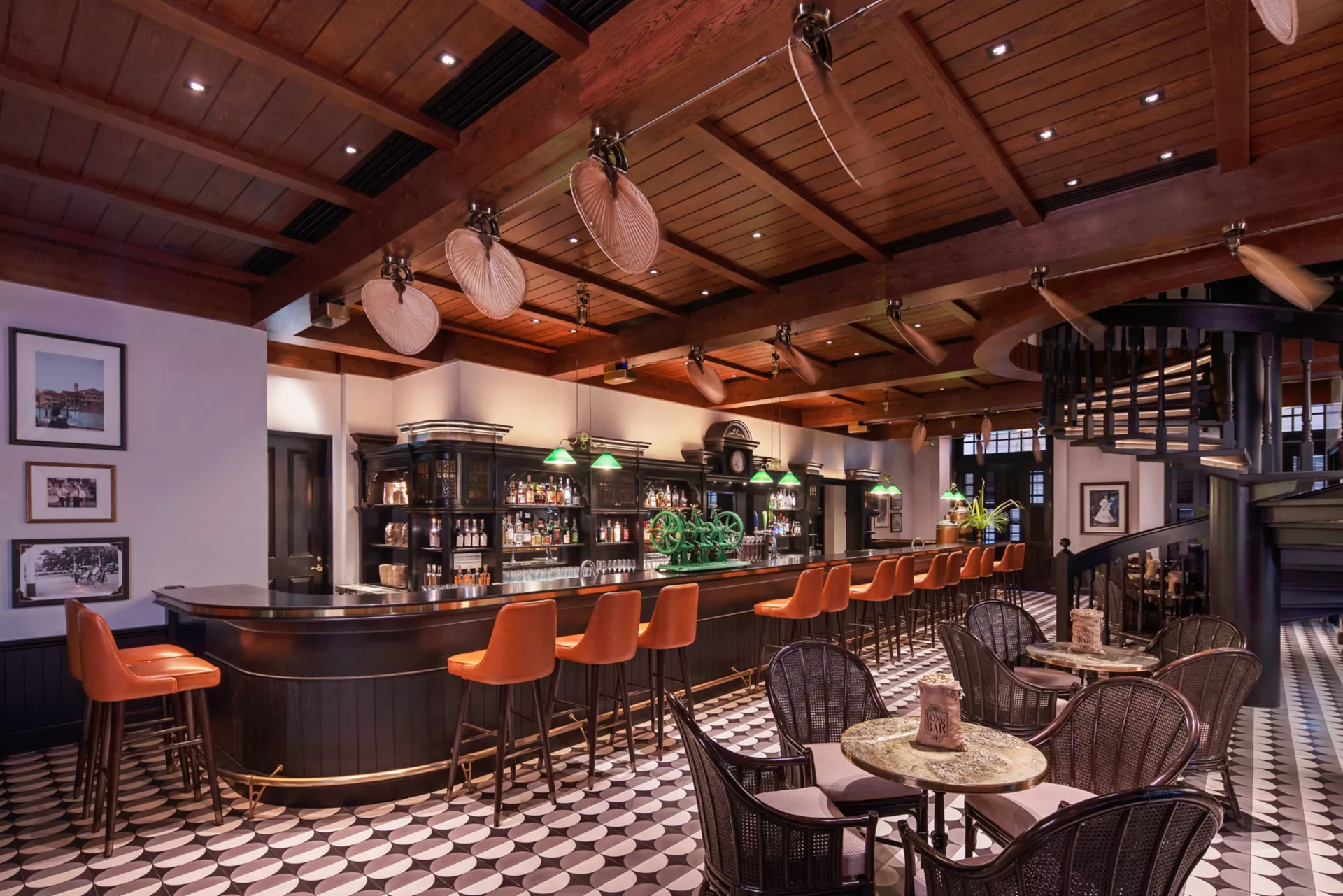
Then there is the drink. The Singapore Sling is so closely attached to Raffles that it risks reducing the hotel to its most marketable anecdote. The cocktail is associated with the bartender Ngiam Tong Boon and the Long Bar, and drinking one while throwing peanut shells onto the floor has become one of Singapore's best-known visitor rituals.
It is possible to stay here without making the Sling the point, and that is the better way to understand the place. The Palm Court, the long verandahs, the internal gardens and the sheer amount of space between the public city and a guest's room explain Raffles' endurance better than a pink cocktail does.
That space was practical in the nineteenth century, when verandahs and courtyards moderated the climate. Today it is something else. Singapore's contemporary luxury runs vertically — Marina Bay towers, branded residences, extraordinary capital passing through a small island. Raffles is three storeys high, with ceilings at 14 feet, suites opening onto verandahs rather than glass, and gardens occupying land that could support something far taller and more productive. What it sells is scarce precisely because Singapore has been so successful at replacing the old with the new.
Why It Earns Its Place
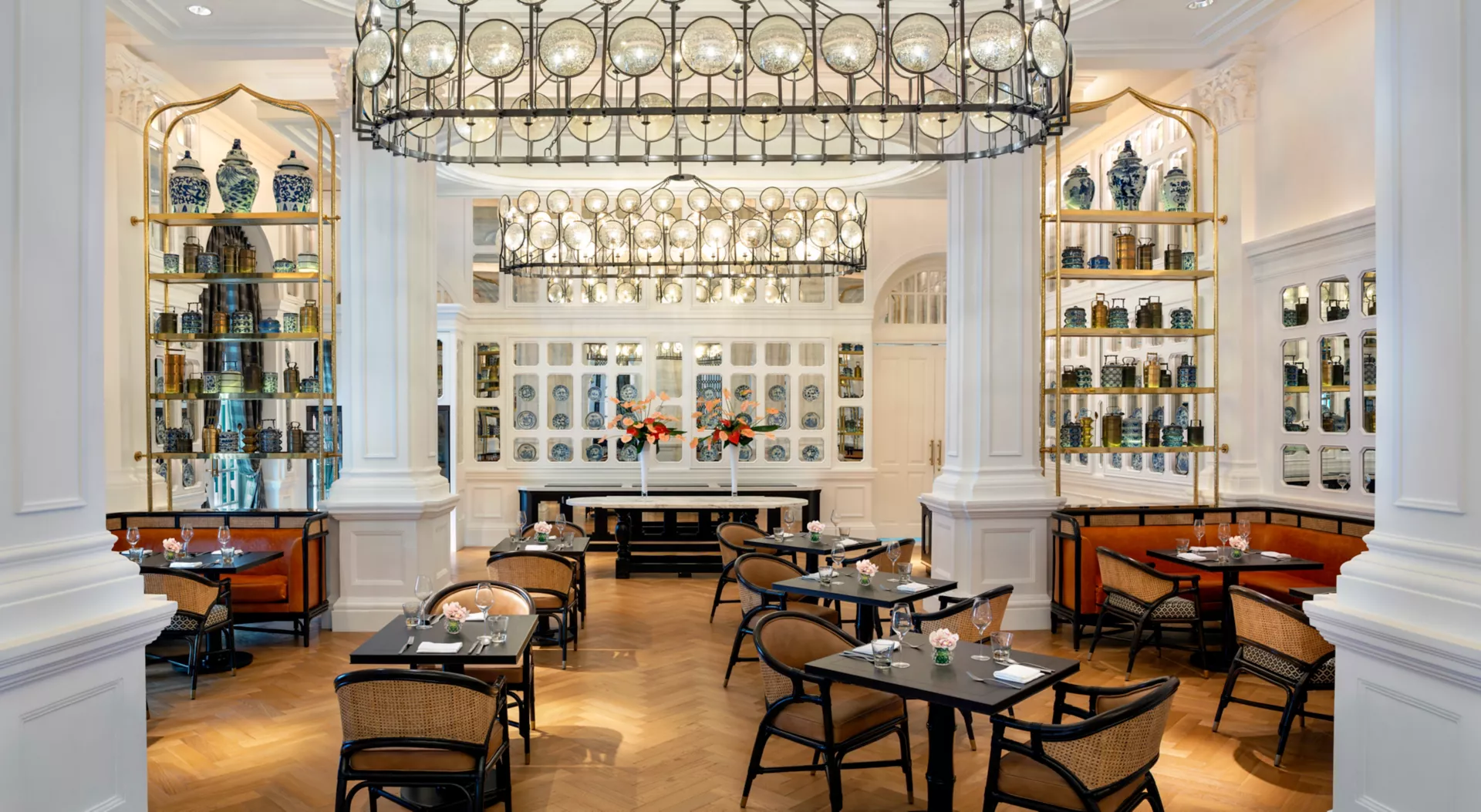
Because Raffles has done something harder than becoming famous. It has remained useful after becoming historic.
The original bungalow is gone. Wings were added. The Main Building replaced what came before it. A portico disappeared and was later reconstructed. The hotel nearly failed financially, survived occupation, declined, was protected as a National Monument and has twice closed for major restoration. What survives isn't an untouched hotel from 1887. It is a hotel Singapore has repeatedly decided to keep.
That makes it more interesting rather than less authentic. Heritage buildings survive through choices: what to retain, what to restore, what to reconstruct, and what to change enough that people will keep paying to use it. Today Raffles has 115 suites, butlers, a spa and a third-floor pool inside a building whose verandahs were designed for a world before air-conditioning.
The question isn't whether this is old Singapore — much of the Singapore around the original hotel no longer exists. It is whether Raffles can carry enough of that world into the present without becoming a performance of itself. So far, remarkably, it can.
The Lifestyle Edit Scorecard
- History
- 9.9 / 10
- Character
- 9.7 / 10
- Service
- 9.5 / 10
- Value
- 8.9 / 10
Who it's for
- Anyone deciding whether Raffles is worth staying at rather than simply visiting.
- There are newer Singapore hotels with higher floors, larger pools and more spectacular views. Raffles offers something those properties cannot manufacture: nearly 140 years of accumulated association with the city, contained within one of the relatively few nineteenth-century grand hotels still doing the job for which it was built.
- If all you want is the Singapore Sling, go to the Long Bar. If what interests you is the hotel itself, stay.
Questions
- When did Raffles Singapore open?
- Raffles welcomed its first guests on 1 December 1887. It began in an existing bungalow known as Beach House before expanding substantially over the following decade.
- Is the present Raffles Hotel building from 1887?
- Not entirely. The recognisable three-storey Main Building was designed by Regent Alfred John Bidwell of Swan & Maclaren and completed in 1899, replacing the original Beach House. Other wings and structures were added at different points in the hotel's development.
- Who founded Raffles Singapore?
- Raffles was established by the Sarkies brothers, Armenian hoteliers whose businesses also became associated with properties including the Eastern & Oriental in Penang and The Strand in Yangon.
- Is Raffles Singapore a protected building?
- Yes. The Singapore Government gazetted Raffles Hotel as a National Monument in 1987, its centenary year.
- When was Raffles Singapore last renovated?
- Its most recent major restoration began in January 2017. The hotel fully reopened on 1 August 2019 after a three-phase programme. An earlier major restoration took place from 1989 to 1991.
- How many rooms does Raffles Singapore have?
- Raffles is an all-suite hotel with 115 suites. The 2017–19 restoration increased the number from 103. Every suite has access to Raffles Butler Service.
- Where is Raffles Singapore?
- At 1 Beach Road, Singapore 189673, in the Civic District.
- Was the Singapore Sling invented at Raffles?
- The cocktail is associated with Raffles bartender Ngiam Tong Boon and the hotel's Long Bar and has become one of the property's defining traditions.
- Can you visit Raffles without staying there?
- Yes. Non-residents can visit several parts of the property, including its restaurants, bars and retail areas, and Raffles currently offers heritage experiences led by its resident historians.
- Is Raffles Singapore worth staying at?
- Its appeal is different from that of Singapore's newer luxury hotels. Raffles combines an all-suite hotel, extensive service and modern facilities with a National Monument dating back to the nineteenth century. Whether that justifies its premium depends largely on how much value you place on the building and its history rather than views or contemporary spectacle.