Product
Fumu — The Shoemaker Who Brought the Craft Home
Singapore produces plenty of economists. Bespoke shoemakers are harder to find — which is why a UCL economics graduate who spent most of a decade in Japanese workshops, and now makes shoes by hand in an industrial unit in Ubi, is worth paying attention to.
By James B. Stoney, Editor · 1 October 2026
London, Not Singapore
The story began with something fairly mundane: Cheng Yao discovered that a good pair of shoes did not necessarily have to be replaced when the soles wore out.
He was studying economics in London in 2012 and working part-time at Joseph Cheaney, the Northamptonshire shoemaker. Singapore, as he later explained it, had given him little exposure to Goodyear-welted or otherwise resoleable shoes; footwear was more commonly worn out and replaced. He became interested first in good shoes and then in how they were actually made.
There was an obvious place to learn. London still had its bespoke shoemakers, and Cheng Yao approached several of them, including Foster & Son. What he discovered was an old problem of craft apprenticeship: to get through the door, you often already needed to know the craft. Japan offered another route.
Nearly a Decade in Japan
Cheng Yao moved to Tokyo in 2016. His first formal training came through The Shoemaker's Class, run by Noriyuki Misawa — not simply a traditional shoemaker, but someone whose work crosses into sculpture and art, and whose awards include the gold medal at Germany's International Efficiency Contest of Shoemakers in 2010 and consecutive overall wins at the Global Footwear Awards in 2022 and 2023.
Cheng Yao subsequently sought more advanced tuition from Kiyo Udagawa before spending more than a year working part-time for Yohei Fukuda, one of Japan's best-known contemporary bespoke shoemakers.
It is an unusual lineage for a Singapore footwear business, and it loops back on itself in a way worth noticing. Fukuda had travelled in the opposite direction to learn his trade, studying shoemaking in Northamptonshire and working for London firms before returning to Tokyo and establishing his atelier in 2008. Fumu therefore represents something more complicated than Japanese shoemaking transplanted to Singapore. The craft moved from England to Japan, was encountered by a Singaporean studying in London, refined in Tokyo and eventually brought back to Singapore.
130 Hours for a Pair of Shoes
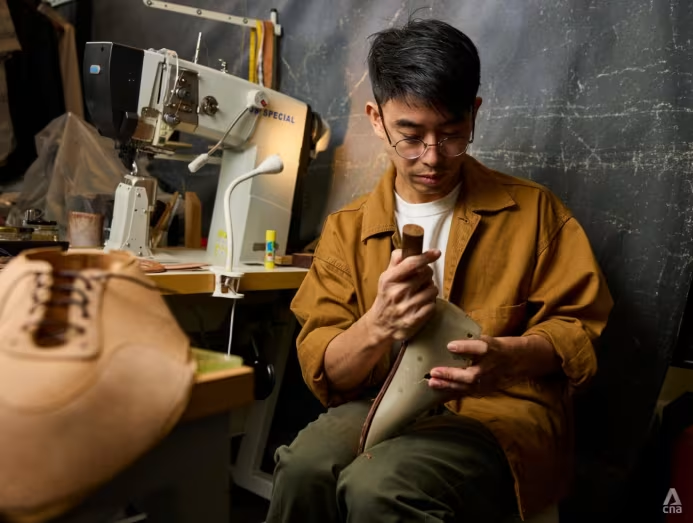
Fumu's bespoke process is properly bespoke. The first appointment establishes the design, materials and requirements before Cheng Yao measures the client's feet. A personal last — the three-dimensional form around which a shoe is constructed — is then made for the individual wearer, followed by a bespoke pattern. A trial shoe is produced and fitted, and the last and pattern can be altered before work begins on the final pair.
Fumu estimates more than 130 hours of work for each bespoke commission. The current lead time is eight to twelve months and prices start from S$6,000, around US$4,700.
There are details almost nobody will see. Cheng Yao uses a hand-sewn decorative bar tack, for example, and hides a sakura motif beneath the tongue of his bespoke shoes — a reference to the years spent learning in Japan. That invisibility is rather the point. One of the things he says he took from Japanese workshops was the willingness to refine a curve or redo a stitch regardless of whether the eventual customer would notice.
Making Bespoke Commercial
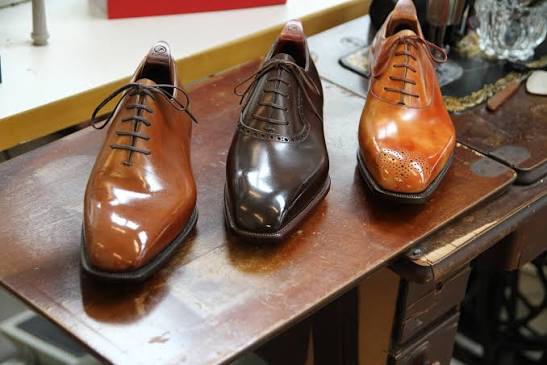
There is an obvious problem with spending 130 hours making a single pair of shoes. It is difficult to build much of a business around it.
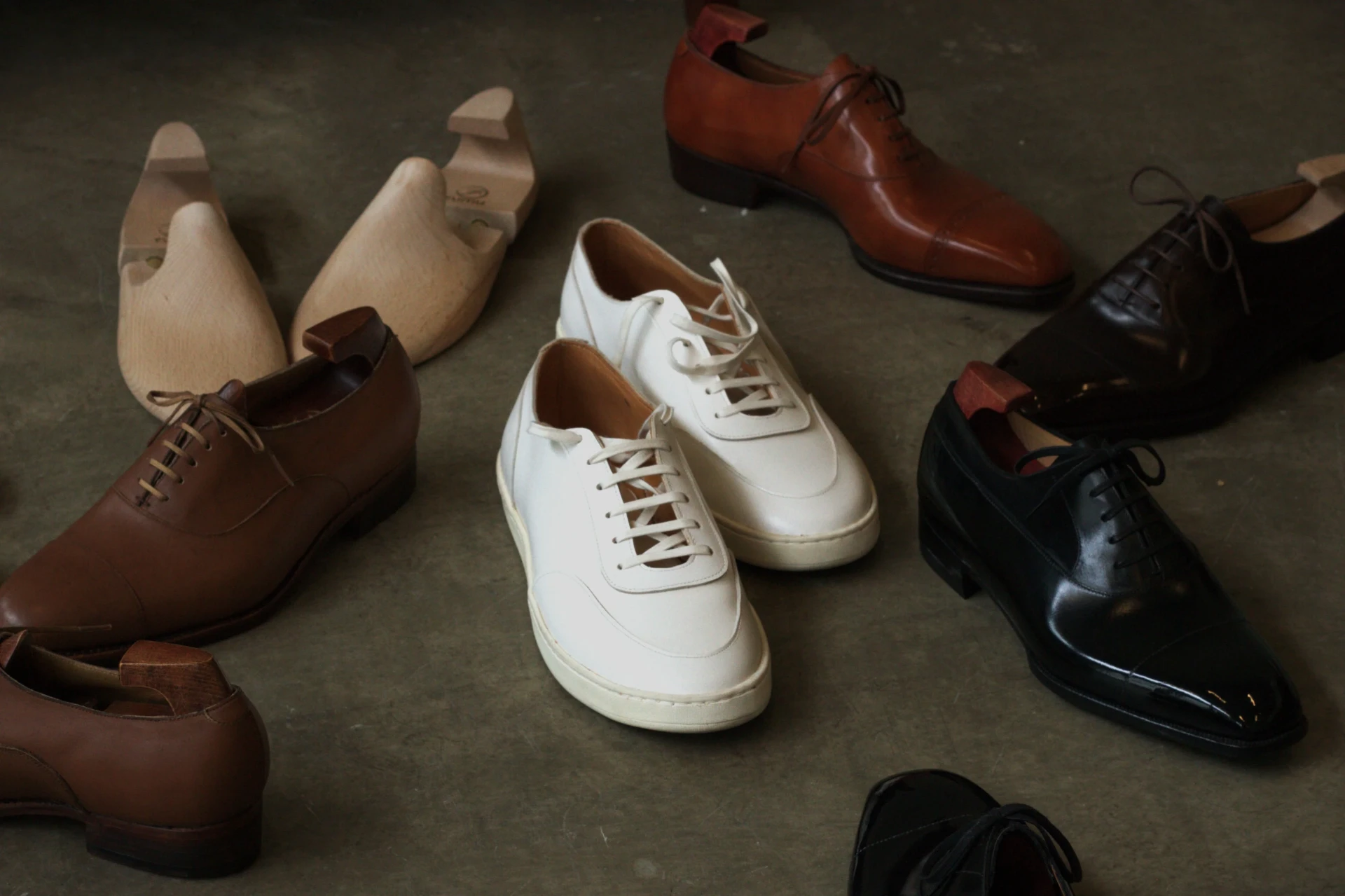
Fumu's answer is the Travellers Collection. These are made-to-order rather than bespoke: customers choose from standard sizes instead of having an individual last produced, dramatically reducing the labour involved. They are not, however, conventional factory-made shoes. At S$798, around US$625, they are made in Fumu's Singapore workshop and hand-lasted over vegetable-tanned leather insoles and leather heel counters, with natural rubber soles, and they are designed to be resoleable. The current lead time is four to six months.
It is the part of Fumu that may ultimately matter most. Bespoke establishes what the workshop can do; the Travellers Collection asks whether some of those methods can survive at a price and production rate capable of supporting an actual Singapore shoemaking business.
Back in Singapore
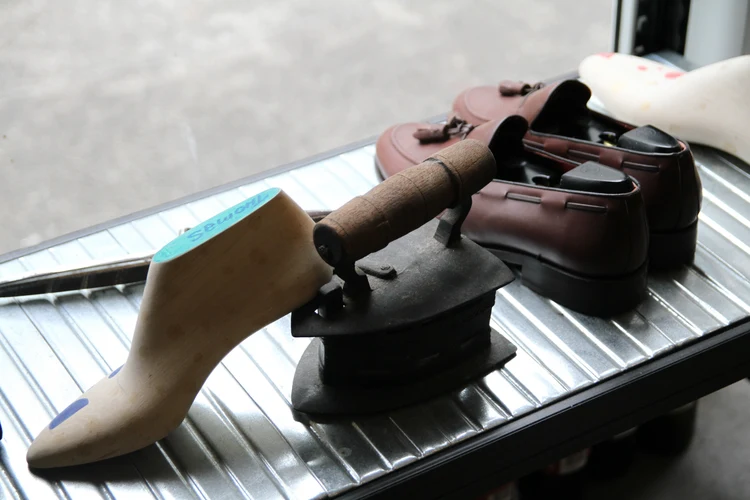
Cheng Yao returned to Singapore in 2025. Fumu now works from an appointment-only studio at Oxley Bizhub in Ubi, shared with Classified Footwear. In 2026, the two businesses also began running three-hour sandal-making workshops, allowing customers to work directly with leather, tools and Vibram soles and leave with something they have made themselves.
It is a small development, but an interesting one. Cheng Yao has spoken about wanting eventually to create a small, sustainable shoemaking industry in Singapore rather than simply maintaining Fumu as a solitary luxury atelier.
That is considerably harder than making one exceptional pair of shoes. It requires customers willing to pay for labour they cannot necessarily see, younger craftspeople willing to spend years acquiring skills that offer none of the obvious economic rewards of Singapore's dominant professions, and enough commercial work to keep those skills employed. Fumu is still at the beginning of that experiment.
Why It Earns Its Place
Because the craft arrived here by a route nobody would have designed.
English shoemaking was learned in Japan by a Japanese maker who went to Northamptonshire to find it. A Singaporean economics student encountered it in a London shop, was turned away by the trade he wanted to join, and went to Tokyo instead. Nearly ten years later he brought it to an industrial unit in Ubi, where the shoes now carry a sakura hidden under the tongue.
The bespoke work is the proof of what the workshop can do, and at S$6,000 and up with a year's wait, it is a serious proposition rather than a casual one. But the more interesting question sits with the Travellers Collection. A single remarkable pair of shoes demonstrates a skill. A business that can keep that skill employed, at a price enough people will pay, is what turns one shoemaker into the beginning of something.
Fumu is attempting the second thing. That is considerably rarer than the first.
The Lifestyle Edit Scorecard
- Craft
- 9.8 / 10
- Design
- 9.5 / 10
- Value
- 8.8 / 10
- Character
- 9.5 / 10
Who it's for
- For people who care about how things are made, and particularly anyone already considering bespoke or high-end men's shoes in Singapore.
- Fumu is also interesting beyond footwear: it is a rare example of a Singaporean leaving the conventional graduate path, spending years acquiring a manual craft overseas and then returning home to try to build a business around it.
Questions
- Who is behind Fumu Singapore?
- Fumu was founded by Singaporean shoemaker Tor Cheng Yao. He studied economics at University College London before moving to Japan, where he spent nearly a decade developing his shoemaking skills.
- Where did Tor Cheng Yao learn shoemaking?
- His training included The Shoemaker's Class under Noriyuki Misawa, further tuition from Kiyo Udagawa and more than a year working part-time at the atelier of Yohei Fukuda in Tokyo.
- How much do Fumu bespoke shoes cost?
- Full bespoke shoes start from S$6,000 (about US$4,700). Each pair requires around 130 hours of work and the current lead time is approximately eight to twelve months.
- Does Fumu make cheaper shoes?
- Yes. Its made-to-order Travellers Collection currently costs S$798 (about US$625). These use standard sizing rather than an individually created bespoke last, but are still handcrafted in Fumu's Singapore workshop using traditional construction techniques.
- Where is Fumu in Singapore?
- Fumu works from a studio at Oxley Bizhub, 61 Ubi Road 1, #03-12, Singapore 408727, shared with Classified Footwear. It is around a ten-minute walk from Tai Seng MRT, and visits are by appointment.
- Do you need an appointment for Fumu?
- Yes. Fumu's showroom operates by appointment.