Place
Hanwell's Six Locks and Three Bridges — Where London's Industrial Past Survives
A short stretch of the Grand Union Canal in Hanwell contains two centuries of engineering history, from Georgian water-saving ingenuity to one of Brunel's final works.
By James B. Stoney, Editor · 8 October 2026
The Canal That Built a Connection
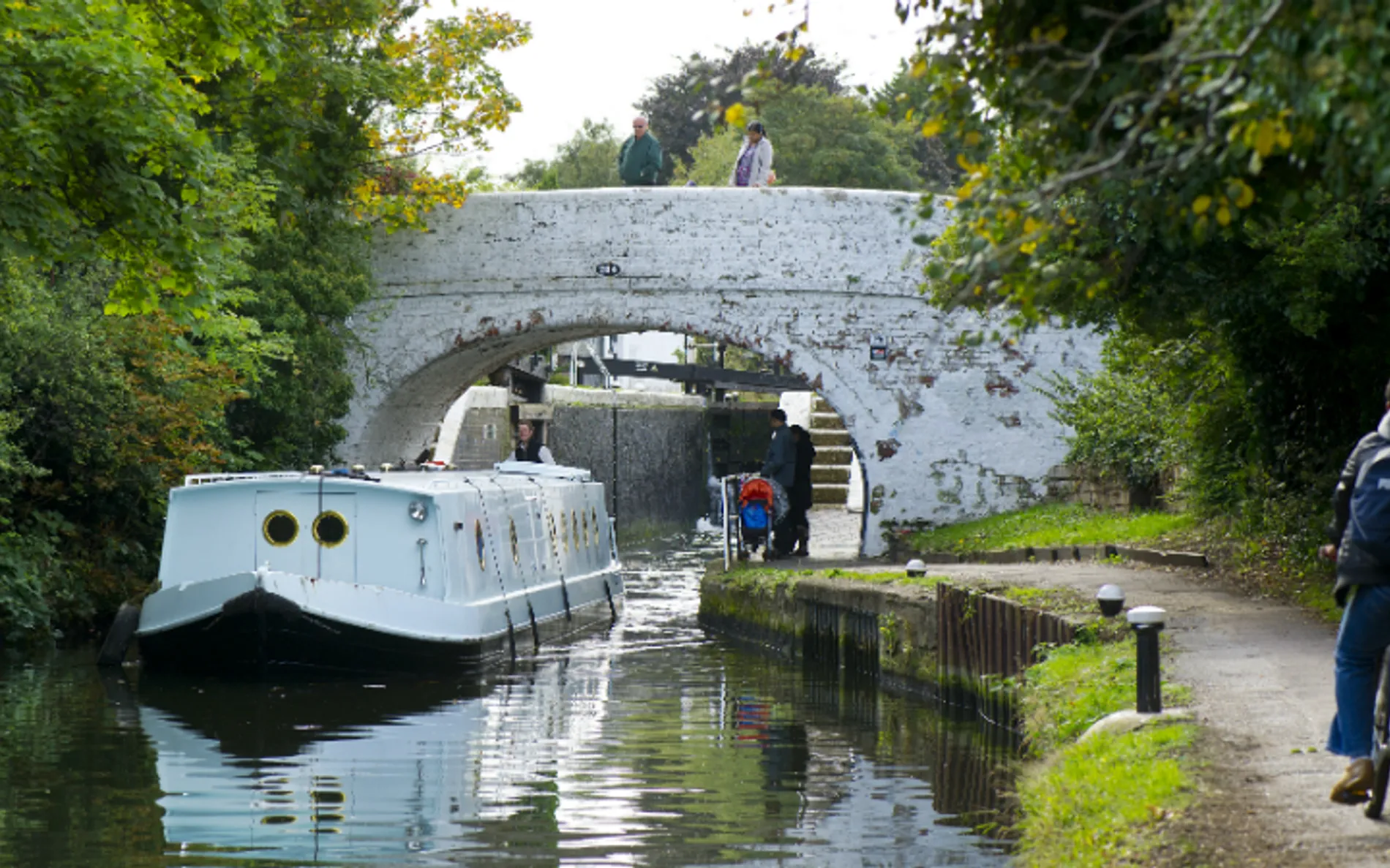
There is a stretch of West London where the Industrial Revolution remains unusually visible. Along the Grand Union Canal at Hanwell, six locks descend towards the River Brent, passing lock-keepers' cottages, a long brick wall and the remnants of an ingenious water-saving system. At the top of the flight, Brunel's Three Bridges carries a road over a canal, which itself passes above a railway.
The Hanwell Flight was built in 1794 as part of the Grand Junction Canal, the commercial connection between London and the Midlands. Its six locks raise the canal just over 53 feet in a third of a mile. They are the work of William Jessop, the Grand Junction's chief engineer, who built them broad — wide enough to take two narrowboats side by side, which is why heavy traffic could move through them at speed.
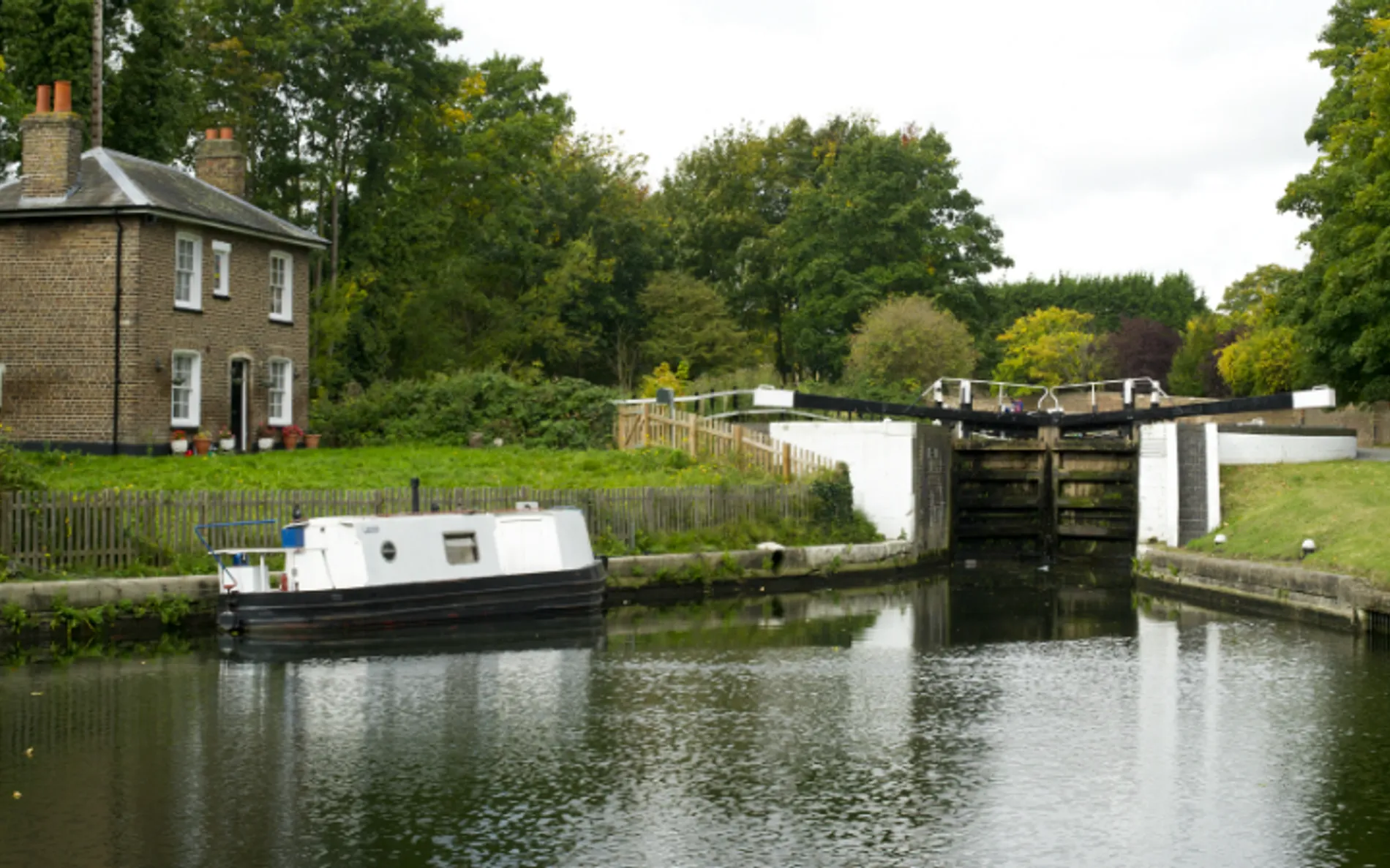
In 1815, some twenty years after the flight opened, engineers added side ponds at each lock. When a lock empties, a paddle diverts the water sideways into a pond rather than losing it downstream, and it goes back in to help refill. It was a sophisticated answer to a problem canal companies understood very well: every boat that passes through a lock costs thousands of litres of water.
That efficiency has acquired renewed significance. The flight has been on Historic England's statutory Heritage at Risk register since 2009, and in December 2025 a £220,000 restoration began on the derelict side ponds at Locks 94 and 95 — £180,000 from a Historic England repair grant, £5,000 from the Inland Waterways Association, the remainder from the Canal & River Trust, with volunteer camps working on the brickwork through 2026. The work is intended to conserve the historic structures rather than return them to use, and to improve understanding of how they functioned, which may inform future water-management work across the network. It follows a year in which drought forced navigation restrictions on the canals.
Two-hundred-year-old water-saving engineering has become interesting again, for exactly the reason it was built.
The Wall and What Was Behind It
The long brick wall that follows the towpath is part of the same scheduled monument as the locks. It is the boundary of St Bernard's Hospital, which opened in 1831 as the First Middlesex County Asylum, and it is not merely a backdrop.
A short branch of the canal once led to a wharf inside the asylum grounds. Boats brought coal for the boilers and took away fruit and vegetables grown in the asylum's market gardens. The canal was not passing the institution. It was supplying it.
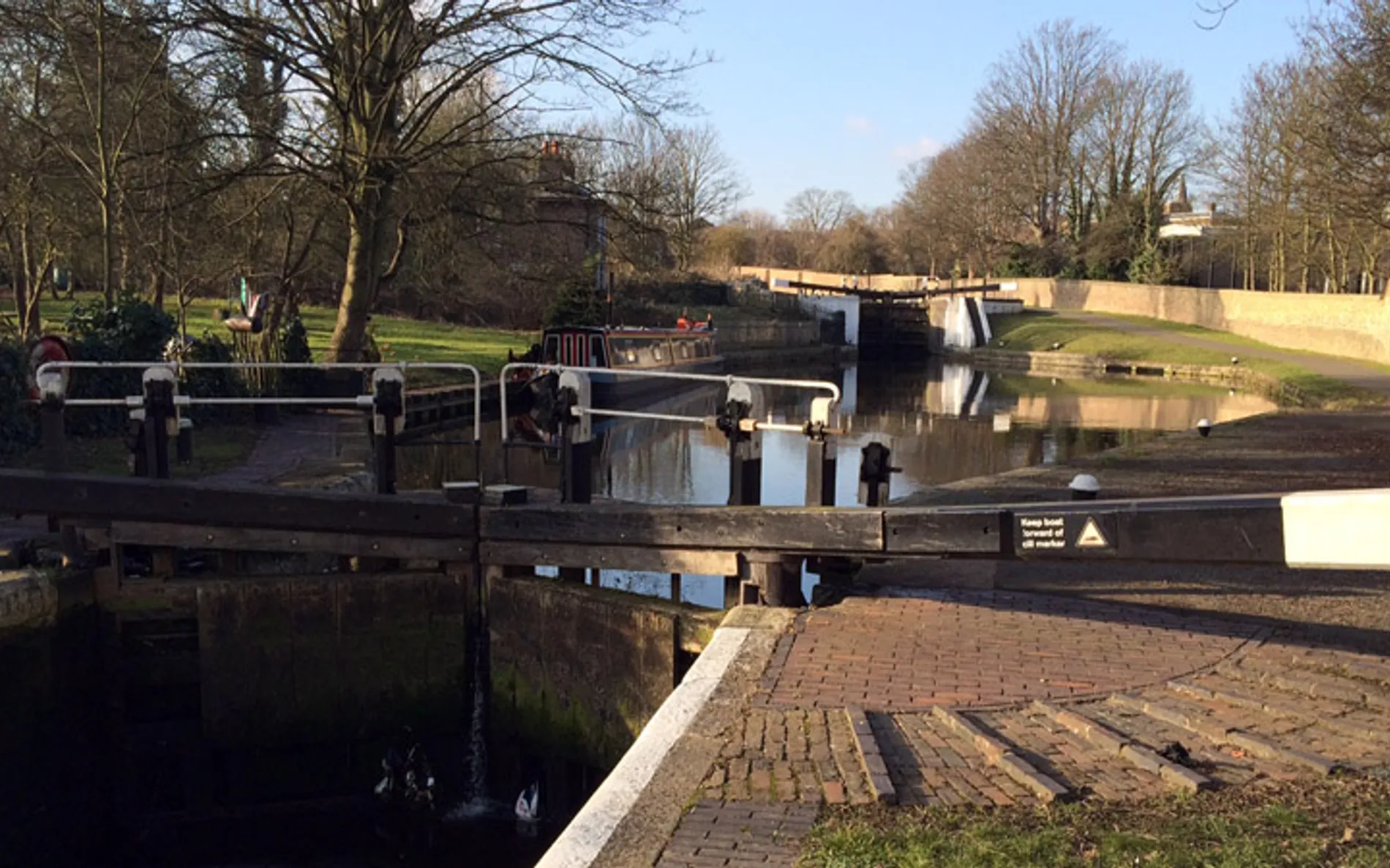
Elsewhere along the towpath, look for a ramp built into the bank — put there to help horses climb out of the water when they fell in.
Brunel's Last Chapter
The most extraordinary structure sits at the top of the flight. Three Bridges, formally Windmill Bridge, opened in 1859 and was designed by Isambard Kingdom Brunel. It was among the last engineering works he completed; he died that year.
Despite its name there are only two bridges. Windmill Lane crosses above the canal, which is carried in a cast-iron trough over the railway cutting below — the Great Western and Brentford line, running towards the docks at Brentford. Cast-iron bridges by Brunel are now uncommon, and this one has been a scheduled monument in its own right since 1970.
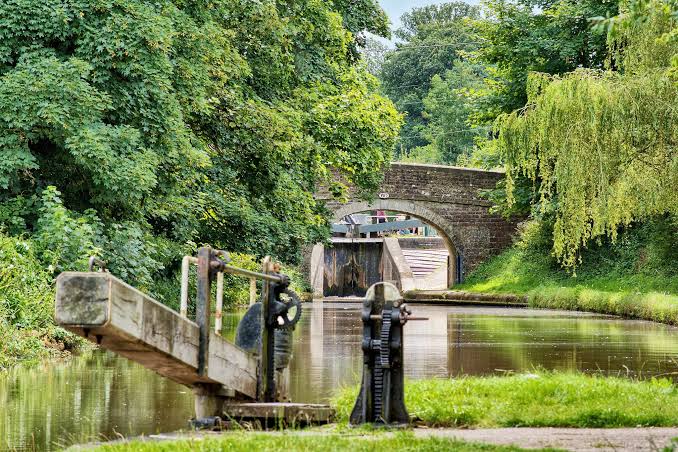
It is an elegant solution to a complicated problem, and a revealing example of how London's transport infrastructure evolved. The canal transformed the movement of goods in the Georgian period; the railway would supersede it within a generation. At Hanwell the two were made to coexist, one directly above the other, by the man who did more than anyone to build the thing that won.
Neither the locks nor Three Bridges was conceived as a visitor attraction, and their appeal today lies partly in that absence of ceremony. They remain embedded in the landscape, accessible without an admission fee or a carefully managed heritage experience.
Why It Earns Its Place
Hanwell offers something increasingly valuable in London: a public landscape whose interest comes from its history rather than its commercial reinvention.
The locks, the side ponds, the asylum wall and Brunel's crossing tell a coherent story about how the capital developed, and the canal provides a setting in which that history can still be understood on foot. There are more celebrated examples of Georgian and Victorian engineering, but few places where successive transport revolutions sit this close together — Jessop's canal at the bottom of the hill, Brunel's railway running underneath it at the top.
It is a reminder that some of West London's most interesting spaces were created for entirely different purposes.
The Lifestyle Edit Scorecard
- Heritage & Engineering
- 9.7 / 10
- Setting & Atmosphere
- 9.2 / 10
- Experience & Accessibility
- 8.7 / 10
- Distinctiveness & Value
- 9.6 / 10
Who it's for
- Anyone interested in London's industrial history, engineering or a canal-side walk with a little more substance than the usual park circuit. It is less suited to visitors expecting a conventional heritage attraction or extensive facilities.
Questions
- Where are the Hanwell locks?
- On the Grand Union Canal near Green Lane, Hanwell, W7 2PJ, roughly fifteen minutes' walk from Hanwell railway station.
- How many locks are there?
- The scheduled monument covers six, numbered 92 to 97. The Canal & River Trust's own visitor information describes a flight of seven, and some boating accounts count eight by including Norwood Top Lock and Hanwell Lock above the flight.
- What are Brunel's Three Bridges?
- A crossing completed in 1859, where Windmill Lane passes over a canal carried in a cast-iron trough, which in turn crosses a railway cutting. Formally called Windmill Bridge, it sits at the top of the lock flight and is a scheduled monument in its own right.
- Is anything being restored?
- Yes. A £220,000 project funded largely by Historic England began in December 2025 to conserve the derelict side ponds at Locks 94 and 95. The flight has been on the Heritage at Risk register since 2009.
- Can you visit?
- Yes, free of charge. The towpath is always open and the structures are publicly accessible, though temporary restrictions may apply during maintenance. Allow one to two hours to walk the flight and reach Three Bridges.