Living
3HB Faro — A Different Side of the Algarve
A five-star hotel built into a former cinema offers something the Algarve's coastal resorts cannot: a stay in a working Portuguese city, with twenty centuries of history immediately outside the door.
By James B. Stoney, Editor · 25 October 2026
The City That Had No Luxury Hotel
For a region built on hospitality, the Algarve's capital was a conspicuous omission. Visitors arrived at Faro Airport and headed for the beaches, golf courses and resorts further west, and until 2021 the city itself had no five-star hotel at all.
3HB Faro changed that, and its architecture tells an interesting story. The building was a derelict cinema. The architect Miguel Abreu kept the older red façade and introduced contemporary sections of black metal and glass behind and above it, with interiors by Paulo Lobo working in warm timber and natural materials.
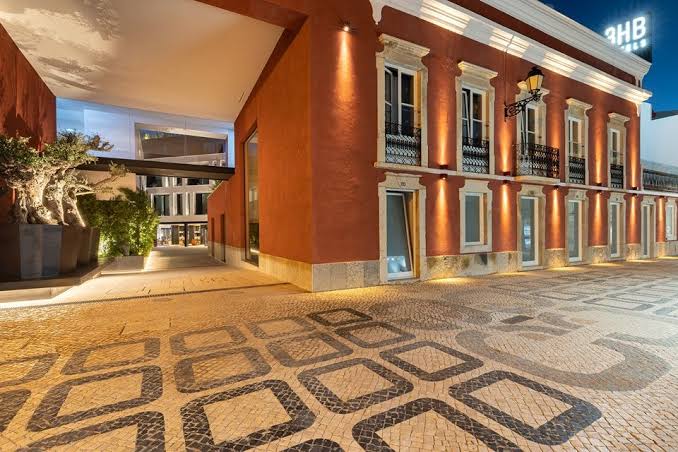
Rather than standing apart from its surroundings, the hotel sits on Rua Vasco da Gama, close to Faro's pedestrianised shopping streets, with shops, offices, cafés and flats sharing the surrounding blocks. Everyday Portuguese city life carries on outside, largely independent of the tourism industry.
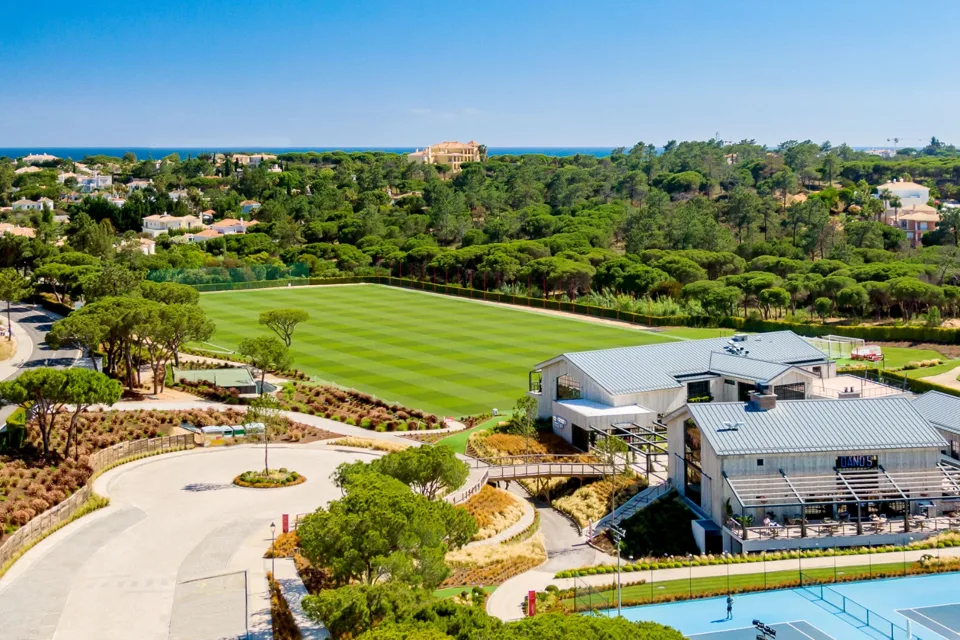
That is the attraction. After the carefully managed environment of Quinta do Lago, Faro feels refreshingly different: a place with its own routines and identity, where the hotel is part of the city rather than the centre of a self-contained resort.
Twenty Centuries, Ten Minutes' Walk
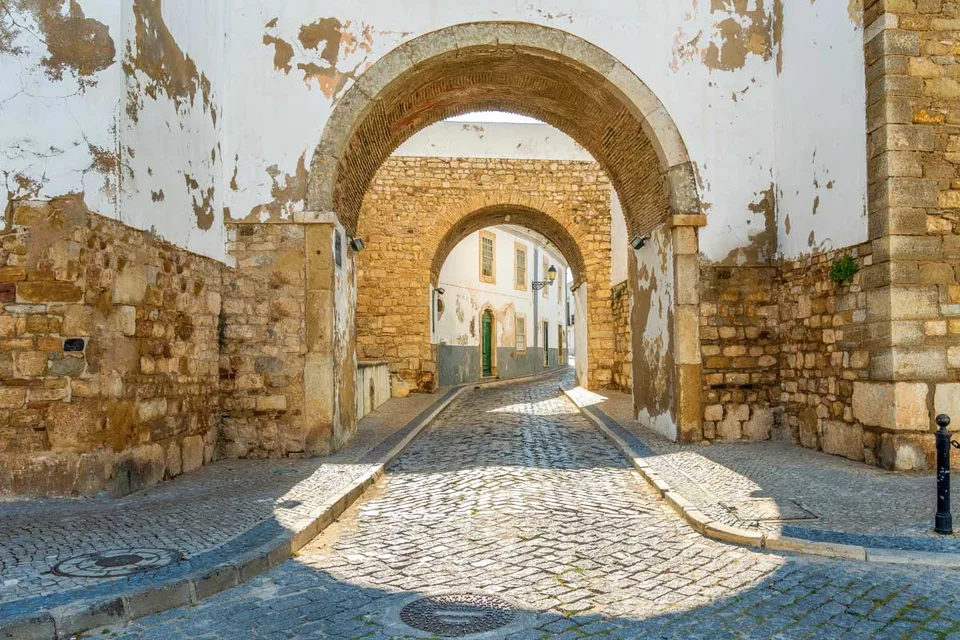
Faro rewards exploration. Its history begins with Ossonoba, a Roman settlement and port substantial enough that its surviving artefacts now fill part of the Municipal Museum. Under Islamic rule the city remained an important commercial centre, protected by walls that still define parts of the historic quarter.
Afonso III captured Faro in 1249, completing the Christian reconquest of the territory that became modern Portugal, and the settlement was granted city status in 1540. The centuries that followed brought repeated destruction. In 1596 English forces commanded by the Earl of Essex attacked and burned much of the town, and the library of Bishop Jerónimo Osório was carried off to England, its books entering Oxford's collections and becoming associated with the Bodleian. The earthquake of 1755 did further damage and prompted another period of rebuilding.
What survives is therefore a historic centre assembled across several centuries rather than preserved from one. The Arco da Vila, inaugurated in 1812, has an earlier Islamic gateway embedded within its neoclassical architecture, and the cathedral combines medieval origins with later Renaissance and Baroque alterations. It is a compact quarter, easily walked from the hotel, with considerably more substance than the decorative old towns found in most resort destinations.
The Roof and the Lagoon
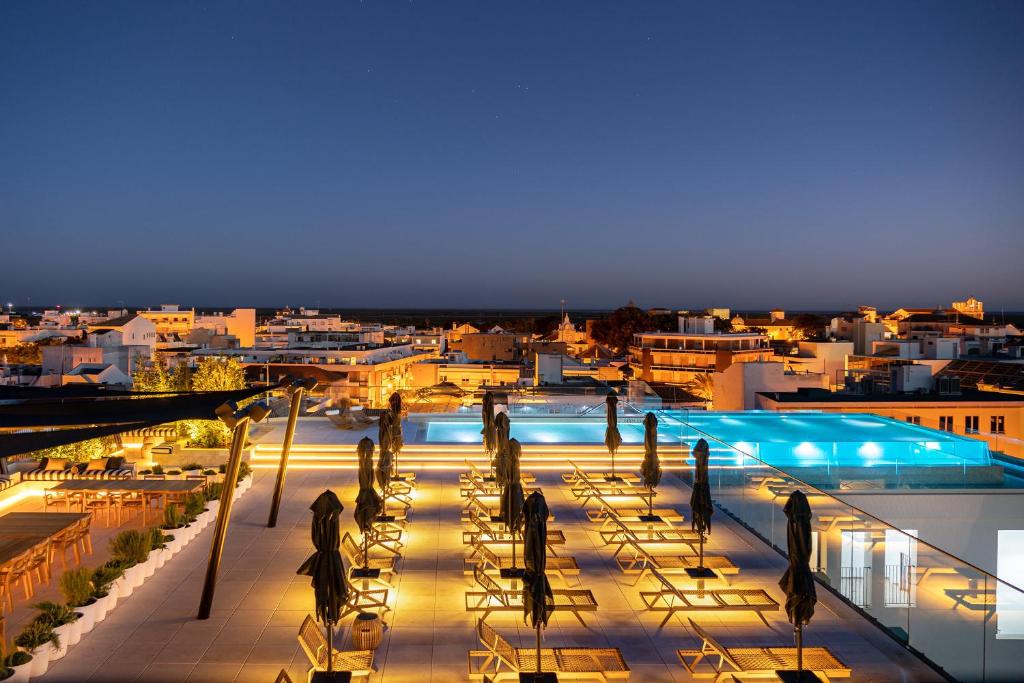
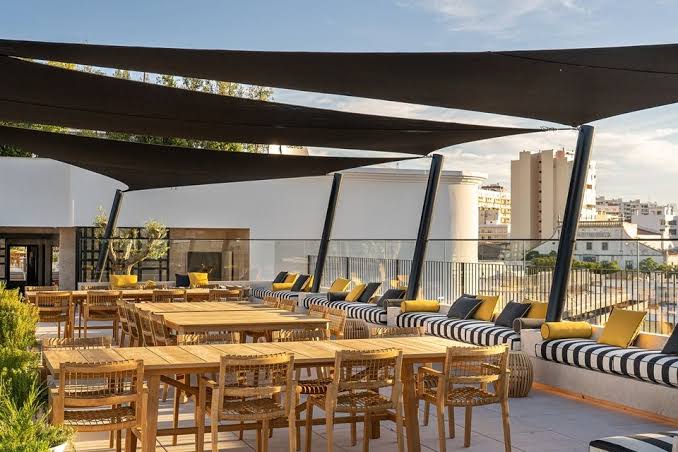
The hotel's defining feature is its rooftop. An infinity pool, loungers and a bar overlook Faro's rooftops towards the Ria Formosa, the protected lagoon separating the city from the Atlantic.
The view explains the city. Unlike the Algarve's beachfront resorts, Faro faces a landscape of tidal channels, salt marshes, mudflats and barrier islands, and that lagoon has shaped its fishing, shellfish, salt and maritime trade for centuries. From five floors up the geography resolves itself: Faro is unmistakably a coastal city, but its relationship with the sea is more complicated than a beach and a promenade.
Below, the hotel keeps up a range of facilities more usually found an hour down the coast. Hábito occupies the rooftop restaurant space, Forno Nero does Italian-influenced cooking at street level, and there is an indoor pool, sauna, Turkish bath, gym and treatment rooms. It holds one Michelin Key.
The Room
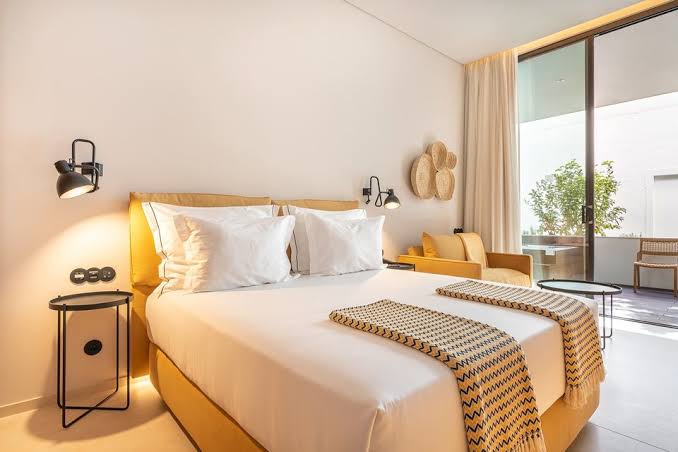
We stayed in a standard room and it was lovely, which matters more than it sounds. A hotel that only works if you book the suite is not really working, and the quality of the ordinary room is the better measure of what most guests will actually get.
The detail is where it shows. A private teak balcony, blackout curtains that close at the touch of a switch, a Nespresso machine and a Marshall speaker — none of it essential, all of it the sort of thing that usually appears two price tiers up. The materials carry through from the public spaces: warm timber, restrained colour, nothing shouting.
It also changes how the city can be used. Faro is somewhere most visitors pass through on the way to somewhere else, and having a comfortable base in the middle of it turns an airport town into a destination with an evening and a morning in it.
Why It Earns Its Place
3HB Faro matters because it represents a different approach to hospitality in the Algarve. Its arrival in 2021 brought five-star accommodation to a regional capital that had spent decades watching visitors drive straight past it.
The converted cinema gives the hotel an architectural story, the central location gives it Faro's Roman, Islamic and Portuguese heritage on the doorstep, and the rooftop connects the building to the Ria Formosa. After time in Quinta do Lago, the contrast was welcome: less curated, more urban, more closely connected to ordinary Portuguese life.
It makes an excellent base for that side of the Algarve. Its greatest advantage is not what the hotel provides, but what is immediately outside it.
The Lifestyle Edit Scorecard
- Location & Character
- 9.6 / 10
- Design & Facilities
- 9.3 / 10
- Experience & Atmosphere
- 9.2 / 10
- Value & Accessibility
- 8.7 / 10
Who it's for
- Travellers looking for contemporary luxury without the isolation of a coastal resort, and anyone interested in Portuguese city life, architecture, Faro's historic quarter or the Ria Formosa. Less suited to visitors whose main priority is direct beach access or a self-contained resort holiday.
Questions
- Where is 3HB Faro?
- Rua Vasco da Gama 33, in central Faro.
- When did it open?
- In 2021, in a converted cinema, as the first five-star hotel in the city.
- How many rooms does it have?
- 104 rooms and suites, some with private terraces and outdoor hot tubs.
- What are the standard rooms like?
- We stayed in a standard room and found it lovely — a private teak balcony, blackout curtains, a Nespresso machine and a Marshall speaker, and a comfortable base for exploring the city without needing a premium suite.
- Does it have a rooftop pool?
- Yes. The rooftop infinity pool and bar overlook the city towards the Ria Formosa.
- What other facilities are there?
- Two restaurants, Hábito and Forno Nero, plus an indoor pool, sauna, Turkish bath, gym and treatment rooms. It holds one Michelin Key.
- Is it close to the old town?
- Yes. The Cidade Velha, the cathedral, the marina and the city walls are all within a short walk.
- Is Faro worth staying in rather than driving through?
- Yes. It has Roman, Islamic and Portuguese layers, a walkable historic quarter and direct access to the Ria Formosa — a different proposition from the Algarve's beach and golf resorts.