Living
The Lost Poet — Four Rooms, Four Personalities
No lobby, no restaurant and four bedrooms. At the top of Portobello Road, a local design studio has made something closer to a private townhouse than a hotel, and we stayed in the pink room on the first floor.
By James B. Stoney, Editor · 25 October 2026
A Different Kind of Hotel
London has plenty of boutique hotels, and most follow the same shape: a desk, a small bar, a restaurant, and bedrooms decorated around a single theme.
The Lost Poet does none of it. Opened in June 2021 in a Victorian townhouse at the Notting Hill Gate end of Portobello Road, it has four rooms, one to a floor, no lobby and no restaurant. The project came from Cubic Studios, a Notting Hill design practice making its first move into hospitality, and the decision they made was to leave the building domestic rather than turn it into a miniature hotel.
Each room has its own colour, furniture and scheme. The result reads less as a hotel than as four separately furnished London rooms that happen to share a staircase.
Inside The Salon
We stayed in The Salon, on the first floor, and its appeal has nothing to do with size.
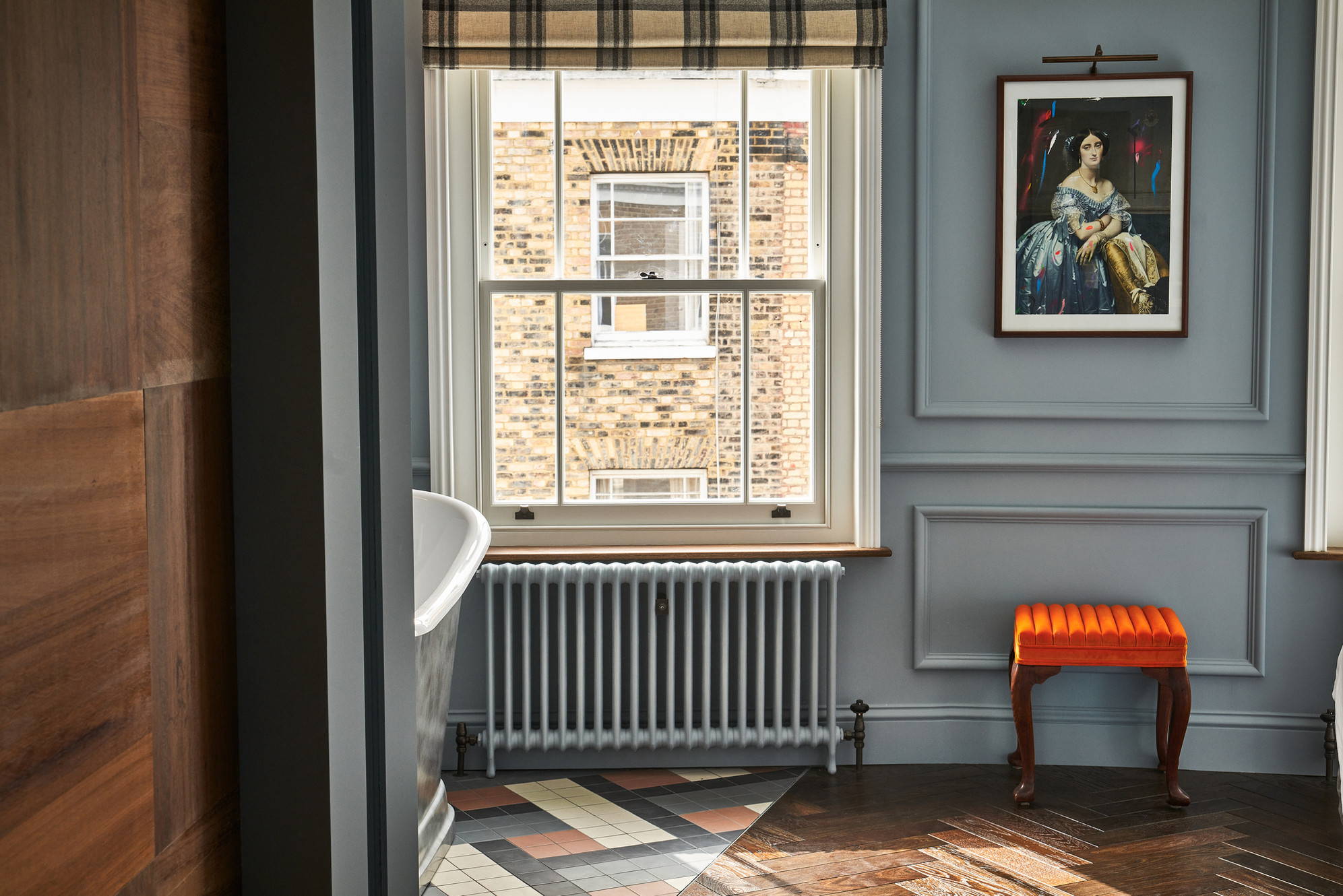
It is compact by luxury hotel standards, and the design is what makes it work. The palette is soft pink, with patterned wallpaper, colourful artwork and a floral chaise longue, and the sash windows keep the proportions the Victorian builders gave them. The super-king bed is a real luxury in a room of that footprint. There is a Nespresso machine, a Bluetooth speaker, a minibar and Evolve bath products — enough that you do not find yourself wishing for a front desk.
What it feels like is residential rather than institutional. The pleasure is in the details and in the sense of staying in a well-furnished London house rather than a room with a number on it.
The proportions are worth knowing about if you are travelling with substantial luggage or expecting a suite. We found it comfortable, and the size never became the point. The pub opposite was not a problem either, which is the question anyone looks up before booking a room on Portobello Road.
Four Rooms, Four Identities
The Salon is one of four, each on its own level. The Suite is on the lower ground, predominantly yellow, with a private garden terrace. The Quarters is green, on the ground floor, with a street-view window. The Muse takes the top two levels in blue, with a private roof terrace and a sunroom.
The differences run deeper than wall colour — furniture, wallpaper, artwork and architectural features are chosen to give each room a separate identity. The Muse is the most ambitious of them, but The Salon makes the case that the appeal does not depend on booking the biggest or most expensive.
With four bedrooms, consistency does not require uniformity. That is the advantage of being small, and they have used it.
Designed from the Neighbourhood
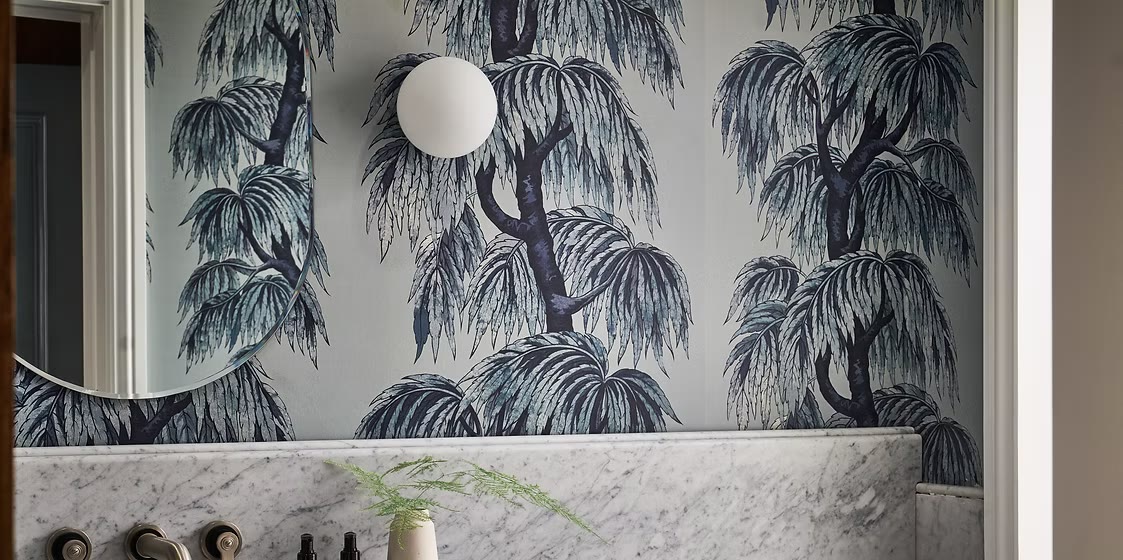
The interiors lean hard on Notting Hill's own trade in antiques and decorative experiment. Reclaimed wooden panelling from old school science laboratories sits alongside antique furniture bought from Portobello dealers a few minutes' walk away. An Irish armchair and a chaise came through The French House and were re-covered in Timorous Beasties fabric. Wallpapers are House of Hackney and Maison C; the bathrooms have Samuel Heath brassware and Spanish tiles.
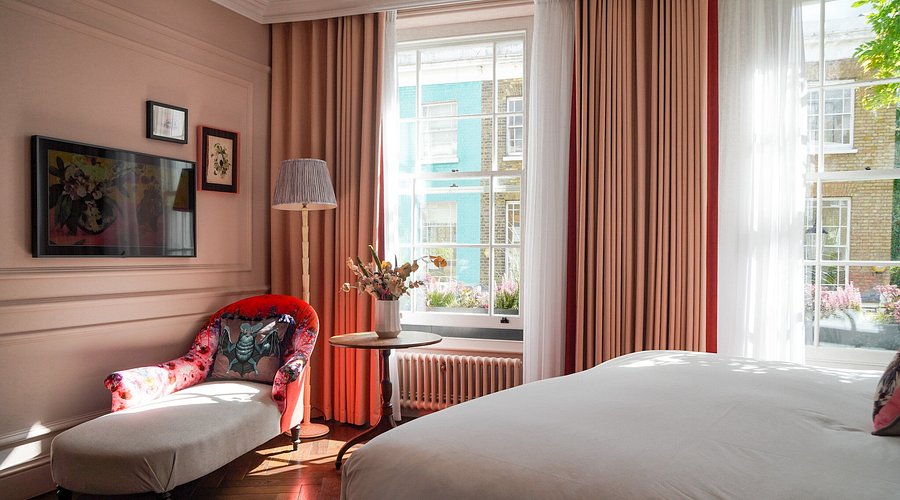
It is deliberately layered — contemporary art, old furniture and reclaimed material coexisting without pretending to a single period. There is a local logic to it. Portobello Road has sold other people's furniture for a century and a half, and a hotel furnished out of that trade feels connected to the street rather than merely sited on it.
That is the strongest argument for the place: it could not be lifted and dropped into another postcode.
The Freedom of No Front Desk
Arrival is as distinctive as the interiors. There is no reception, no lobby and no key to collect — you check in online and let yourself in with a digital entry system, and you come and go at any hour without passing anybody.
It is a small operational difference with a large effect. You are not arriving at a hotel; you are letting yourself into a house. For a four-room property it makes obvious sense, and it removes the faint transactional note that even good small hotels carry.
There is a trade-off. Anyone who wants a staffed desk, a concierge or communal facilities will find this too stripped back, and the narrow winding wooden staircase is a Victorian inheritance that luggage does not improve. It is also adults only, unless you take the whole house.
For us it worked. The Salon supplied the character and the comfort, and the keyless system supplied the rest — the sense of having a temporary address in Notting Hill rather than a reservation.
Why It Earns Its Place
The Lost Poet works because it understands what a small Victorian townhouse can do that a large hotel cannot. Cubic Studios put the effort into individual rooms, sourced materials and a sense of place, and then got out of the way.
Our stay in The Salon showed the concept holds up outside the headline room. It was compact but comfortable, distinctive without being impractical, and quieter than its position suggests.
There are compromises — no shared facilities, stairs instead of a lift, and a premium on the better rooms. But this is not trying to compete with a full-service hotel. It offers something more particular: a thoughtfully designed Notting Hill townhouse and the privacy to use it as your own.
The Lifestyle Edit Scorecard
- Design & Character
- 9.6 / 10
- Location & Setting
- 9.5 / 10
- Accommodation & Experience
- 9.1 / 10
- Value & Accessibility
- 8.6 / 10
Who it's for
- Couples and independent travellers who want design, privacy and a central Notting Hill address more than they want hotel facilities. Particularly good for anyone interested in interiors and antiques. Less suitable for guests needing step-free access, on-site services, or the amenities of a larger hotel.
Questions
- Where is The Lost Poet?
- 6 Portobello Road, London W11 3DG, five minutes from Notting Hill Gate.
- How many rooms are there?
- Four, one per floor: The Suite, The Quarters, The Salon and The Muse.
- Which room did you stay in?
- The Salon, on the first floor — soft pink, super-king bed, floral chaise longue and sash windows over Portobello Road.
- Is it noisy?
- The house faces Portobello Road with a pub opposite, but it was not a problem during our stay.
- How does check-in work?
- Online, with digital keyless entry. There is no reception desk and no key to collect.
- Is there a restaurant?
- No. There is no restaurant or bar on site, which is rarely a hardship given where it is.
- Who designed it?
- Cubic Studios, a Notting Hill design practice, in their first hospitality project. It opened in June 2021.
- Which room has the roof terrace?
- The Muse, a two-level suite at the top. The Suite has a garden terrace on the lower ground floor.
- Is it accessible?
- No. The townhouse has narrow winding stairs and no lift. Anyone with access requirements should check directly before booking.
- What does it cost?
- Rates vary by room and season, with published examples from around £200 to close to £500 a night. The Muse commands the premium.