Experience — Culture
Fêtes de Bayonne — Five Days in Red and White
A rugby club, a trip to Pamplona and an idea that got slightly out of hand. Ninety-four years later, an entire city still changes clothes for it.
By James B. Stoney, Editor · 15 August 2026
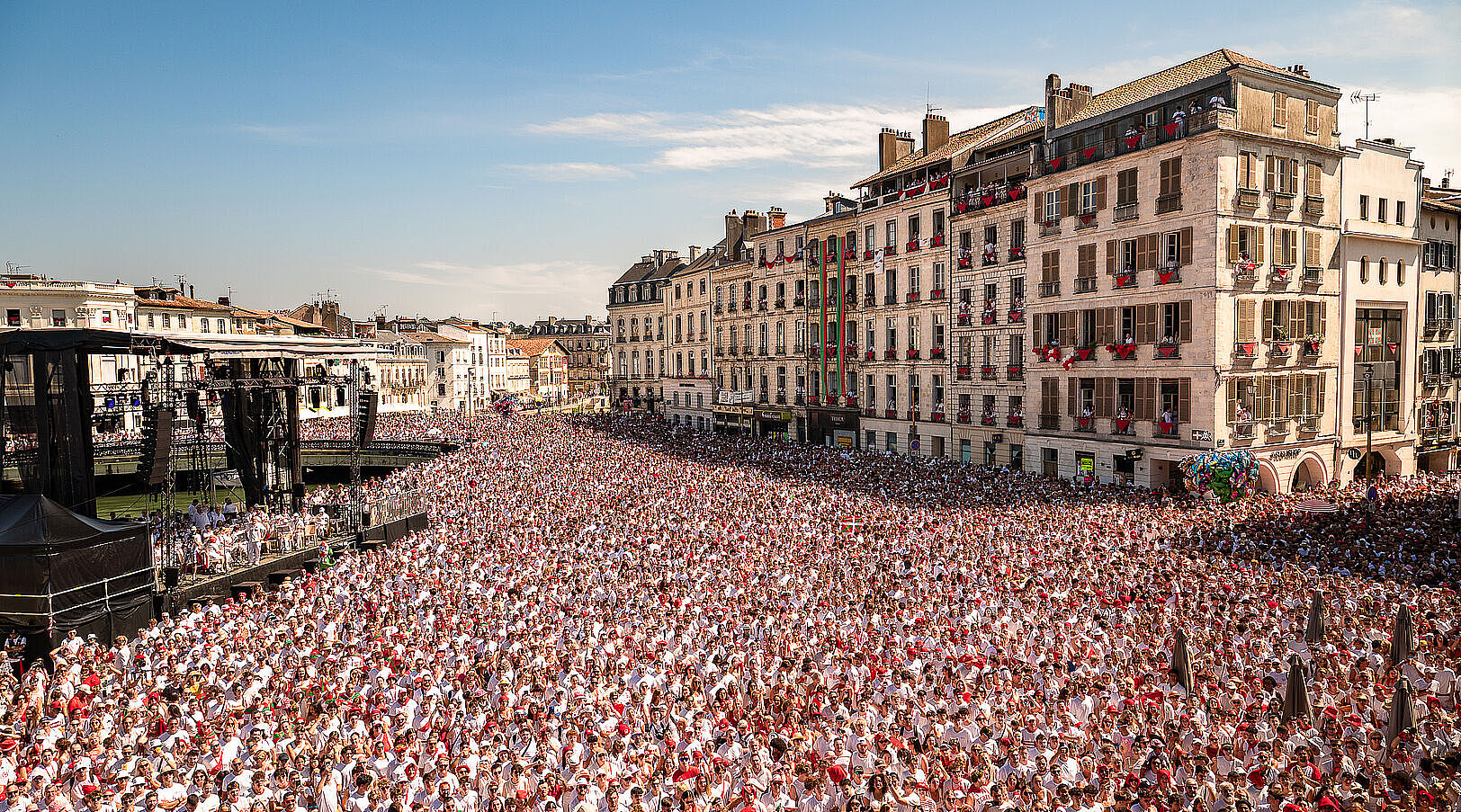
Some festivals happen in a city. The Fêtes de Bayonne take possession of one.
For five days each summer, the streets of this small city in the French Basque Country fill with bandas, dancing, sport, processions and enormous crowds. Almost everyone wears the same thing. White clothes. Red scarf.
It looks like a tradition that must have existed for centuries. It hasn't. That's only one of the things that makes Bayonne's great summer ritual more interesting than it first appears.
A Different Starting Point
The first official Fêtes de Bayonne opened on 13 July 1932. The inspiration came partly from across the Spanish border. A group of Bayonne locals associated with Aviron Bayonnais rugby club had experienced Pamplona's San Fermín festivities and returned wondering whether their own city could create something similar.
The first edition was known as the Grandes Fêtes d'Été. Music, dancing, sport, processions, courses de vaches. What began as a local summer celebration grew into one of France's largest annual gatherings, drawing crowds many times the size of Bayonne's own population.
The Fêtes have survived war, social change and the transformation of Bayonne itself. They're now included in France's national Inventory of Intangible Cultural Heritage.
The Keys and the King
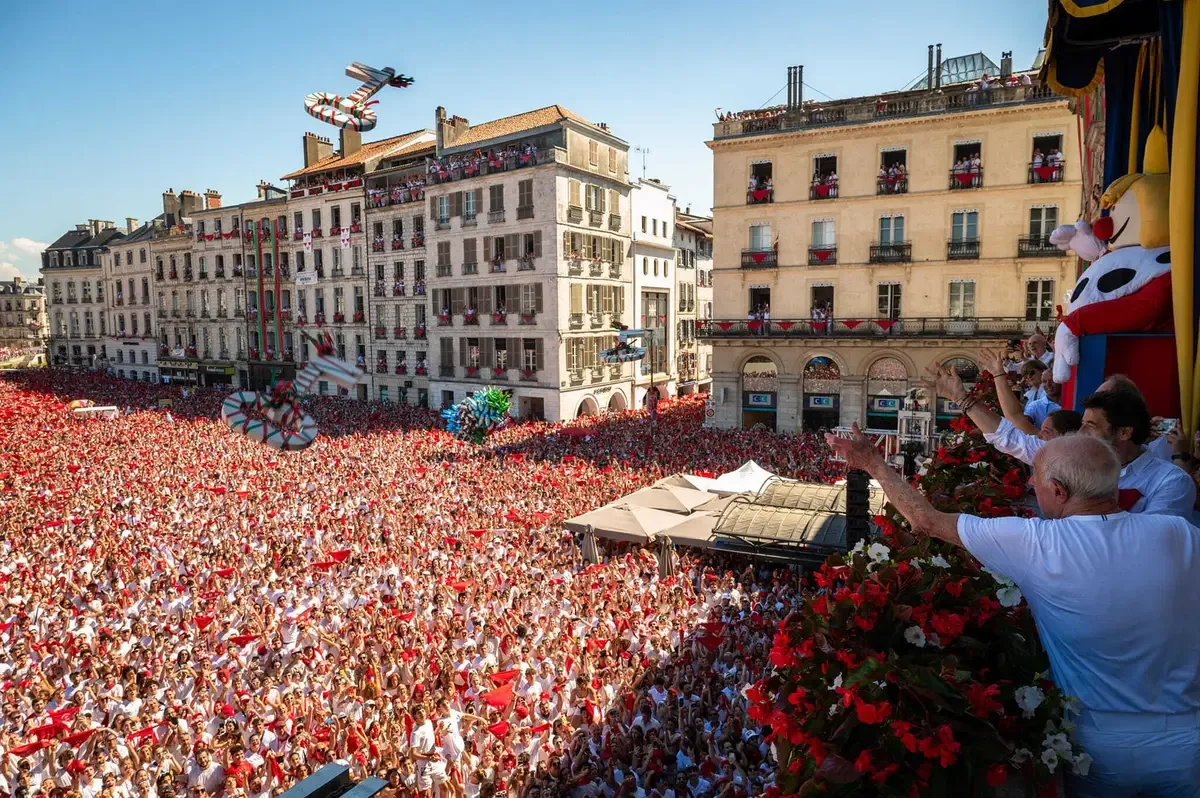
The moment Bayonne symbolically changes hands comes at the Hôtel de Ville. Since 1947, three enormous keys representing Grand Bayonne, Petit Bayonne and Saint-Esprit have been thrown from the town hall balcony to the crowd in the Place de la Liberté below. The message is uncomplicated. The city belongs to the festayres now.
Then there's King Léon. The festival's oversized monarch was inspired by Léon Dachary, whose civil name was Raphaël Dachary, a well-known Bayonne figure remembered for his humour and personality. King Léon presides over the Fêtes from the town hall balcony, appearing each day as part of a ritual now inseparable from the celebration.
Once the keys have been handed over, normal Bayonne is effectively suspended.
First, Change Clothes
White and red now seem as old as the Fêtes themselves. They aren't. The festival went through different colours over its history — blue workwear appeared at points, green and red were tried. There was no universal uniform through the early decades.
The shift toward today's white clothing and red scarf gathered momentum only toward the end of the 1980s and became established through the 1990s, with Pamplona's influence obvious. But Bayonne gives the clothing another meaning of its own. The city's explanation talks about equality rather than uniformity. For a few days, clothes reveal very little about the person wearing them — resident or visitor, young or old, wealthy or otherwise. Everybody enters the streets looking broadly the same. The individual recedes. Bayonne becomes the identifying feature.
Follow the Sound
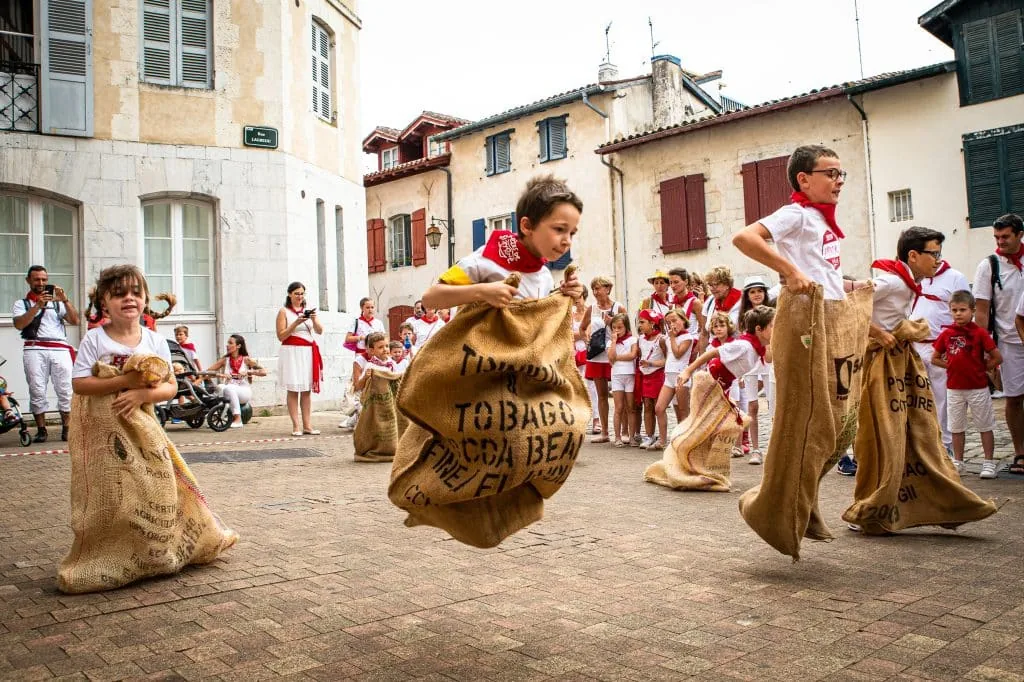
There's an official programme. Trying to follow all of it would be exhausting. Bandas carrying brass and percussion move through the streets. Basque and Gascon music mixes with concerts and contemporary performances. Giants and cabezudos pass through the city. Pelota, traditional dance, Basque strength sport.
The courses de vaches remain another longstanding element, cows released into an enclosed area as participants attempt to dodge them.
And then there's bullfighting. Corridas and novilladas have historically formed part of Bayonne's festive tradition at the Arènes de Bayonne. Bullfighting remains legal in parts of southern France under an exception for areas where an uninterrupted local tradition can be demonstrated. It's also increasingly contested — for some, part of the cultural history of Bayonne and the wider southwest; for others, incompatible with contemporary attitudes toward animal welfare. You don't have to attend it to experience the Fêtes. The festival taking place beyond the arena is vast enough on its own.
More Than a Party
With crowds on this scale, it would be easy to describe the Fêtes as an enormous street party. That misses something. The celebration works because it belongs to Bayonne rather than having simply been placed there.
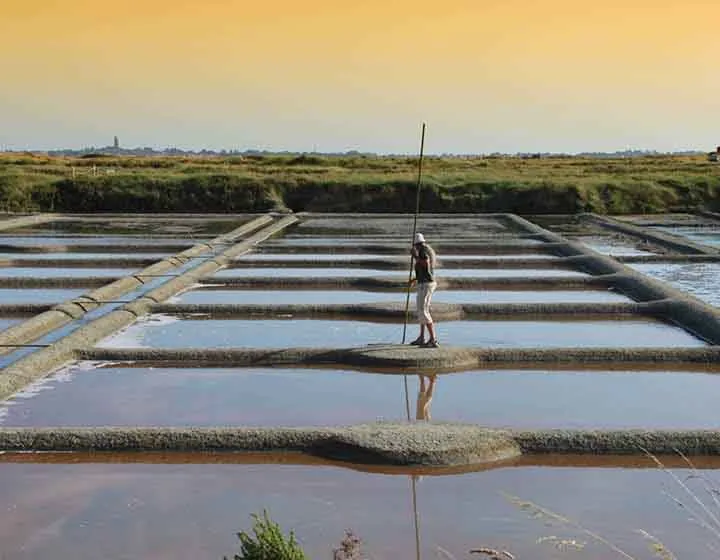
Local associations prepare for it all year. Musicians fill streets they know. Basque and Gascon traditions sit alongside the drinking and late nights. Families take part during the day before a different version of the festival emerges after dark. The same local ownership runs through the salt marshes at Guérande, further up the same coast.
Even the terminology matters. Locals generally call them the Fêtes, not a feria — a small distinction, but a revealing one. Bayonne borrowed inspiration from Pamplona. What developed over the following nine decades became its own thing.
The City Is the Headline Act
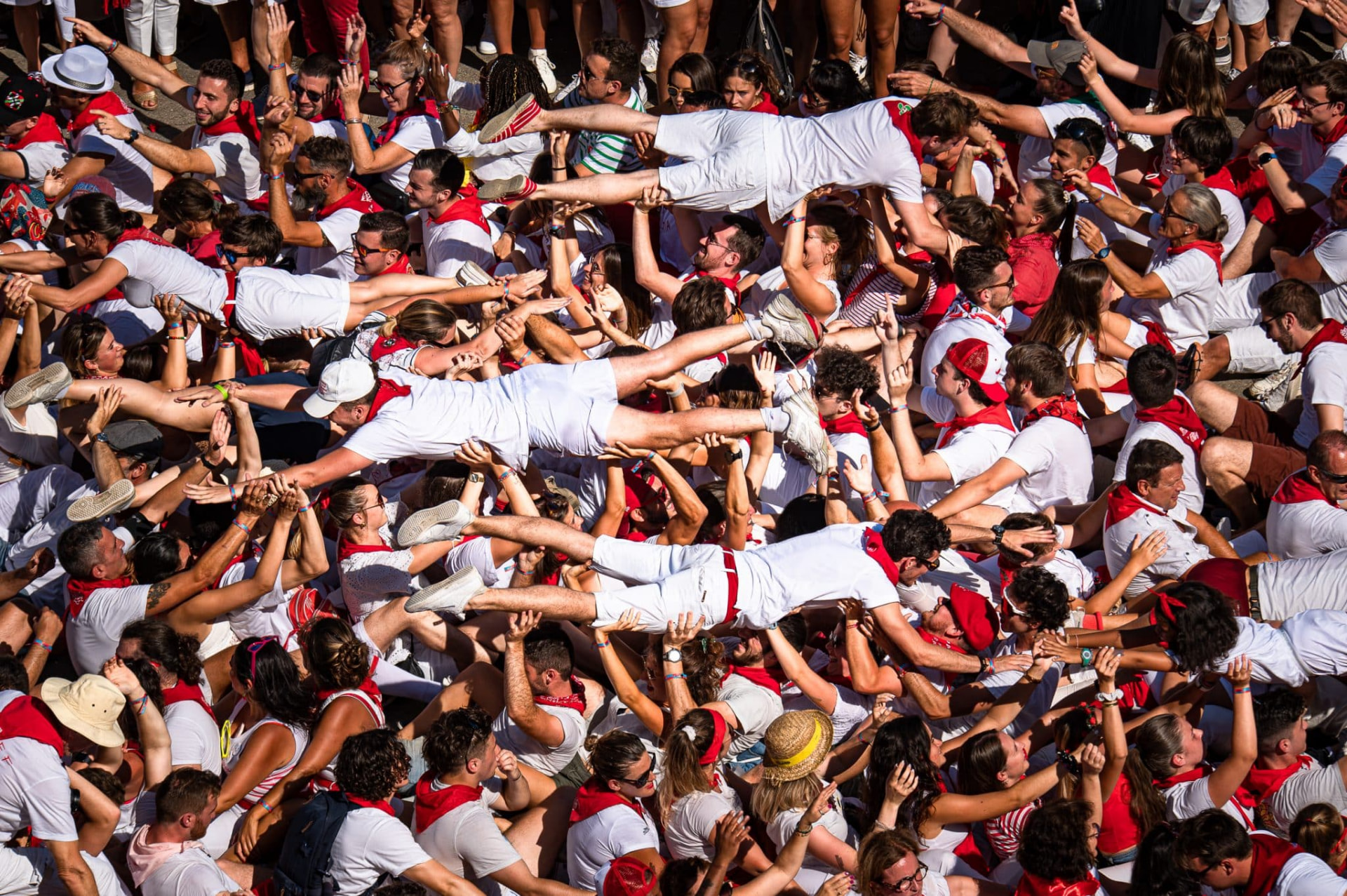
There are festivals you attend because of who is performing. Bayonne is different. The city is the headline act. Its narrow streets become processional routes. Balconies become viewing platforms. Squares become stages. Restaurants and bars dissolve into the crowds outside them.
The architecture that normally provides the background suddenly becomes part of the event. And because almost everybody has agreed to wear the same two colours, the visual effect is extraordinary. Thousands of individuals begin to look like a single crowd. That may be the cleverest thing about the Fêtes. They don't simply ask you to watch. They give you a uniform and expect you to join in.
Why It Earns Its Place
Because very few experiences allow you to see an entire city temporarily agree to behave differently.
The opening Wednesday may be the best moment to understand it. The white clothes are still clean. The red scarves have just appeared. The keys leave the balcony and disappear into the crowd. For the next five days, Bayonne belongs to everyone underneath them. Dates and the full programme are published each year by the Ville de Bayonne.
Then the music stops. The scarves come off. The keys are returned. And Bayonne becomes Bayonne again. Until next summer. Twenty minutes down the coast, Hôtel Le Garage in Biarritz makes a quieter base — the rest of Edit No.27, France, Facing the Atlantic, follows the same shoreline.
The Lifestyle Edit Scorecard
- Atmosphere
- 9.7 / 10
- Cultural significance
- 9.5 / 10
- Sense of place
- 9.7 / 10
- Experience
- 9.5 / 10
Who it's for
- Travellers who would rather participate in a place than simply sightsee.
- Anyone interested in Basque and Gascon culture, music and traditions.
- Visitors comfortable with very large crowds and a city operating completely differently from normal.
- Less suited to anyone looking for a quiet introduction to Bayonne — come another week for that.
Questions
- What are the Fêtes de Bayonne?
- Bayonne's annual summer celebrations, combining street music, Basque and Gascon traditions, dancing, sport, processions and other festivities throughout the city.
- When did the Fêtes de Bayonne begin?
- The first official celebrations opened on 13 July 1932, drawing partial inspiration from Pamplona's San Fermín festivities while developing an event rooted in Bayonne's own culture.
- When were the Fêtes de Bayonne in 2026?
- The 2026 Fêtes de Bayonne ran from 15 to 19 July.
- Why does everyone wear white and red?
- The modern white-and-red tradition became established relatively recently, particularly from the late 1980s into the 1990s. It was influenced by Pamplona, but Bayonne also describes the shared clothing as a way of creating equality among festayres.
- What happens at the opening ceremony?
- Three symbolic keys representing Grand Bayonne, Petit Bayonne and Saint-Esprit are thrown from the Hôtel de Ville balcony to the crowd, symbolically handing the city over for the Fêtes.
- Who is King Léon?
- The symbolic monarch of the Fêtes, inspired by Bayonne personality Léon Dachary, whose civil name was Raphaël Dachary. His giant figure presides over the celebrations from the town hall.
- Are the Fêtes de Bayonne a feria?
- Locally, they're deliberately known as the Fêtes de Bayonne rather than simply a feria. Although they share traditions with festivals elsewhere in southwest France and northern Spain, Bayonne has developed its own identity around the event.
- Is there bullfighting at the Fêtes de Bayonne?
- Bullfighting has historically formed part of the wider programme at the Arènes de Bayonne. It remains a contested tradition in France and is legal only in areas where an uninterrupted local tradition can be demonstrated. It isn't necessary to attend the bullfighting events to experience the wider Fêtes.
- How many people attend?
- Attendance across the five days has historically reached well over one million visits, making the Fêtes one of France's largest annual popular gatherings.
- What should you wear?
- White clothing with a red scarf is the established tradition. A red belt is also commonly worn.