Edit No.27
France, Facing the Atlantic
Hôtel Le Garage · L'Aillet · Maison des Paludiers · Fêtes de Bayonne · Villa Grand Voile
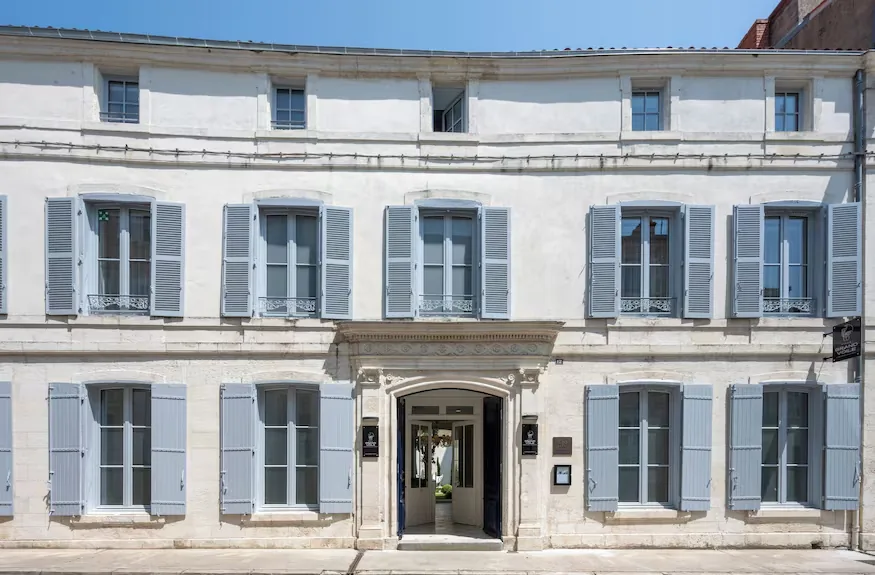
France's Atlantic coast runs from the Basque border to the salt marshes of the Loire, and it has never been a single place. It is a working shoreline before it is a holiday one — fishing ports, oyster beds, salt pans and shipping fortunes — and the parts of it worth writing about are the ones that still carry the evidence.
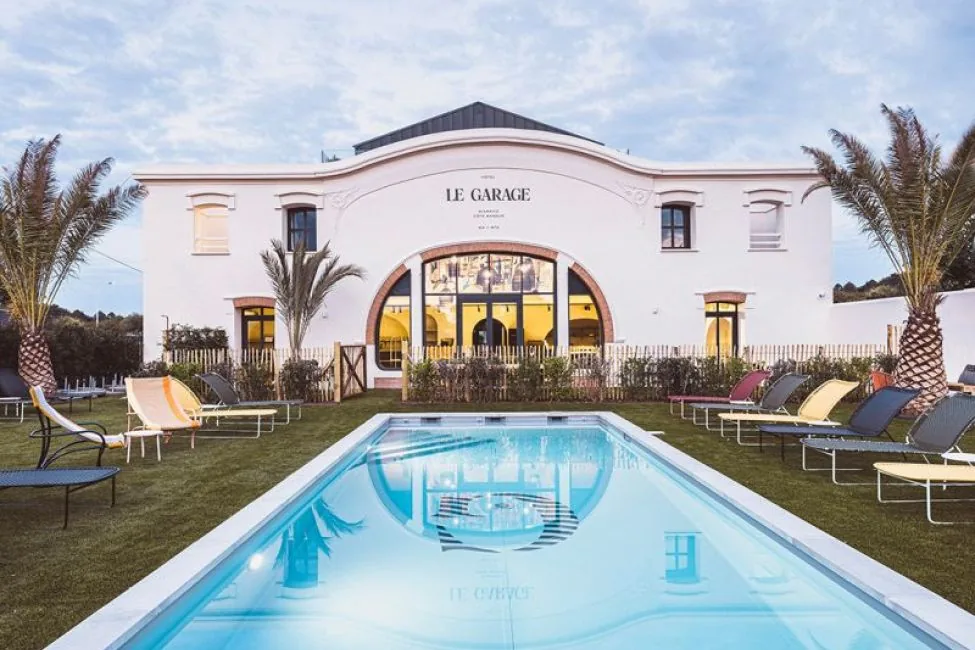
This edit moves north along that coast. Biarritz, where a carriage shed became an aero club, then a garage for the Rolls-Royces of hotel guests across the road, and now a 27-room hotel that kept its arches. La Teste-de-Buch, on the Bassin d'Arcachon, where a bistro cooks oysters from the water half a mile away without making a performance of it. Guérande, where salt is still raked by hand into mounds that have not changed shape in a thousand years. Bayonne, where the town turns red and white for five days and closes to almost everything else. La Rochelle, where an eighteenth-century shipowner's house keeps eleven rooms behind a white-stone façade built on Atlantic trade.
What connects them is not a style. It is the habit of a coast that has always earned its living from the water, and the places that have found a way to keep doing so.
In this edit
Living — Architecture
Hôtel Le Garage — The Garage That Kept Its Arches
A carriage shed, an aero club, a garage for some of the finest cars arriving in Biarritz, then thirty years behind closed doors. The arches never went anywhere.

Place — Food
L'Aillet — The Bistro Worth Leaving Arcachon For
A contemporary bistro in the centre of La Teste-de-Buch, 250 wines in the cellar and a dinner menu nobody sees until it arrives.
Experience — Craft & History
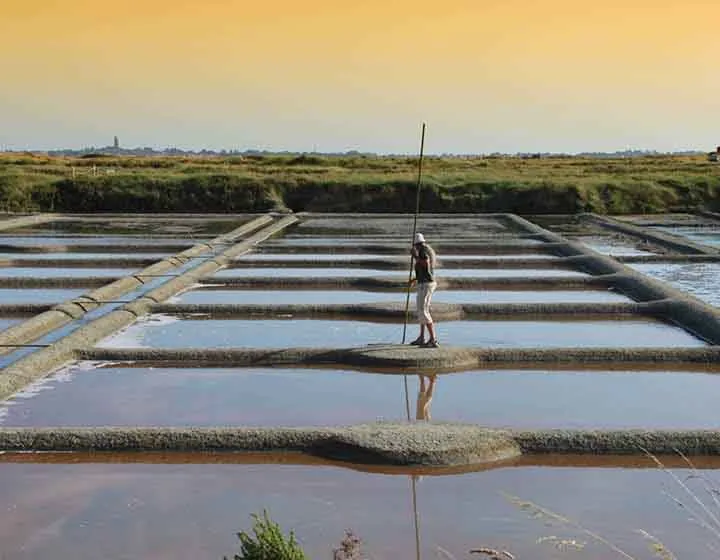
Maison des Paludiers — Learning to Read the Salt Marshes
A 1.2-kilometre walk from an old salt-working village into the private marshes beyond it. Ninety minutes later, a landscape that initially looks almost empty begins to make sense.
Experience — Culture
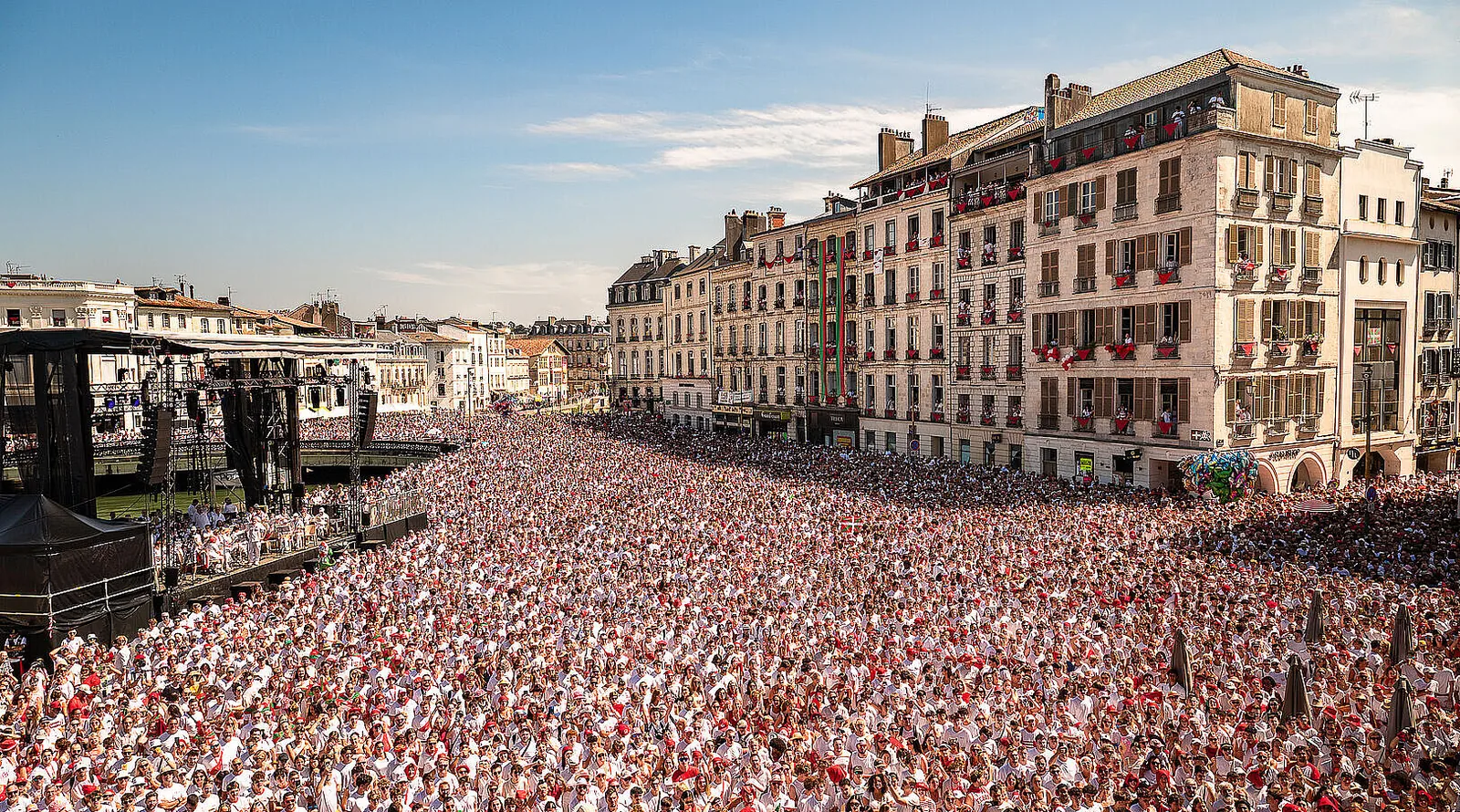
Fêtes de Bayonne — Five Days in Red and White
A rugby club, a trip to Pamplona and an idea that got slightly out of hand. Ninety-four years later, an entire city still changes clothes for it.
Living — Stay
Villa Grand Voile — Eleven Rooms in a Shipowner's House
An 18th-century shipowner's mansion, turned into eleven rooms by a three-Michelin-star chef and his sommelier partner. Every room is named after something from the sea.
Questions
- What does Edit No.27 cover?
- France's Atlantic coast, from Biarritz on the Basque shoreline north through the Bassin d'Arcachon, Guérande and Bayonne to La Rochelle. Five pieces: two hotels, a bistro, a salt-marsh museum and a five-day festival.
- When is the best time to travel this coast?
- Late spring and September give you the water and the light without the July and August crowds. The exception is Bayonne — the Fêtes are fixed to late July, and the town is unrecognisable outside them.
- How far apart are these places?
- Biarritz to La Rochelle is roughly four and a half hours by car, or a little over three by TGV with a change. Arcachon, Guérande and Bayonne all sit on or near that line, which makes the coast a realistic single trip rather than five separate ones.
- Do you need a car?
- For Biarritz, Bayonne and La Rochelle, no — all three are on the rail network and walkable once you arrive. For the Bassin d'Arcachon and the Guérande marshes, yes. Both reward being able to stop where you want.
- How are places chosen for an edit?
- On whether they hold up in use rather than in marketing. Everything here was assessed for what it actually does — the building, the kitchen, the craft, the crowd — and written up on that basis.