Place — Food & History
Botley Hill Farmhouse — Five Centuries at the Top of the Downs
Bought by a Tudor merchant in 1546, later a tearoom and only relatively recently a pub. Nearly five centuries on, much of what reaches the table still comes from the estate outside.
By James B. Stoney, Editor · 22 August 2026
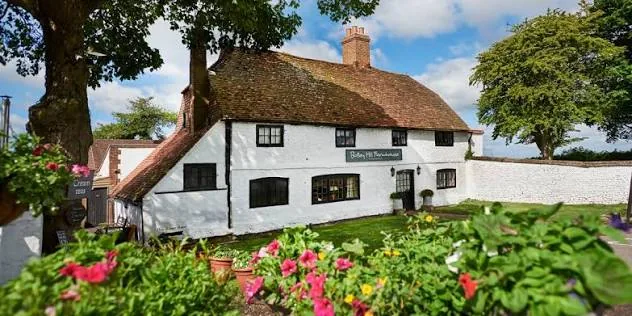
Botley Hill Farmhouse has the beams, fireplaces and low ceilings expected of an old Surrey country pub. Except it wasn't built as a pub.
The Grade II-listed, timber-framed building has 16th-century origins and sits within the historic Titsey Estate, high on the North Downs. Its history can be traced through one of Tudor London's great merchant families and, unusually, much of that connection remains visible today.
A Different Starting Point
The Titsey Estate was acquired in the 1530s by Sir John Gresham, a wealthy London merchant whose international trading interests stretched from northern Europe to the Middle East. Botley Hill Farmhouse records its own acquisition by Gresham in 1546.
Gresham rose to become Lord Mayor of London, while his nephew Sir Thomas Gresham became even more famous: financial adviser to Elizabeth I and founder of London's Royal Exchange. The family's emblem was a golden grasshopper. Nearly five centuries later, one still appears on the Botley Hill Farmhouse sign.
The Grasshopper
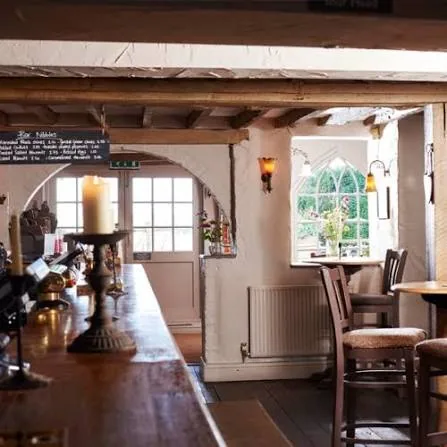
There are more unusual traces inside. In the room that now carries the Grasshopper name, an old fireplace bears markings believed to have Turkish origins. Flagstones within the building are traditionally thought to have arrived in England as ballast aboard merchant ships.
Given the Greshams' international trading interests, the story is plausible, but neither claim should be treated as settled archaeology. Perhaps that makes them more interesting. These aren't objects installed to give an old pub some character. They're details that have accumulated inside a building with centuries of commercial and family history behind it.
The estate itself remained with the Greshams and their Leveson Gower descendants for more than four centuries. In the 20th century, Richard and Thomas Leveson Gower established the Titsey Foundation to preserve the house, gardens, church and surrounding estate for the future.
Farmhouse to Tearoom to Pub
Botley Hill's current life is surprisingly recent. For much of its history it was a farmhouse. From 1936, it became known locally as a tearoom, particularly for its cream teas. Historic England's listing from 1984 still records the building's use as "House, now Tea shop."
It became a licensed pub in 1994. That means people had been living and working inside the building for roughly four centuries before anyone pulled the first pint across a bar. Today there are three main drinking and dining areas, exposed timber framing and real fires, but the building hasn't been polished into a heritage attraction. It still functions as somewhere to eat and drink.
Eating the Estate
The connection with Titsey isn't confined to history. Beef served at Botley Hill comes from cattle on the Titsey Estate itself — effectively from just over the fence. Lamb is sourced from nearby Moorhouse Farm, while herbs are grown in the farmhouse garden.
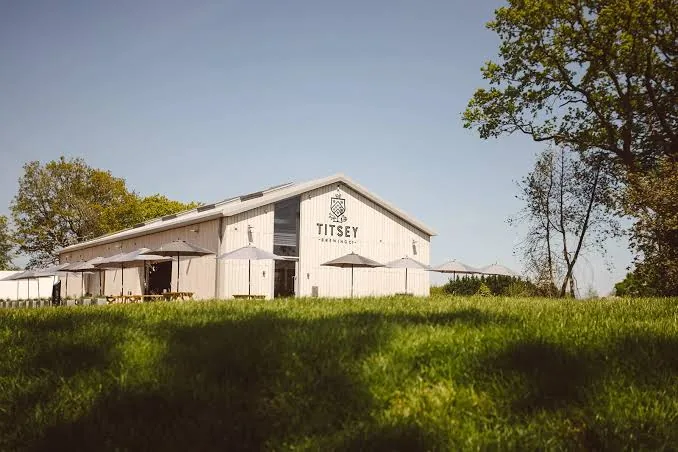
Then there's the beer. Titsey Brewing Co began in 2017 in a small farm shed at Botley Hill before expanding to larger premises elsewhere on the estate. Its names deliberately raid the same history as the building: Gresham Hopper, Leveson Buck and Gower Wolf all refer back to people and symbols associated with Titsey. It's a pleasingly short supply chain — the family whose history appears on the pub sign also appears on the beer pump.
At the Top of the Downs
Then there's the location. Botley Hill sits high on the North Downs, close to one of the highest points of the North Downs Way, with long views across Surrey and towards London in clear weather. It makes particular sense approached on foot or by bicycle — the National Trail passes nearby, turning the farmhouse into something it has probably been in one form or another for centuries: somewhere to stop before continuing across the landscape.
The food, beer and history are compelling individually. Here they work because they belong to the same place.
Why It Earns Its Place
Plenty of Surrey pubs have old beams and a story about somebody famous passing through. Botley Hill has something more substantial. A Tudor merchant acquired the farmhouse in 1546. His family and their descendants remained connected with the surrounding estate for centuries. Their grasshopper still hangs outside. Beef now comes from the same estate, while the local beer carries their names — the same argument about place that runs through Edit No.28, from Foxhills and Starling to the Hannah Peschar Sculpture Garden.
And the pub itself? That's one of the newest chapters.
The Lifestyle Edit Scorecard
- History
- 9.4 / 10
- Setting
- 9.3 / 10
- Food & provenance
- 8.8 / 10
- Character
- 8.9 / 10
Who it's for
- Walkers and cyclists exploring the North Downs.
- Anyone interested in genuine Tudor and Elizabethan history rather than vaguely "historic" pub décor.
- Diners who value genuinely local sourcing, including beef from the surrounding Titsey Estate.
- Best visited on a clear day, when the location becomes as important as the building.
Questions
- How old is Botley Hill Farmhouse?
- The Grade II-listed timber-framed building has 16th-century origins. Botley Hill Farmhouse records its acquisition by Sir John Gresham in 1546.
- Who was Sir John Gresham?
- A prominent Tudor merchant who acquired the Titsey Estate in the 1530s and later became Lord Mayor of London. His nephew was Sir Thomas Gresham, founder of the Royal Exchange and adviser to Elizabeth I.
- Why is there a grasshopper on the sign?
- The golden grasshopper was the Gresham family's emblem. The same symbol is famously associated with Sir Thomas Gresham and London's Royal Exchange.
- When did Botley Hill Farmhouse become a pub?
- It became a licensed pub in 1994. Before that it had operated as a tearoom from 1936, while the building had spent much of its earlier history as a farmhouse.
- What is the Titsey Foundation?
- The charitable foundation was established by Richard and Thomas Leveson Gower to preserve the historic Titsey Estate, including its house, gardens, church and parkland.
- Is the food locally sourced?
- Much of it is. Beef comes from the Titsey Estate, lamb from nearby Moorhouse Farm and herbs are grown at Botley Hill itself.
- What is the connection with Titsey Brewing Co?
- The brewery began in a small shed at Botley Hill Farmhouse in 2017 before moving to larger premises on the Titsey Estate. Several of its beers take their names from the estate's Gresham and Leveson Gower history.